



Into the darkest consumer nightmare, a little light may shine. In the case of data centers, the insurance industry is licking its chops over the massive policies utility companies will need for their gargantua, according to Insurance Journal.
Or to put it more mildly: Soaring demand for insurance coverage related to data center construction is creating a “meaningful growth opportunity” for the industry, outstripping some traditional insurance markets, according to S&P Global Ratings.
The market for such coverage could reach $10 billion in premiums in 2026, analysts said in a study that speaks glowingly of the hyperscale risk the centers may create. In comparison, annual premiums for the global aviation market are estimated at around $5 billion.
Really? Short answer: Don’t count on it.
In theory, more revenue and competition could help stabilize pricing for consumers who are currently facing rapidly rising premiums thanks to climate change, wildfires, earthquakes and other hazards.
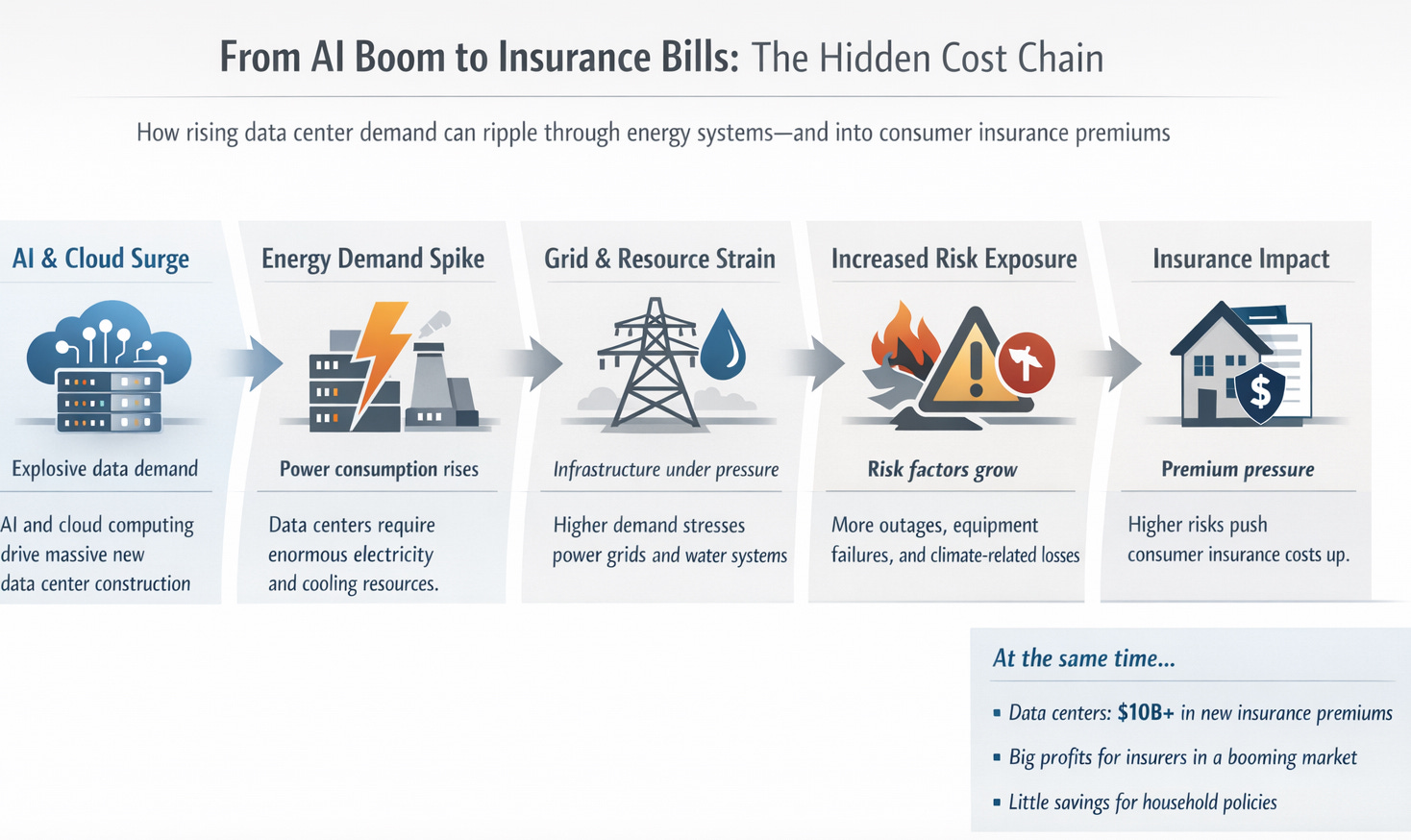
Why that rarely lowers your premium
That sounds good but insurance pricing doesn’t work like a retail sale.
Rates are driven by claims and risk, not insurer profits;
If wildfire losses, repair costs, or litigation rise, premiums rise — period;
Profits from insuring data centers don’t typically get “shared” with homeowners or auto customers.
Bottom line: A booming new business line doesn’t mean insurers cut prices elsewhere. It just means they make more money for their shareholders.
The hidden cost: energy and infrastructure strain
Data centers are among the most power-hungry facilities in the economy.
That creates ripple effects:
Higher electricity demand → upward pressure on utility bills;
Grid strain → increased outage and infrastructure risk;
Water usage (for cooling) → added stress in drought-prone regions.
For insurers, those pressures can translate into:
Greater systemic risk;
Higher expected losses; and
More upward pressure on premiums.
New risks, not just new revenue
Data centers also introduce fresh exposures:
Massive concentration risk (billions in one location);
Vulnerability to power failure and cooling breakdowns; and
Growing cyber and business interruption risks.
These aren’t “easy profits” — they require significant capital and careful pricing.
What it means for consumers
You’re unlikely to see direct premium relief from the data-center boom;
In some regions, especially energy-constrained ones, the buildout could add to cost pressures;
The biggest drivers of your insurance bill remain unchanged:
Climate risk;
Construction and repair costs; and
Legal environment.
The bottom line
The data-center boom may be a windfall for insurers — but for consumers, it’s more likely to be a wash at best, and a cost driver at worst.