

Airline travel just keeps getting more adventurous, doesn’t it? TSA agents are once again working without pay, thanks to a partial government shutdown, weather continues to disrupt flight schedules and consumers have lost a number of important protections the Biden administration had proposed or implemented.
The TSA agents are pawns in the latest Washington showdown, as Democrats in Congress hold up funds for the Department of Homeland Security, demanding tighter controls on the Immigration and Customers Enforcement agents whose conduct has spread fear throughout the land.
TSA agents are deemed essential. You’d think that would mean they would be paid for working but it doesn’t. Air traffic controllers, however, are still being paid because funds for their salaries come out of a different budget. Congress adjourned and flew home just as this all began last week. Welcome to Washington.
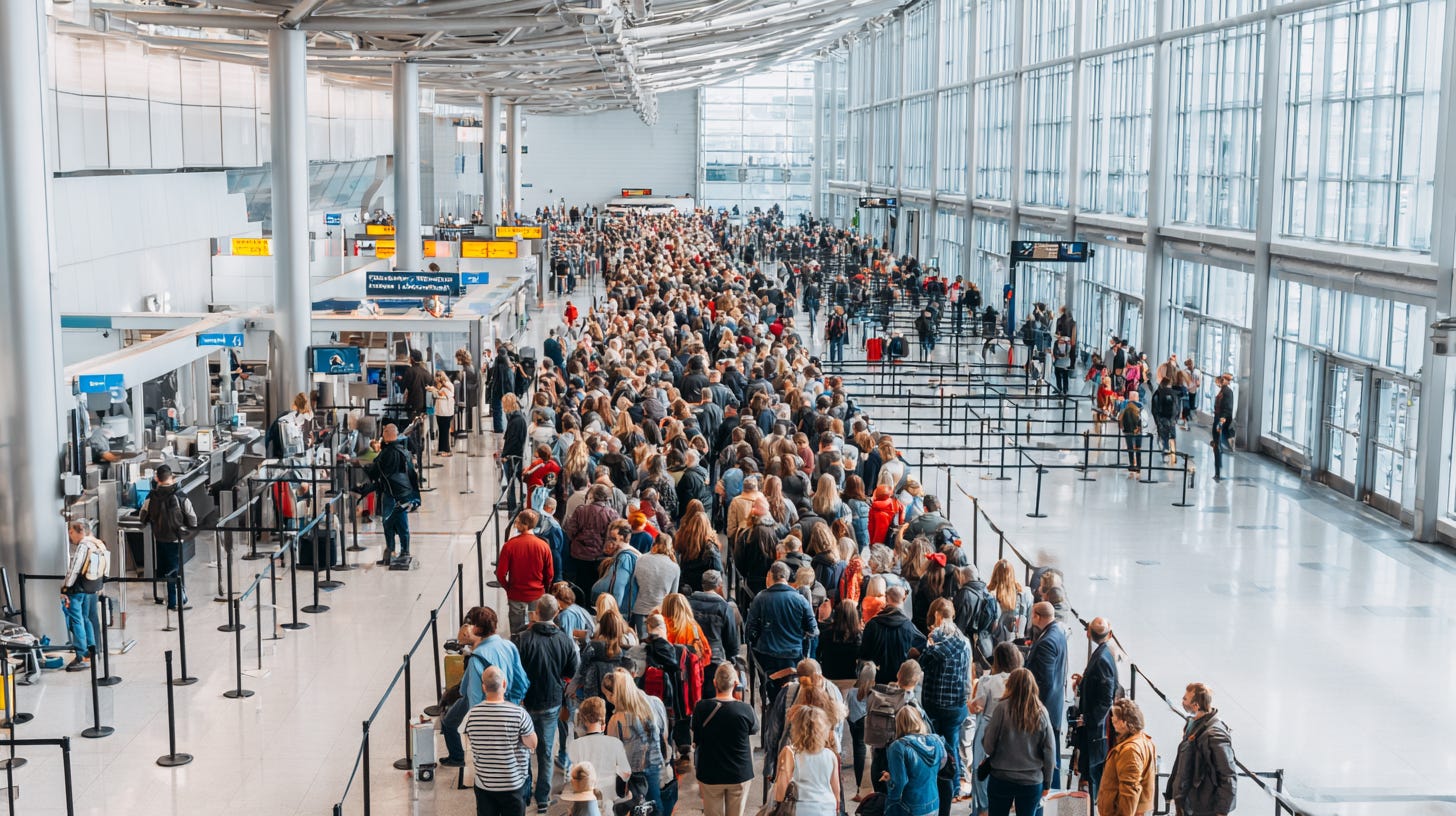
The TSA situation is likely to cause long lines at security checkpoints as agents invariably begin calling in sick or simply looking for work elsewhere. And if the showdown continues, funding could run out for the controllers, which could lead to extensive flight delays.
The latest work-for-nothing ordeal comes at a difficult time, as TSA agents are just recovering from a 43-day pay drought during last year’s government shutdown. They are not likely to be in a good mood.
Consumer protections trashed
Against this backdrop, the Trump White House has seen fit to eliminate a number of new airline customer protections that had been put in place or were being implemented by the Biden administration. Airlines said the rules would drive up costs and force an increase in ticket prices and Trump responded to their complaints.
Among the eliminated rules are:
Cash compensation mandates;
Mandatory meals/hotels for disruptions; and
Strong enforcement posture.
Still in effect are rules requiring automatic refunds (buy no other cash compensation) for cancellations and major delays.
Automatic refunds still in place
At least for now, airlines are still required to automatically issue cash refunds for canceled flights or significant delays (3+ hours domestic, 6+ hours international). The refunds apply also to delayed baggage, seat upgrades that were promised but not delivered and paid extras like wi-fi.
Airline-caused disruptions
Eliminated by the Trump team was a proposed rule that carriers pay for airline-caused disruptions. This was regarded as the most significant enhancement. It:
Would have required airlines to pay:
~$200–$300 for shorter delays
Up to ~$775 for long delays or cancellations
Also would have required airlines to cover:
Meals
Hotel stays
Rebooking (even on competitors)
The Transportation Department also formally withdrew an airline passenger rights rulemaking initiated under Biden.
An airlines industry lobbying group issued a statement endorsing the reduced consumer protection:
“We are encouraged by this Department of Transportation reviewing unnecessary and burdensome regulations that exceed its authority and don’t solve issues important to our customers,” Airlines for America said.
Reduced enforcement
The Trump administration has also cut back on enforcing existing rules. It waived part of an $11 million Southwest Airlines fine tied to the 2022 meltdown and dropped litigation over chronically delayed flights.
Where to find help
Given the retreat from federal protections, here’s where consumers can still turn:
Airline customer service dashboards: The DOT’s airline consumer rights dashboard is still operational, and the monthly Air Travel Consumer Report still tracks delays, cancellations, complaints, and baggage handling — useful for knowing which airlines perform best before booking.
Travel credit cards: Many cards with travel benefits offer their own delay and cancellation protections, which can fill the gap left by federal rules. These are contract-based rights that don’t depend on regulation.
Trip insurance: Comprehensive travel insurance can cover delays, cancellations, and unexpected expenses for stranded passengers.
DOT complaints: Travelers can still file complaints with the DOT at airconsumer.dot.gov. Even with weaker enforcement, a paper trail matters, especially if the situation escalates.
Credit card chargebacks: If an airline refuses a legitimate refund, disputing the charge with your credit card company is a viable and often effective remedy.
The U.S. Department of Transportation website isn’t much help. We searched for “consumer rights for airline travelers” and found a post from 2022 that was more than a little out of date. Posts aren’t displayed by date so it’s hard to find anything current.
This isn’t exactly an esoteric topic. Data from DOT shows that refunds – or lack thereof – remains one of the top complaints against U.S. airlines for the last few years. Complaints against U.S. airlines hit a new record for 2024, according to DOT data released in April 2025, so you might expect the agency that regulates airlines to be a bit more forthcoming with its clients, otherwise known as taxpayers.
Makes you want to try a train.