


Arizona has taken the most aggressive step yet against the fast-growing world of prediction markets, filing criminal charges against trading platform Kalshi and accusing it of running an illegal gambling operation in the state.
The case, announced today by Arizona’s attorney general, marks the first time a state has pursued criminal prosecution—not just civil action—against a federally regulated prediction market. It sets the stage for a high-stakes legal battle that could determine whether Americans are “investing” in future events or simply placing bets.
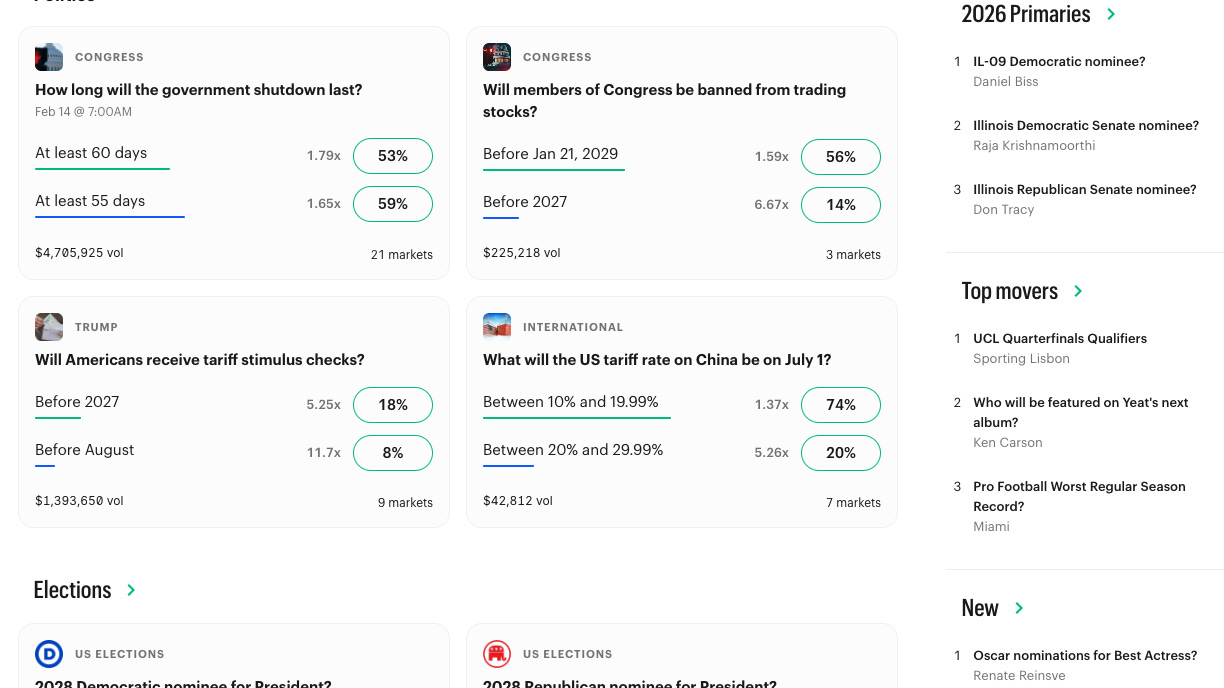
At the center of the dispute is Kalshi, a New York–based company that allows users to trade on the outcomes of real-world events. Customers can buy and sell contracts tied to questions such as whether a political candidate will win an election or whether a particular economic indicator will hit a target.
To its users, it can look like trading. To Arizona, it looks like gambling.
“Illegal gambling operation”
According to prosecutors, Kalshi accepted wagers from Arizona residents on a range of events, including sports contests and political races, without obtaining the licenses required under state law.
The charges—roughly 20 counts—allege the company operated an illegal gambling business and facilitated unlawful betting activity. Among the contracts cited are those tied to election outcomes, including future gubernatorial and presidential races.
Arizona officials argue that regardless of how Kalshi describes its platform, the mechanics are familiar: users stake money on uncertain outcomes and receive payouts based on results. Under state law, they say, that’s gambling—plain and simple.
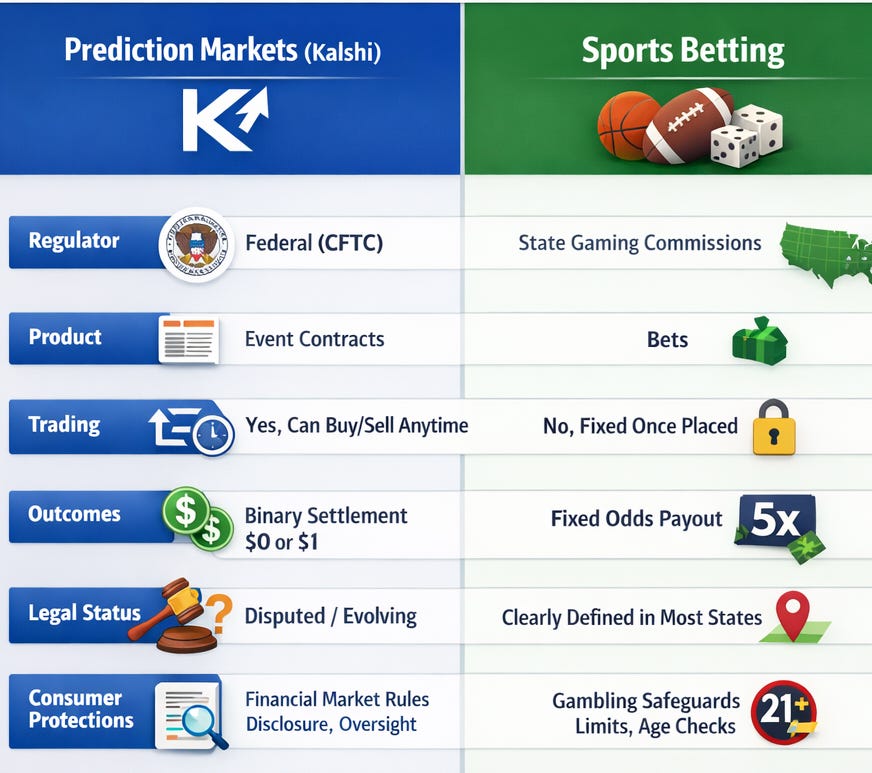
The distinction matters. Arizona tightly regulates sports betting and other forms of wagering, requiring operators to be licensed and to follow consumer protection rules, including safeguards against problem gambling and fraud.
Kalshi, the state contends, bypassed that system.
Kalshi’s defense: “We are a financial exchange”
Kalshi rejects that characterization entirely.
The company says it operates as a federally regulated exchange overseen by the Commodity Futures Trading Commission (CFTC), offering “event contracts” that function like financial derivatives rather than bets.
In a statement responding to the charges, Kalshi called the case “paper-thin” and argued that federal law preempts state gambling restrictions.
“Our market is regulated at the federal level,” the company has said in previous filings. “States do not have jurisdiction to redefine these contracts as gambling.”
The company’s core argument is that prediction markets serve legitimate economic purposes, helping businesses and investors hedge risks tied to real-world events—from elections to inflation.
That argument has found some support in Washington, where the CFTC has allowed certain event contracts to trade, though not without controversy.
A growing national showdown
Arizona’s case is not happening in isolation. It is part of a widening conflict between states and prediction market platforms over who gets to regulate this emerging industry.
Several states, including Nevada and Massachusetts, have already moved to block or challenge Kalshi’s operations. Until now, however, those disputes have largely played out through civil enforcement and regulatory actions.
Arizona’s decision to bring criminal charges raises the stakes dramatically.
Legal experts say the case could trigger a wave of similar actions—or force a definitive ruling from federal courts on whether prediction markets fall under federal commodities law or state gambling statutes.
“This is the collision everyone saw coming,” said one regulatory analyst. “You’ve got a product that looks like betting but is being framed as finance, and two different legal systems claiming authority.”
Investing—or betting?
For consumers, the distinction may feel academic.
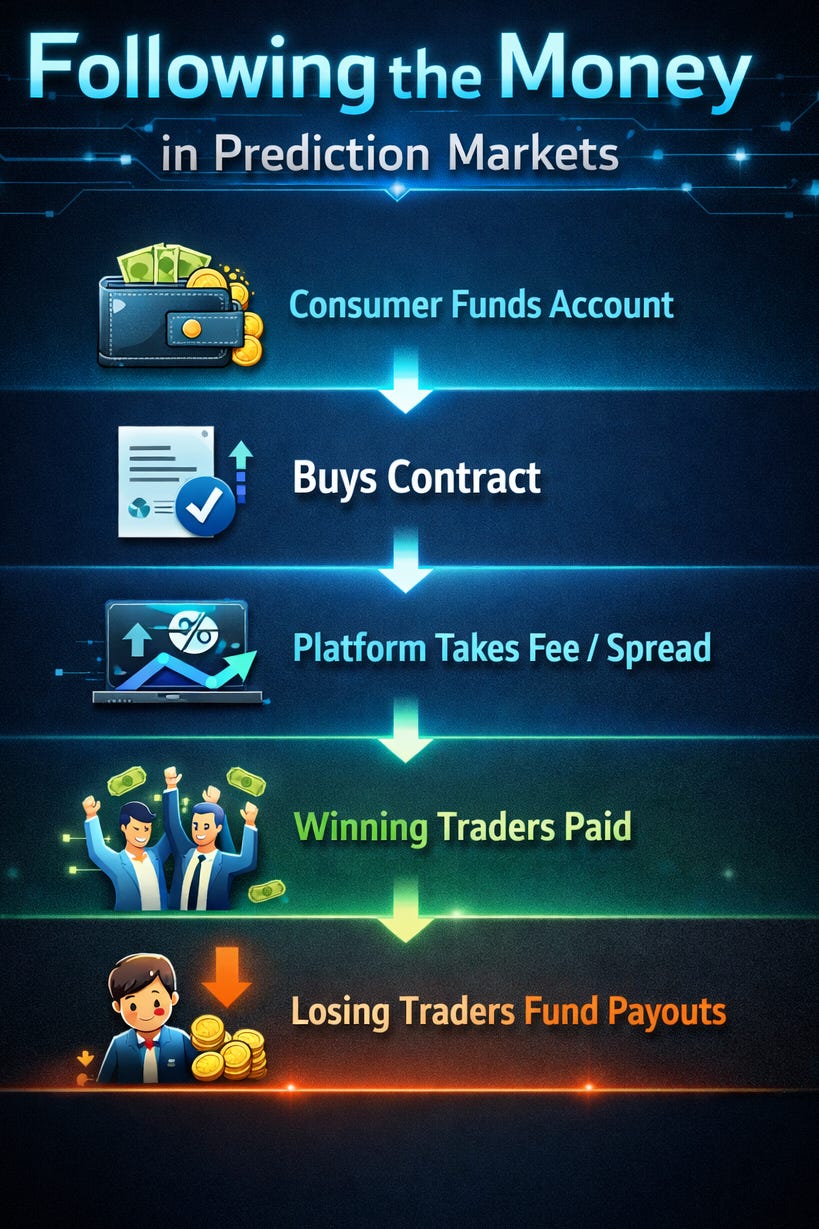
A user logging onto Kalshi might purchase a contract predicting that a candidate will win an election or that a sports team will prevail. If the event occurs, the contract pays out; if not, it expires worthless.
That payoff structure closely mirrors traditional betting.
But the platform’s design—order books, bid-ask spreads, and tradable positions—resembles financial markets, where participants can buy and sell contracts before outcomes are known.
Supporters say this structure makes prediction markets valuable tools for price discovery, aggregating collective knowledge about future events.
Critics say it’s a thin veneer over gambling.
“Call it what you want,” one state regulator said in a recent enforcement action elsewhere. “If people are risking money on uncertain outcomes, it’s gambling.”
Consumer risks in a gray zone
The legal ambiguity has real consequences for consumers.
Traditional sportsbooks are subject to state-level oversight, including rules on advertising, responsible gaming, and dispute resolution. Prediction markets, operating under federal oversight, may not offer the same protections in every case.
That raises questions about:
Transparency: Are odds and risks clearly disclosed?
Recourse: What happens if a dispute arises?
Addiction safeguards: Are there limits or interventions for heavy users?
At the same time, federal regulation brings its own safeguards, including market surveillance and anti-manipulation rules.
The result is a patchwork system where consumers may not fully understand which protections apply.
What comes next
Kalshi is expected to fight the charges, setting up a legal battle that could stretch for months or years.
If the company prevails, it could solidify the legal standing of prediction markets nationwide, opening the door to broader adoption.
If Arizona succeeds, it could embolden other states to crack down—and potentially shut down access to such platforms in large parts of the country.
Ultimately, the dispute may require resolution at the federal level, possibly even the U.S. Supreme Court, to determine where the line between gambling and financial markets truly lies.
For now, consumers are left navigating a fast-evolving landscape where the rules are still being written—and where the difference between investing and betting may depend less on what you’re doing than on who’s watching.
Gambling or Investing? How to Tell
The Kalshi case highlights a fundamental question: when does a “trade” become a bet?
Here’s a quick guide:
Signs it looks like gambling
You’re betting on sports outcomes or election results
The payoff is all-or-nothing
The outcome depends on chance or uncertain events
You can’t influence the result
If it feels like placing a wager, regulators may treat it that way.
Signs it looks like investing
Contracts are tradable before they settle
Prices move based on market supply and demand
The platform operates like an exchange (order books, bids, asks)
It’s overseen by a federal financial regulator
This is how prediction markets justify their existence.
Why it matters for consumers
Protections differ: Gambling sites vs. financial exchanges follow different rules
Taxes may differ: Winnings vs. capital gains treatment
Risk awareness: Fast-moving markets can lead to quick losses
Bottom line
If you’re putting money on an uncertain outcome, assume real risk—no matter what it’s called.