


Chatbots can squish a child’s natural curiosity and pull-string toys can strange or choke them, U.S. PIRG is warning in its annual Trouble in Toyland report. Among the top hazards, new and returning, are chatbots, string and squishy toys and counterfeit toys, which may sidestep safety standards.
“The toy market is evolving rapidly, in frightening ways. Four out of five of these problems didn’t represent a significant threat 10 years ago,” said Teresa Murray, Consumer Watchdog Director for U.S. PIRG Education Fund and co-author of the report. “We may think we know what to watch out for when we’re toy shopping. But some things that could hurt our children are things we don’t even know are out there.”
One of the five threats is AI toys, which PIRG researched for the second year in a row.
“Just a few years ago, AI toys didn’t even exist. Now, once again, our testing has uncovered poorly designed chatbot toys with glitchy guardrails that deteriorate the longer you talk to them,” said R.J. Cross, Our Online Life campaign director for U.S. PIRG Education Fund and co-author of the report. “Underneath these toys are chatbots meant for adults. There are positive use cases for AI, but talking companion toys for young children are not among them.”
The primary categories this year are:
Squishy or squeezy fidget toys, which often contain water beads that can expand in kids’ bodies if swallowed. Earlier this year, the government started regulating how much water beads can expand. The popularity of squishies has led to numerous counterfeits and knockoffs that may violate those rules and can also contain toxic chemicals. Regulators and industry experts also warn of a troubling social media challenge that encourages kids to heat squishy toys. That has led to children suffering burns when the squishy bursts.
Pull-string activity toys/teething toys for toddlers and infants. In the last year, nearly a half-million of these toys have been recalled or targeted with government warnings because of hazards. Regulators have tallied dozens of related choking incidents or injuries in the last year.
Toys powered by AI chatbots that have conversations with children. PIRG tested seven of these toys and again found some that our researchers got to discuss sexual topics and how to find potentially dangerous objects in the home.
Toys purchased online from unfamiliar sellers, especially newer international vendors. These toys frequently do not meet U.S. safety standards.
Recalled and counterfeit toys, which are illegal to sell but widely available.
Other key findings:
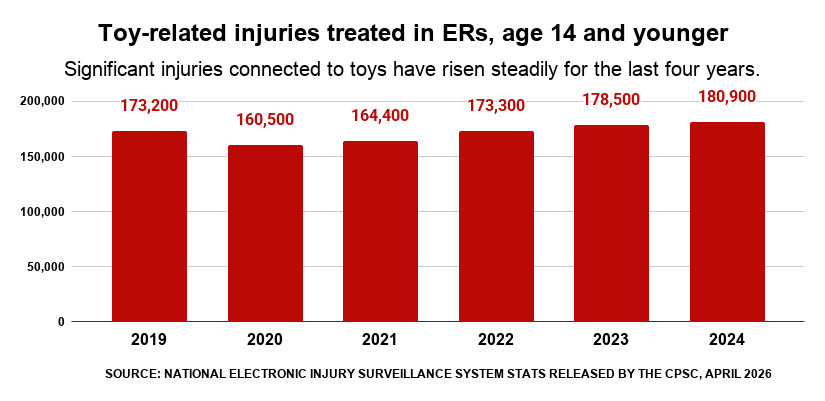
The number of toy-related injuries treated in emergency rooms has increased every year since 2020; half among children age 4 or younger.
From January through July 2026, the Consumer Product Safety Commission issued more than 900 notices of violations for shipments of toys. Each shipment often contains hundreds or thousands of the same item. More than one-fourth were not seized at the border.
“After four decades of ‘Trouble in Toyland’ reports, many dangerous toys aren’t on the market anymore. But we’ll never fully thwart unscrupulous vendors who put making a buck over the safety of their customers,” said Faye Park, president of U.S. PIRG Education Fund. “Parents, government agencies and consumer advocates such as us need to remain vigilant as each new generation of products appears. The holiday season should be a time for rejoicing, not a time for dealing with creepy robots or emergency room visits.”