


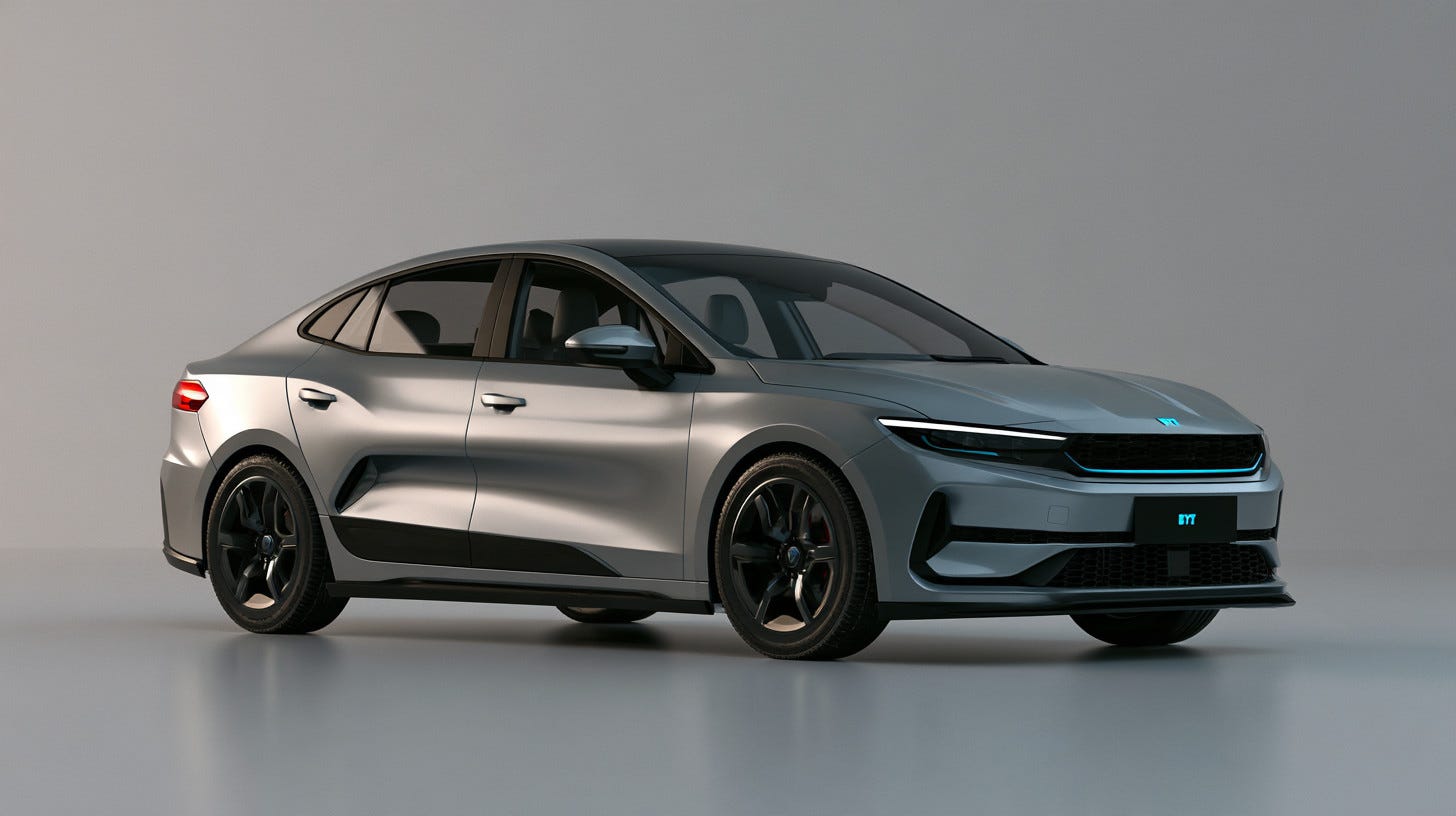
Chinese automakers are turning the car market upside down in much of the world, including Europe, South America, Mexico and Canada. But not in the United States, where U.S. consumers are now paying about $50,000 and up for a new car — and automakers would like to keep it that way.
“We need to protect the U.S. market from a flood of Chinese imports that carry surveillance risk and disadvantage current manufacturers that have made generational investments in American communities,” said John Bozzella, who heads the Alliance for Automotive Innovation, which represents General Motors, Toyota, Volkswagen and other major automakers.
American unions are also strongly endorsing the ban. The United Auto Workers (UAW), Teamsters, United Steelworkers (USW), and International Association of Machinists and Aerospace Workers (IAM) have all endorsed the measure.
"We oppose the importation of vehicles made by exploited workers making substandard wages and benefits," the UAW said in Congressional testimony.
They’re hoping Congress will quickly pass a permanent ban on Chinese cars next week, when they return for a brief session after the midterm elections, which saw Democrats seize control of both the House and Senate.
Democrats likely to respond?
The automakers think that Democrats are more likely to respond to consumer groups’ pleas that Americans need access to more affordable cars, although Dems may be more likely to be swayed by the autoworkers. Republicans have generally responded to automakers’ claims that they are a pillar of American manufacturing.
Former Senator Sherrod Brown (D–Ohio), who was elected to a new term Tuesday, has called Chinese EVs “an existential threat” to the U.S. automotive industry and says that allowing imports of cheap EVs from Chinese brands “is inconsistent with a pro-worker industrial policy.”
They also claim that Chinese cars would represent a security risk. In a Claims Journal report, Bozzella cited major Chinese gains in the European market.
“Given the obvious national security risk and China’s pattern of unfair behavior, Congress should protect our defense and advanced manufacturing base and stop Chinese automakers from doing here what they’ve gotten away with in Europe,” Bozzella said.
Bozzella said in the first eight months of 2026, the EU imported more than 1.1 million vehicles from China — more than all of 2025.
What’s fair competition?
President Trump told Fox News in September that he would accept Chinese car companies building cars in the U.S., alarming automakers.
Trump said he would “love that” if Chinese carmakers set up plants in the U.S. “These cars of the very near future are inexpensive, safe, fuel efficient and, quite simply, AMAZING!!! START BUILDING THEM NOW!”
It was actually the Biden administration that began the ban of Chinese cars. The ban was supposedly based on the fear that Chinese cars could send sensitive driver data to China. Besides that ban, Washington also maintains more than 100% tariffs on Chinese electric vehicles.
Chinese experts Tuesday slammed the push for a permanent ban on Chinese vehicles as "protectionism wrapped in the guise of national security." They said that if the U.S. keeps shutting itself off, it could ultimately fall behind in the global wave of vehicle intelligence electric cars, to the detriment of consumers, according to a Global Times report.
"The Alliance's push is essentially about blocking low-priced, high-value competitors from entering the market — economic protectionism, not a national security concern," He Weiwen, a senior fellow at the Center for China and Globalization, told the Global Times on Tuesday.
Further, he said, the claim that Chinese vehicles pose a "surveillance risk" has never been backed by any publicly available evidence.
What to do
What’s a consumer to do?
The best advice may be to wait — to hold onto your present car for a few years while the international politics work themselves out. One way or another, it’s almost inevitable that the cheaper and supposedly better Chinese cars will work their way into the U.S., or the domestic industry will respond with a new generation of stylish, efficient electric cars.