



A fast-growing trend meets unanswered health questions
Cannabis use is rising across the United States, but one group stands out: older adults.
Americans over 60 are now the fastest-growing segment of cannabis users, increasingly turning to marijuana products for pain relief, sleep problems, anxiety and other chronic conditions as legalization spreads.
But while use is expanding, the science around cannabis and brain health is still catching up — leaving consumers navigating a mix of potential benefits and risks with limited long-term data.
What the research shows about memory and cognition
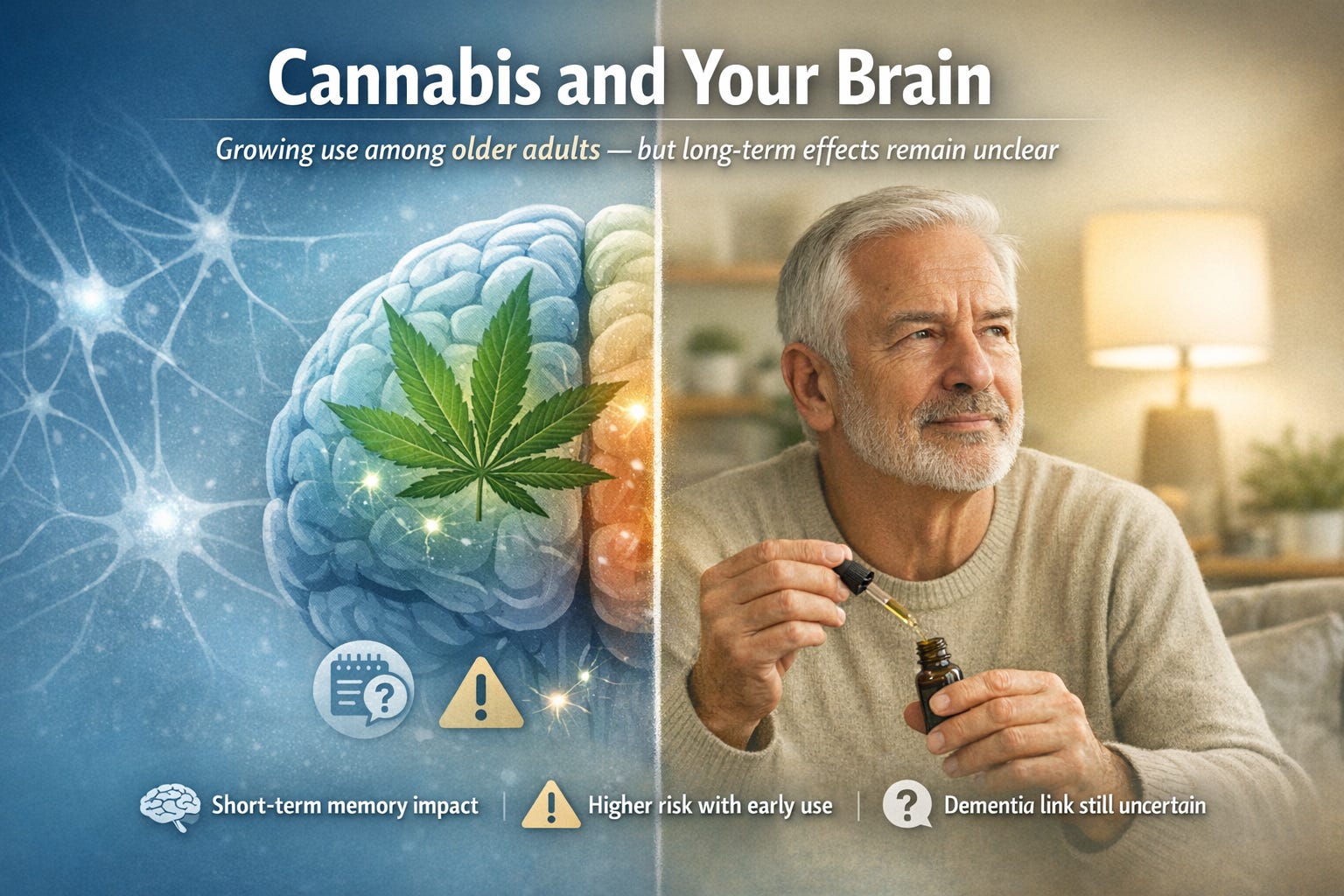
A growing body of research suggests cannabis can affect how the brain processes and retains information — particularly in the short term.
Studies have found that cannabis use can impair short-term memory, attention and working memory, with effects most pronounced during active use or shortly after.
Brain imaging research has also shown that long-term or heavy users may exhibit reduced brain activity during memory-related tasks, raising concerns about cumulative effects over time.
Early use linked to greater long-term risks
The strongest warnings from researchers center on early exposure.
People who begin using cannabis during adolescence — when the brain is still developing — appear more likely to experience:
Lasting cognitive deficits;
Increased impulsivity;
Higher risk of mental health disorders, including psychosis; and
Greater likelihood of developing cannabis use disorder.
These findings have made youth use a focal point for public health experts, even as adult use becomes more normalized.
What about older adults?
For those who start using cannabis later in life, the picture is less clear — and in some cases, more nuanced.
Some early studies suggest cannabis could have potential neuroprotective effects, with limited evidence pointing to greater brain volume in certain regions among older users.
But experts caution that these findings are preliminary and far from conclusive.
At the same time, older adults may face unique risks, including interactions with medications, increased sensitivity to psychoactive effects and a higher likelihood of falls or confusion.
Dementia link still uncertain
One of the biggest open questions is whether cannabis use affects the risk of dementia.
So far, research has not established a strong or consistent link between cannabis use and conditions like Alzheimer’s disease.
However, scientists emphasize that long-term studies — particularly those tracking older users over decades — are still limited, making it difficult to draw firm conclusions.
What this means for consumers
For now, cannabis sits in a gray area: widely used, often helpful for symptom relief — but not fully understood.
Health experts generally advise:
Moderation, especially with higher-potency products
Avoiding use during adolescence and young adulthood
Consulting a doctor, particularly for older adults or those with existing health conditions
Being cautious about combining cannabis with other medications
The bottom line
Cannabis is becoming a mainstream health and wellness tool for many Americans, especially older adults.
But the science on how it affects the brain — particularly over the long term — is still evolving.
Until clearer answers emerge, experts say consumers should approach cannabis use with the same caution they would apply to any substance that affects the brain: informed, measured and mindful of both benefits and risks.