

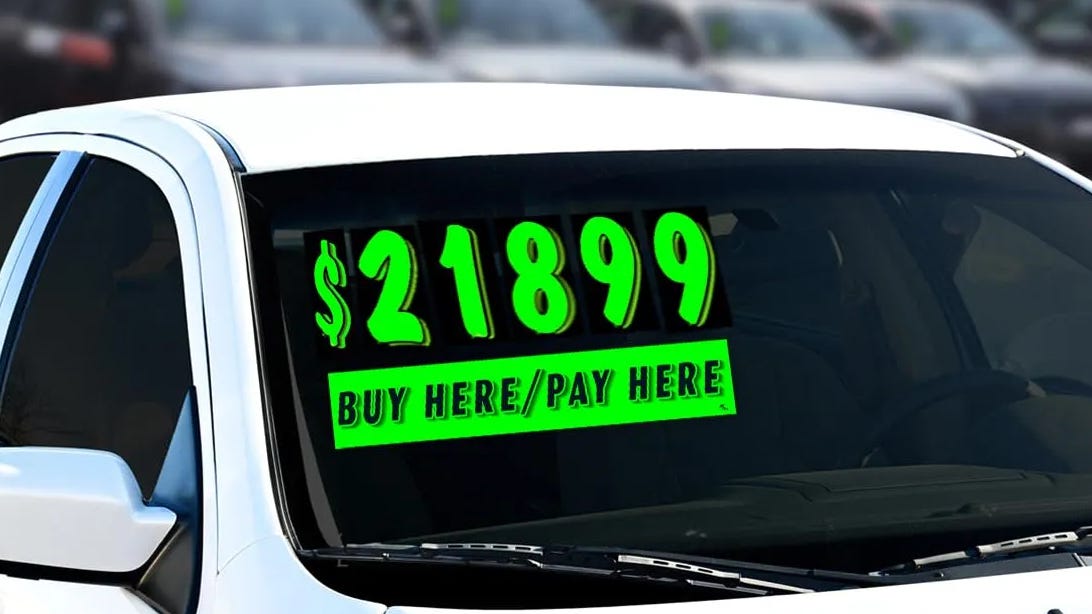
The Federal Trade Commission (FTC) is warning nearly 100 auto dealer groups across the United States that the prices they advertise must reflect the true total price consumers will actually pay, including all mandatory fees.
In letters sent to 97 dealership groups nationwide, the agency urged businesses to review their advertising and pricing practices to ensure they comply with federal consumer protection laws. At a minimum, the FTC said, advertised vehicle prices must match the real price charged to buyers at the dealership—without surprise add-ons at the end of the purchase process.
“The Trump-Vance FTC is committed to preventing auto dealers from misleading consumers with low advertised prices and then adding on mandatory fees at the end of the purchasing process,” said Christopher Mufarrige, director of the FTC’s Bureau of Consumer Protection. “The FTC will remain focused on monitoring auto dealerships to ensure that the market functions efficiently and competitors are transparently competing on price.”
Targeting “bait-and-switch” pricing tactics
The warning letters highlight several practices the agency says may violate the Federal Trade Commission Act, which prohibits deceptive or unfair business practices.
Among the tactics the FTC says it is watching closely:
Advertising vehicle prices that exclude mandatory fees
Listing prices that depend on rebates or discounts not available to all buyers
Advertising prices that do not account for required down payments
Conditioning advertised prices on consumers using dealer financing
Requiring add-on products that weren’t included in the advertised price
Promoting vehicles that aren’t actually available
Consumer advocates say these strategies can make comparison shopping nearly impossible.
“It’s very difficult for buyers to know the real price of a vehicle when dealerships advertise one price online and then present a completely different number in the showroom,” said Teresa Murray, consumer watchdog director at U.S. PIRG Education Fund, who has frequently criticized opaque pricing in the auto market.
Enforcement actions already underway
The FTC’s warning comes as the agency continues pursuing several enforcement cases against major dealership groups over alleged deceptive pricing.
Recent FTC actions have targeted companies including:
Lindsay Chevrolet
Leader Automotive Group
Asbury Automotive Group
In those cases, the FTC alleges dealerships advertised low prices but then added thousands of dollars in unexpected fees or forced add-ons once consumers arrived to purchase a vehicle.
One common practice cited in enforcement actions is the addition of “junk fees”—charges for products such as paint protection packages, nitrogen-filled tires, or service plans that buyers may not want but feel pressured to accept.
A broader crackdown on hidden fees
The auto-dealer warning is part of a wider FTC effort to combat hidden or misleading fees across multiple industries.
In recent years the agency has examined similar pricing tactics in:
apartment rentals
hotel and resort fees
event ticketing
grocery delivery services
subscription services
The FTC argues that undisclosed charges distort competition because companies advertising artificially low prices appear cheaper than rivals that disclose full prices upfront.
Consumer groups say the problem has become more visible as car prices and financing costs have surged since the pandemic.
According to data from Cox Automotive, the average new-vehicle transaction price in the United States remains above $48,000, while high interest rates have pushed average monthly payments for new vehicles close to $750. In such an environment, even small hidden charges can significantly increase the cost of buying a car.
Dealers already under scrutiny
The FTC has repeatedly warned the auto industry about deceptive pricing in recent years. In 2023 and 2024 the agency proposed a sweeping “Motor Vehicle Dealers Trade Regulation Rule”, designed to limit junk fees and require clearer disclosures during car purchases.
That rule faced heavy opposition from dealership trade groups such as the National Automobile Dealers Association (NADA), which argued that most dealers already comply with consumer protection laws and that additional federal regulation could increase costs.
While legal and regulatory debates over that proposal continue, the FTC’s latest warning letters signal the agency is still willing to use its existing authority to pursue deceptive advertising cases.
Advice for car shoppers
Consumer advocates say buyers should take extra steps to verify the final cost of a vehicle before signing a contract.
Key tips include:
Request a complete “out-the-door” price in writing before visiting a dealership
Carefully review line-item charges on purchase agreements
Question fees labeled as “documentation,” “dealer prep,” or “mandatory add-ons”
Walk away if a dealership refuses to honor its advertised price
The FTC says it will continue monitoring dealership advertising nationwide and may take enforcement action if it finds dealers engaging in deceptive pricing.
For consumers navigating an already expensive car market, regulators say the goal is simple: the price you see advertised should be the price you actually pay.