


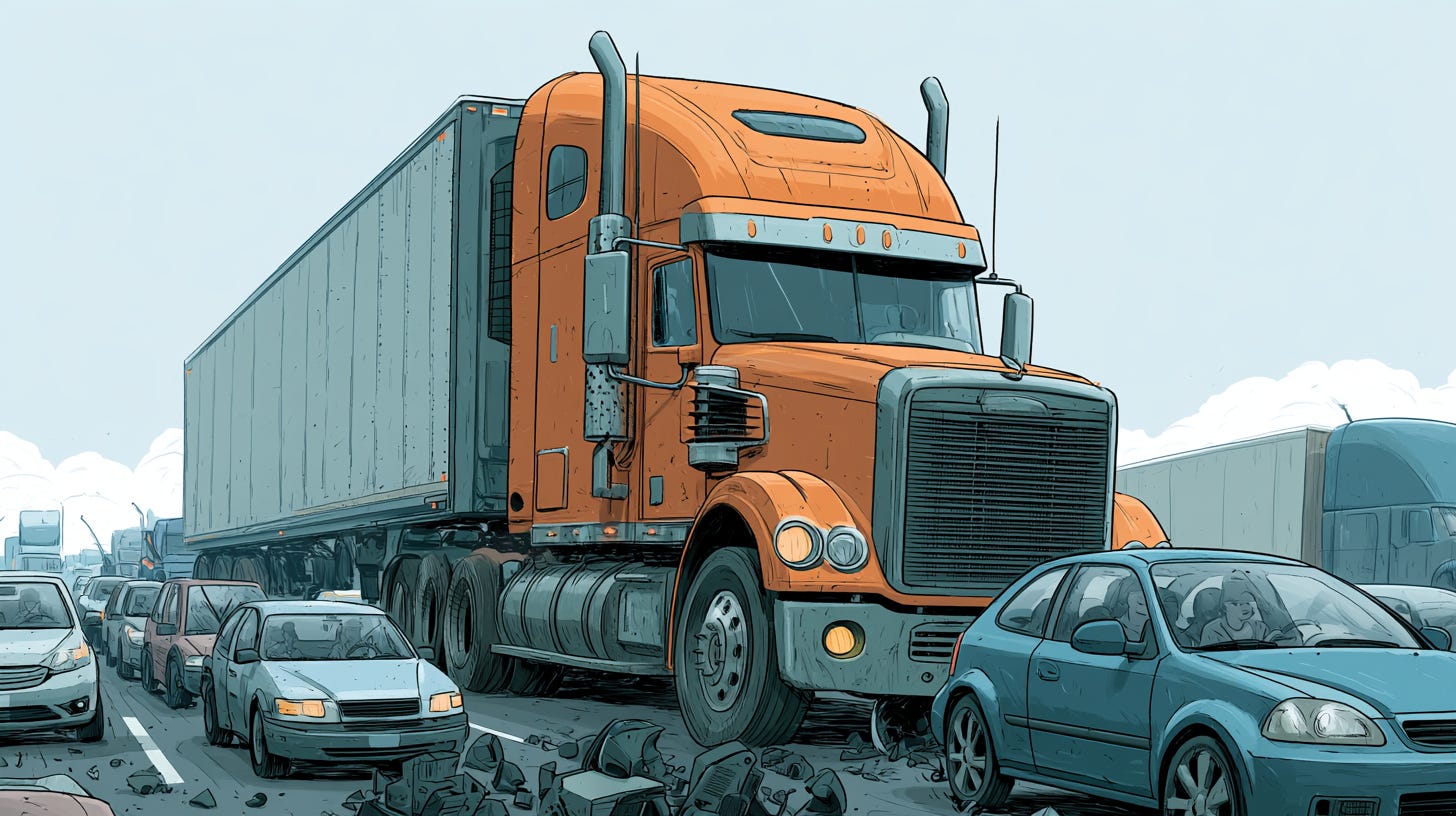
Safety concerns mount as larger trucks require longer stopping distances and may worsen crash severity
A coalition led by the Taxpayers Protection Alliance and the National Consumers League is warning Congress that allowing heavier trucks on U.S. highways could saddle consumers with billions in new costs while increasing safety risks.
In a letter to congressional leaders, the groups urged lawmakers to maintain the current federal limit of 80,000 pounds for truck gross vehicle weight, calling it a “prudent, evidence-based safeguard” for both infrastructure and public safety.
Heavier trucks, faster road damage
The coalition argues that even modest increases in truck weight could significantly accelerate wear and tear on highways and bridges — infrastructure already strained by age and underfunding.
Research cited in the letter shows a fully loaded 80,000-pound truck can cause as much road damage as thousands of passenger vehicles. Raising weight limits, the groups said, would shorten pavement lifespan and drive up maintenance costs.
Those costs would ultimately fall on taxpayers.
“Raising the cap would accelerate pavement deterioration [and] shift billions of dollars in additional repair and reconstruction costs onto consumers and taxpayers,” the letter states.
With governments already spending hundreds of billions annually on transportation infrastructure, the coalition warned that heavier trucks could compound funding shortfalls at the federal, state, and local levels.
Safety concerns: longer stops, deadlier crashes
Beyond infrastructure, advocates say heavier and longer trucks pose increased safety risks.
Larger vehicles require longer stopping distances, are more difficult to maneuver, and can increase the severity of crashes — particularly for passenger vehicle occupants and first responders.
Groups including AAA, the Consumer Federation of America, and Public Citizen joined the letter, highlighting concerns about a “growing traffic safety crisis” that already costs the U.S. economy hundreds of billions of dollars annually.
Industry pressure vs. public cost
Proposals to increase truck weight limits have surfaced periodically, often backed by segments of the trucking industry seeking greater efficiency — fewer trips carrying larger loads.
But critics argue those efficiency gains are outweighed by hidden public costs, including infrastructure damage, higher insurance losses, and increased crash risks.
The coalition’s message to Congress is blunt: avoid shifting private-sector benefits onto the public ledger.
What this means for consumers
Higher taxes or fees: Road repairs tied to heavier trucks could mean higher fuel taxes, tolls, or local taxes
Insurance impacts: More severe crashes can push up auto insurance premiums
Road conditions: Faster deterioration may lead to more potholes, construction delays, and congestion
Bottom line
At a time of strained infrastructure budgets and rising roadway fatalities, consumer and safety groups are urging lawmakers to keep truck weight limits where they are — warning that bigger rigs could mean bigger bills for everyone else.