


A federal court ruled that the FDA’s restrictions on mifepristone, a key abortion medication, were medically unnecessary and violated federal law.
The decision doesn’t immediately change access to the drug but affirms that the agency must weigh scientific evidence over politics.
The ruling comes as the Trump administration reviews mifepristone rules using research widely criticized as flawed.
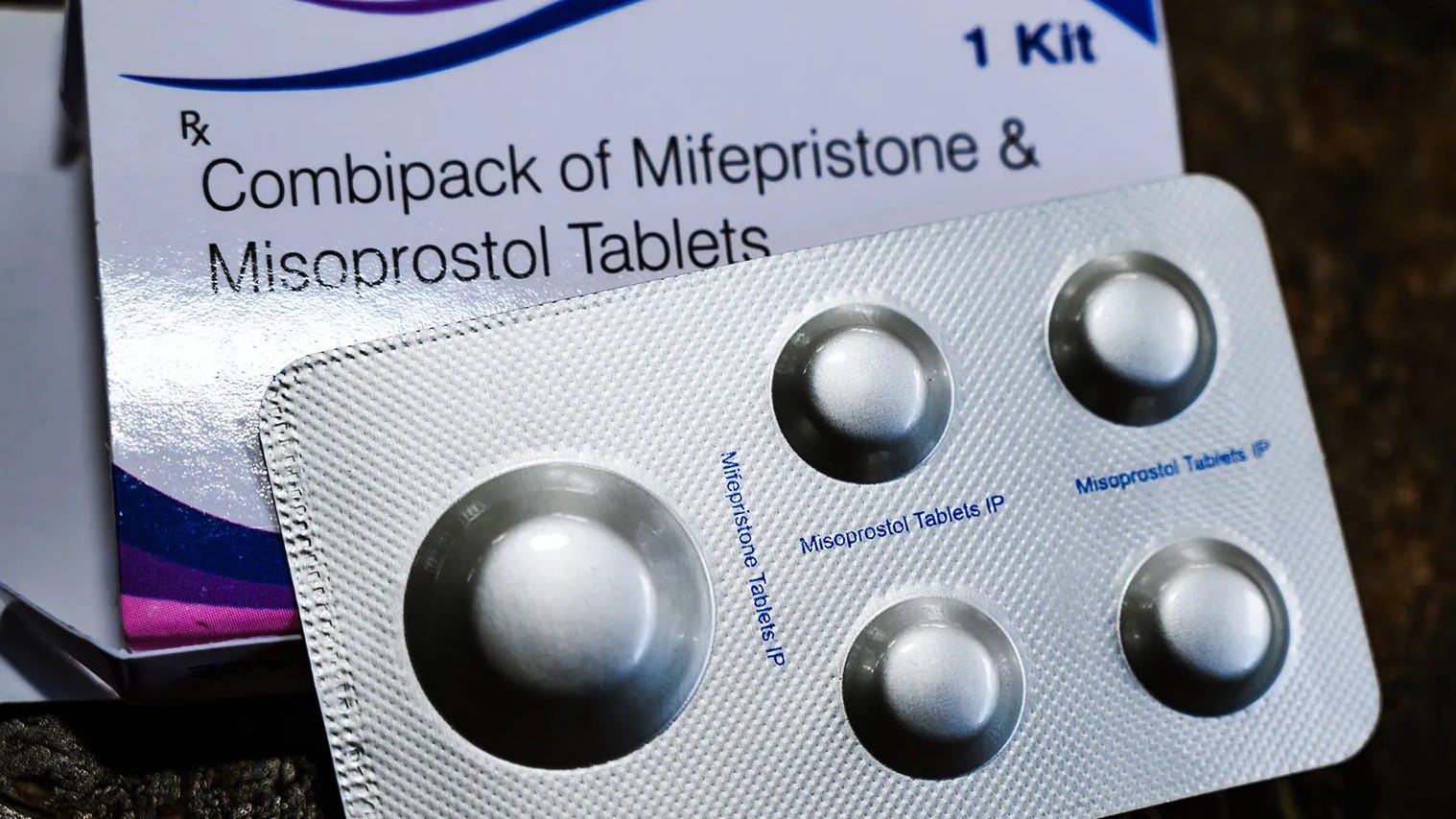
A federal district court ruled Friday that the Food and Drug Administration’s restrictions on the abortion medication mifepristone were not supported by medical evidence and therefore violated federal law.
While the ruling doesn’t immediately alter patient access, it affirms that the agency must base its policies on scientific data rather than political pressure. The court found that the FDA had failed to justify the extra hurdles it places on mifepristone — regulations that make it harder for patients and providers to access the drug, despite decades of research showing it is safe and effective.
Trump administration review under fire
The decision comes as the Trump administration has launched a new review of mifepristone regulations. Health Secretary Kennedy said the review was prompted by a short, non-peer-reviewed paper promoted by Project 2025, a conservative policy group.
The study — denounced by more than 260 medical researchers — has been criticized for distorted methodology and lack of transparency. Despite that, Kennedy cited it in a September letter to anti-abortion state attorneys general as raising “concerns about the safety of mifepristone as currently administered.”
Medical experts call ruling a victory for science
Reproductive rights and medical organizations praised the ruling, calling it a reaffirmation of evidence-based policymaking.
“Today’s decision is a victory for everyone who believes that access to safe and essential medicines should be dictated by science, not politics,” said Julia Kaye, senior staff attorney with the ACLU’s Reproductive Freedom Project.
Physicians also warned that the Trump administration’s approach could worsen access for patients, especially in rural areas. “In the Hawaiian islands, where patients may live a flight away from the nearest provider, losing a telemedicine option for mifepristone would be devastating,” said Dr. Heidi Purcell, a plaintiff in the case.
Years-long challenge to FDA restrictions
The lawsuit, Purcell v. Kennedy — originally filed by the ACLU in 2017 on behalf of medical groups and providers — has sought to remove what plaintiffs call “medically unjustified” barriers to medication abortion.
While the FDA has loosened some requirements in recent years, such as lifting its in-person dispensing rule in 2021, it continues to single out mifepristone for extra regulation. Medical authorities say the drug remains more heavily restricted than nearly all other prescription medications, despite a strong safety record.
If the Trump administration tightens those rules further, advocates warn, abortion access could be sharply reduced nationwide.
What mifepristone is
Mifepristone (brand name: Mifeprex) is a prescription medication used to end an early pregnancy (up to 10 weeks gestation when used with misoprostol).
It works by blocking progesterone, a hormone necessary to maintain pregnancy.
It was approved by the FDA in 2000 after extensive studies showed it was safe and effective.
Mifepristone is also used in some cases for miscarriage management, Cushing’s syndrome, and uterine fibroids.
How it’s used
The standard medication abortion regimen involves two drugs:
Mifepristone (taken first) to stop the pregnancy from progressing.
Misoprostol (taken 24–48 hours later) to cause the uterus to empty.
The combination is approved by the FDA and endorsed by major medical organizations, including the American College of Obstetricians and Gynecologists (ACOG) and the World Health Organization.