


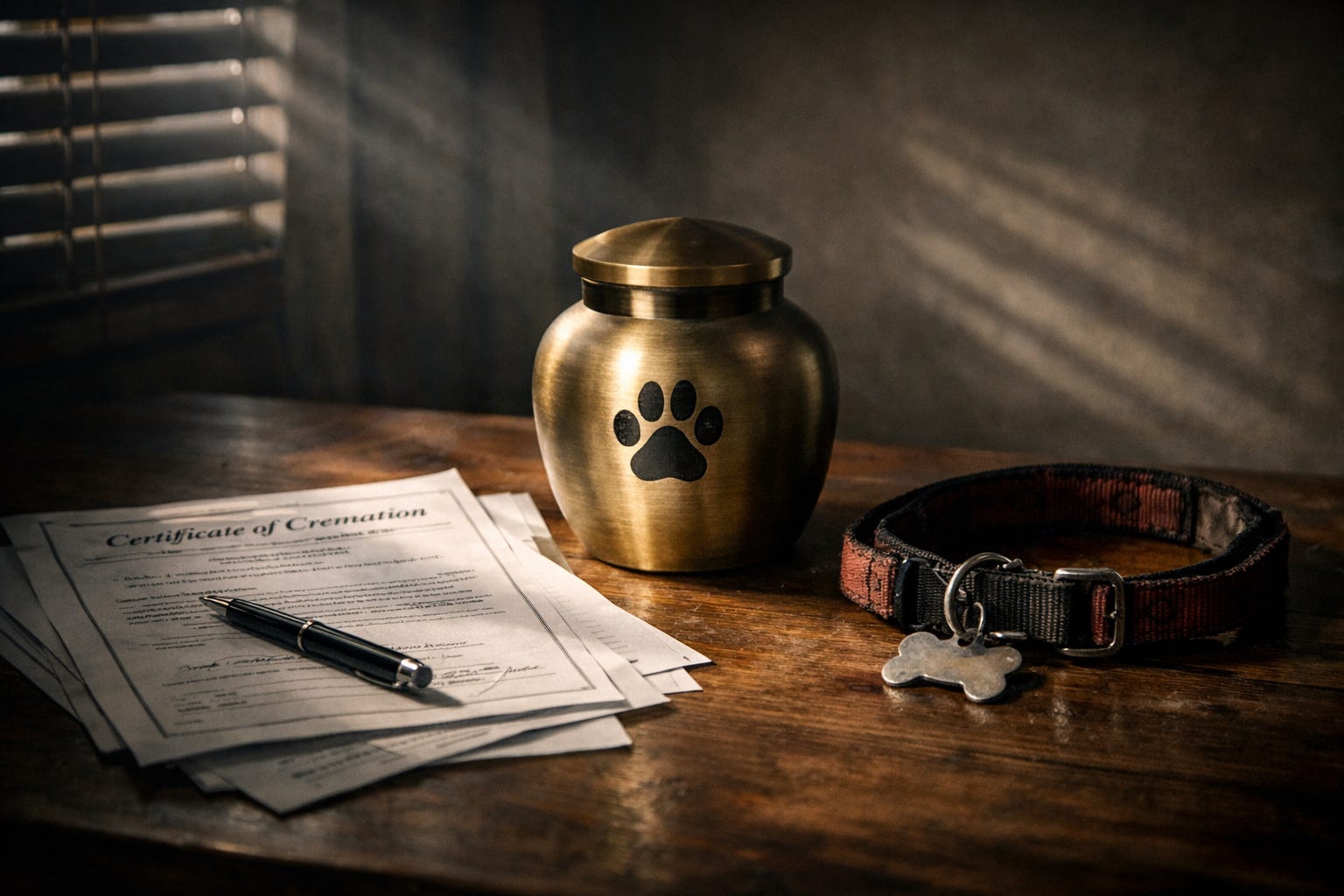
When grieving pet owners paid to have their beloved companions cremated, they believed they would receive their animals’ ashes as a final keepsake. Prosecutors in Pennsylvania now say thousands of those families were deceived.
A sweeping criminal case filed by the office of Attorney General Michelle Henry alleges that a western Pennsylvania funeral director charged families for pet cremation services but instead dumped many of the animals in a landfill while returning ashes that likely did not belong to their pets.
The case centers on Eternity Pet Memorial, a business operated by Patrick Vereb, who also ran Vereb Funeral Home in the Pittsburgh region.
Authorities say the alleged scheme may have affected more than 6,500 pet owners, making it one of the largest pet cremation fraud cases ever uncovered in the United States.
Allegations of a widespread deception
According to prosecutors, families paid hundreds of dollars for individual cremations, believing they would receive their pet’s ashes and a measure of closure after a loss.
Instead, investigators allege many animals entrusted to the company were discarded in a landfill, while pet owners received containers of ashes from unknown sources.
The alleged deception took place between 2021 and 2024, prosecutors say.
Families across several counties in western Pennsylvania — including Allegheny, Armstrong and Westmoreland — were affected. Many learned of the allegations only when investigators began contacting customers while building the case.
The criminal charges filed against Vereb include:
Theft by deception
Receiving stolen property
Deceptive business practices
Authorities estimate customers paid hundreds of thousands of dollars for cremation services that were never performed.
“This case involves a profound betrayal of trust,” prosecutors said when announcing the charges. “Families relied on this business during moments of grief.”
Emotional toll for families
For many pet owners, the revelation has been devastating.
Pets often occupy the same emotional space as family members. For those who paid for cremation services, receiving their pet’s ashes can be an important part of grieving.
Learning that the remains may not belong to their animal — or that the body was discarded — has left many families feeling deceived and heartbroken.
Several pet owners have filed civil lawsuits seeking damages for emotional distress and fraud. Attorneys representing affected families say the emotional impact is significant.
“For people who love their animals, this isn’t just a financial loss,” one attorney involved in litigation said. “It’s a violation of trust at one of the most vulnerable moments in their lives.”
Court proceedings in the criminal case are expected to continue into 2026 due to the large number of alleged victims and the volume of evidence.
A lightly regulated industry
The case has also drawn attention to the pet cremation industry, which consumer advocates say is often loosely regulated compared with the human funeral industry.
Many veterinary clinics do not operate crematories themselves. Instead, they contract with third-party companies that collect animals and perform cremations.
In many states:
Pet crematories are not licensed the same way funeral homes are
Record-keeping rules can be minimal
Oversight varies widely by state or even county
That system often relies heavily on trust.
Pet owners typically never see the cremation process and must rely on the provider’s word that their pet was handled properly.
Consumer advocates say that lack of oversight creates opportunities for misconduct.
Similar cases around the country
While the Pennsylvania case may be among the largest, it is far from the only controversy involving cremation services.
Over the past two decades, investigators have uncovered a series of scandals involving both pet and human cremation providers.
One of the most infamous cases occurred in Georgia in 2002 at Tri-State Crematory, where authorities discovered more than 300 human bodies that had never been cremated despite families being told the remains had been processed.
The discovery triggered criminal charges and hundreds of civil lawsuits.
More recently, authorities in several states have investigated smaller pet cremation fraud cases in which operators allegedly:
Dumped animals instead of cremating them
Returned ashes from other sources
Mixed remains from multiple animals despite promises of individual cremation
Consumer protection experts say such incidents highlight a systemic problem.
“The issue is that there’s often little verification in the process,” said one animal welfare advocate. “Families are trusting businesses during moments of grief.”
Calls for stronger oversight
The Pennsylvania case has prompted renewed calls for stronger regulations governing pet cremation businesses.
Some advocates say states should consider:
Licensing requirements for pet crematories
Chain-of-custody documentation for animal remains
Inspection and record-keeping standards similar to those used in human funeral services
Certification programs verifying individual cremations
Some companies already use systems such as identification tags or digital tracking to assure owners their pets’ remains are handled correctly.
But those safeguards are not universally required.
How to make sure your pet is actually cremated
When a beloved pet dies, many families choose cremation so they can keep their companion’s ashes. But consumer advocates say it’s important to ask questions before trusting a cremation service.
Here are several steps experts recommend.
Ask who performs the cremation
Many veterinary clinics do not operate their own crematories. Instead, they contract with third-party companies that pick up animal remains.
Pet owners should ask:
What cremation company is used?
Where is the crematory located?
Is the facility licensed or inspected?
Doing a quick online search of the crematory’s reputation can reveal complaints or past problems.
Request an individual cremation
Pet cremations typically fall into three categories:
Private cremation – One animal is cremated alone and the ashes returned to the owner.
Partitioned cremation – Multiple pets are cremated together but separated by partitions.
Communal cremation – Several animals are cremated together and ashes are not returned.
If receiving your pet’s ashes is important, ask for private cremation and request documentation confirming the service.
Ask about identification tracking
Reputable crematories often use a tracking system to ensure remains are not mixed up.
Common methods include:
Metal ID tags placed with the pet throughout the cremation process
Barcodes or digital tracking systems
Cremation certificates that list the date and ID number
These systems help maintain a clear chain of custody.
Ask if you can witness the cremation
Some crematories allow families to witness the cremation or at least see the facility.
While not every owner wants to attend, the option can provide reassurance that the process is legitimate.
Research the crematory
Look for businesses that:
Have been operating for several years
Provide transparent explanations of their process
Maintain memberships in professional associations such as the International Association of Pet Cemeteries and Crematories
These organizations set voluntary standards for pet funeral services.
Trust your instincts
If a provider is vague about procedures, reluctant to answer questions, or unusually inexpensive, consumer advocates say it may be worth looking for another crematory.
For grieving families, a little research beforehand can help ensure that a beloved pet’s remains are handled with dignity.
A search for accountability
For thousands of Pennsylvania families, the court case may determine whether they receive answers about what happened to their pets.
But for many, the damage is already done.
What they believed were the ashes of a beloved companion — the dog that greeted them at the door, the cat that slept beside them for years — may never have belonged to their animal at all.
And for grieving owners, that realization can reopen a wound they thought had already begun to heal.
Horrifying! Although two of our dogs and one cat are buried down the street from you, Jim, we have had 5 others cremated and their ashes returned to us. I choose to believe that the ashes, which we have in lovely urns, belong to our dogs. But I will ask the questions the next time we need the service.