

It took nearly 13 years — and nine child drownings — before millions of above-ground pools were recalled.
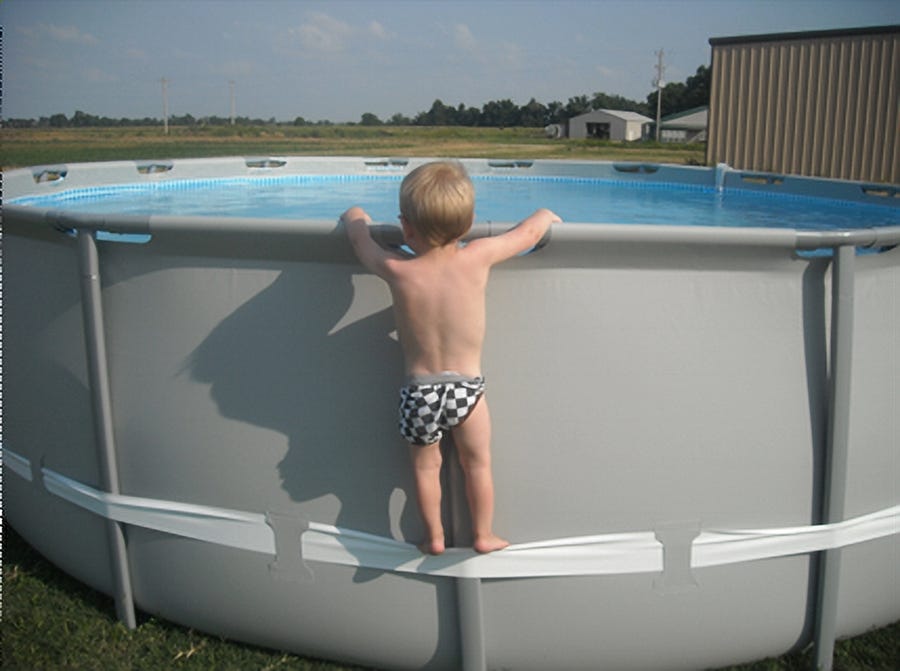
In August 2012, a parent reported to the U.S. Consumer Product Safety Commission that his 2-year-old son had nearly drowned after climbing over the side of a 48-inch-tall pool. The problem, the parent warned, was a horizontal band running around the outside of certain pools that acted like a step.
“On these Intex pools,” the parent wrote, “there is a band that runs about a foot off of the ground and our child used that as a step and climbed over the top.”
That complaint came five years after the first reported drowning tied to a similarly designed pool in 2007. Three more deaths followed in 2011. Yet it wasn’t until July 2025 that Intex and two other companies recalled about 5 million pools and offered free repair kits to eliminate the climbing hazard.
The case is one of the starkest examples in a new report from U.S. PIRG Education Fund. The analysis finds that product recalls are often slow to arrive — sometimes years after serious injuries and deaths have been reported.
“This time lag is very much the point,” said Teresa Murray, consumer watchdog director for U.S. PIRG Education Fund. “It’s horrific to see that it sometimes takes months or even years to recall a hazardous product.”
A record year for recalls — and injuries
According to the group’s review of recall announcements from the U.S. Consumer Product Safety Commission, there were 420 recall announcements in 2025 — the highest annual total since 2007 and a sharp increase from 305 in 2024.
Those recalls covered more than 40 million individual products.
Regulators tallied 882 injuries linked to products recalled in 2025 — the highest number since 2016. Importantly, not all of those injuries occurred in 2025; many happened months or years earlier, underscoring the lag between harm and regulatory action.
For consumers, that delay can mean dangerous products remain in homes long after warning signs have surfaced.
Pressure cookers and five years of complaints
Another example cited in the report involves a countertop pressure cooker sold by SharkNinja.
In 2019, a 41-year-old woman reported that her SharkNinja Food pressure cooker exploded while she was making beef stew, causing second-degree burns to her abdomen. Over the next several years, the company received at least 105 similar complaints and faced 26 lawsuits alleging burn injuries.
Yet it wasn’t until May 2025 — more than five years after the first reported injuries — that SharkNinja recalled more than 2 million pressure cookers and offered free replacement lids.
By then, dozens of consumers had reported serious burns.
The pattern, consumer advocates say, reflects a system that too often depends on accumulating evidence — and sometimes litigation — before companies act.
Children’s products a major share
More than one-quarter of the 2025 recalls involved children’s products, including toys, infant sleep products, clothing and other items intended for young users.
That statistic alarms safety advocates, who note that children are particularly vulnerable to choking, suffocation, drowning and fire hazards.
Besides pools and pressure cookers, some of the largest recalls of 2025 involved:
Adjustable dumbbells that could detach during use
“Burst-proof” garden hoses that ruptured
Attic fan motors linked to fires
Countertop ovens with overheating risks
Portable power banks prone to catching fire
In many cases, recalls were announced only after multiple injury reports or fire incidents.
The online marketplace problem
The report also highlights the “double-edged sword” of online shopping.
While e-commerce platforms offer convenience and vast selection, consumer advocates say online sellers often comply less consistently with U.S. safety standards than traditional brick-and-mortar retailers. When hazardous products are sold by third-party vendors — especially those located overseas — accountability can be elusive.
If a product turns out to be defective, regulators may struggle to track down the seller. Consumers may find it difficult to obtain refunds, repairs or replacement parts. And recalled products can remain available for purchase through secondary sellers long after a recall notice has been issued.
“Given how long some products can stay on sale, even after they may have hurt or killed someone, it’s important to recognize the warning signs of a hazardous product before it enters your home,” said Andre Delattre, senior vice president and COO of The Public Interest Network. “The best way to avoid an injury or fire from an unsafe product is to never buy it.”
A strained safety net?
The spike in recalls raises complicated questions. On one hand, a higher number of recall announcements can indicate active oversight and enforcement. On the other, the rise in injury totals — and the long delays preceding some recalls — suggest that hazards may be reaching consumers too easily.
The Consumer Product Safety Commission relies heavily on consumer complaints, manufacturer reports and injury data to identify dangerous products. But companies often conduct internal investigations before agreeing to a recall, and negotiations over recall terms can take months.
Meanwhile, products remain in circulation.
For families like the one who reported the near-drowning in 2012, the delay can feel incomprehensible.
Nine children died in connection with pools featuring the external climbing band before the 2025 recall was finally announced. By then, millions of units had been sold.
What consumers can do
Consumer advocates recommend several steps to reduce risk:
Register products with manufacturers so you can be notified of recalls.
Check the CPSC website regularly for recall announcements.
Be wary of unusually cheap products sold by unfamiliar third-party sellers online.
Read reviews carefully, looking for patterns of complaints about overheating, fires, breakage or injuries.
Stop using a product immediately if you suspect it is unsafe — even before an official recall is announced.
In an era of sprawling global supply chains and one-click shopping, the burden of vigilance increasingly falls on consumers.
The 2025 recall data, advocates say, serve as both warning and wake-up call. The record number of recalls shows that dangerous products are still slipping through. The record injury counts show the human cost.
And the long delays between harm and action raise a troubling question: How many warning signs does it take before a dangerous product is finally pulled from the market?