


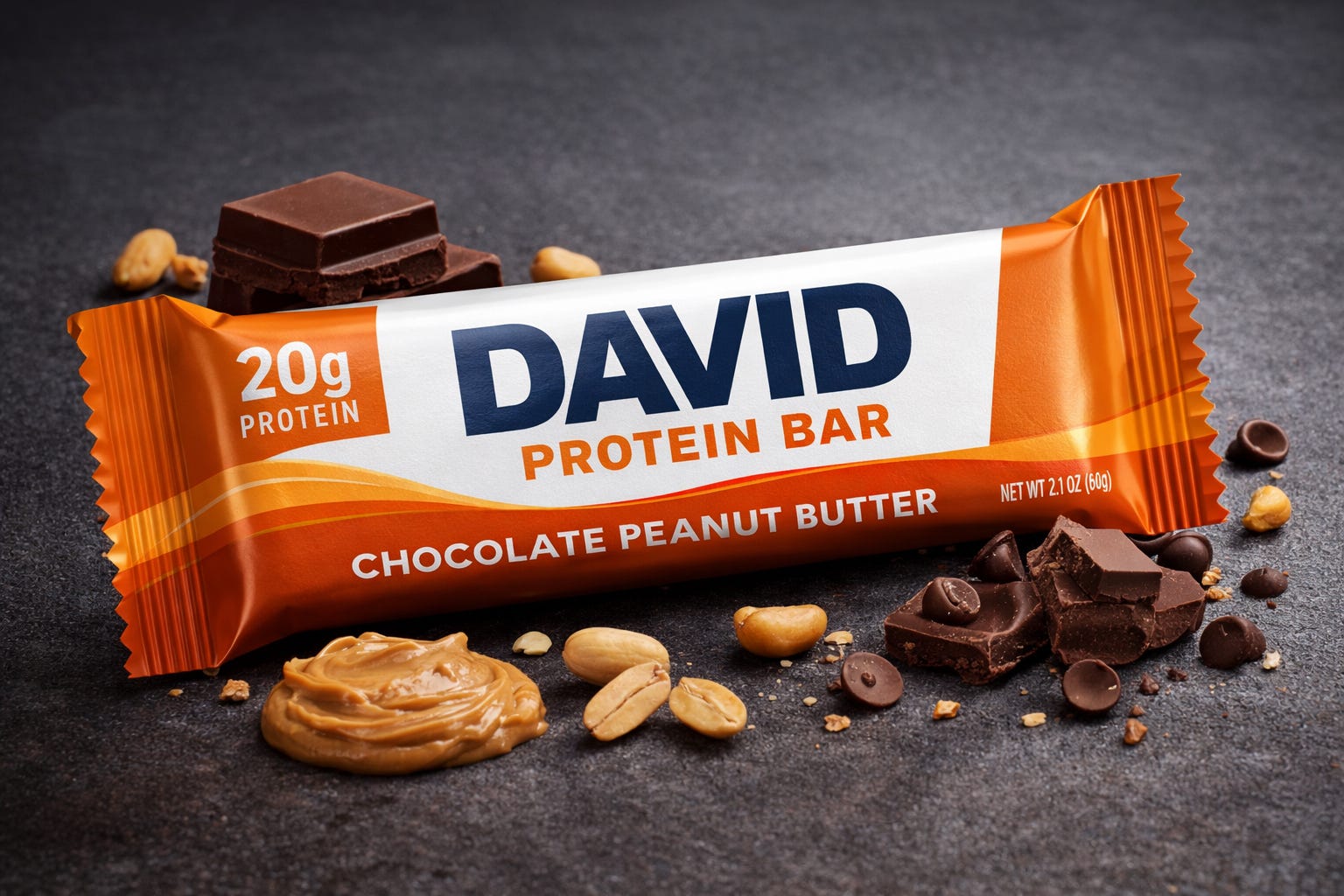
David Protein bars have become one of the more recognizable names in the booming high-protein snack market, buoyed by sleek gold packaging, an aggressive TikTok presence, and a nutritional profile that reads almost too good to be true: 28 grams of protein, zero grams of sugar, and just 150 calories per bar.
But last week, a lawsuit went viral alleging that those numbers may be significantly off. According to the complaint, tests conducted by a third-party, FDA-recognized laboratory found that the bars may contain as much as 83 percent more calories and 400 percent more fat than what’s printed on their labels, according to a GQ report.
Under FDA regulations, nutrient contents cannot exceed label figures by more than 20 percent — meaning the alleged discrepancy, if proven accurate, would represent a serious violation.
The reaction online was swift and merciless. TikTok users drew comparisons to Kälteen bars — the fictional snack from Mean Girls that causes Regina George to unknowingly gain weight. “David Protein Bars are actually Fat Bars,” declared one widely shared post. The brand, which had cultivated a loyal following among fitness-conscious consumers, suddenly found itself at the center of a nutrition scandal.
The company’s co-founder and CEO Peter Rahal pushed back quickly. In a statement on March 12th, he wrote that David’s products are “labeled correctly and in full compliance with all FDA regulations,” and called the lawsuit’s claims “meritless,” arguing they reflect “a fundamental misunderstanding of basic, well-established scientific principles regarding how calories are determined under U.S. nutrition labeling standards.”
At the heart of that defense is a technical dispute about how calories are measured in the first place — and it’s a dispute that reveals just how little most people understand about the numbers on their food packaging.
How calories get on a label
In the United States, calorie counts are typically calculated using something called the Atwater method, according to Debbie Fetter, a professor of nutrition at UC Davis. Rather than directly measuring the energy in a specific food sample, the Atwater system relies on general factors — predetermined averages for how many calories each macronutrient provides.
The formula is straightforward: four calories per gram of protein, four per gram of carbohydrates, and nine per gram of fat, with adjustments sometimes made for digestibility.
The lawsuit, however, appears to cite results from a different method: bomb calorimetry. The procedure works essentially by burning food. A sample is placed inside a sealed, oxygen-filled chamber surrounded by water and ignited. As the food burns, it heats the water, and the resulting temperature change reveals how much total energy the sample contains.
The problem with applying that method to something like David Protein bars, Rahal and some nutrition experts argue, is that bomb calorimetry measures all the energy in a food — including energy from ingredients the human body can’t actually absorb.
“Let’s use fiber as an example,” Fetter explains in the GQ article. “It contains energy, it contains calories, but the human body doesn’t have the enzymes needed to break down that fiber. So that energy is not available for absorption for us — but it could be computed as an energy amount” under bomb calorimetry.
The EPG question
The ingredient at the center of this controversy is EPG, or esterified propoxylated glycerol — a fat substitute used in David’s bars. A gram of conventional fat contributes nine calories. A gram of EPG, by contrast, contributes just 0.7 calories, because the body can digest only a small fraction of it.
The Atwater method can account for EPG’s low digestibility, assigning it a calorie value that reflects how little energy the body actually extracts from it. Bomb calorimetry, however, measures all the energy locked in the substance — including the portion that passes through the body unabsorbed — producing a dramatically higher calorie figure that doesn’t reflect real-world metabolism.
“When we eat food, we have some indigestible energy losses because we’re human — we don’t absorb everything,” Fetter says. Direct combustion testing, she adds, can measure “more calories than what is actually physiologically available to us.”
Rahal made a similar argument in his March 12th statement: “While bomb calorimetry is a recognized calorie testing method for many foods, it is widely accepted in the industry that bomb calorimetry is not the right testing method for determining calories in foods containing certain ingredients, such as dietary fiber, certain sweeteners, and, critically for us, fat substitutes like esterified propoxylated glycerol.”
Fetter broadly agrees. “Honestly, bomb calorimetry is not commonly used these days to calculate the energy amount in foods,” she says. The lawsuit does not specify exactly which procedure the third-party lab used, and the laboratory declined to comment when contacted by NBC News, citing confidentiality agreements.
The takeaway
Whatever the courts ultimately decide, the episode has surfaced a wider gap in public nutritional literacy. Most consumers treat calorie counts as fixed, objective facts. In reality, they are estimates — products of measurement systems designed to approximate how the human body processes food, not precise readings of energy content.
That nuance rarely makes it onto packaging, or into viral TikTok posts. The David lawsuit became a social media story about a brand allegedly deceiving its customers. The underlying science — about digestibility, fat substitutes, and the limits of calorie measurement — mostly got lost in the noise.
David, for its part, is not backing down. Rahal announced on March 12th that the company intends to counter-sue. The brand also leaned into the Mean Girls comparisons, posting a parody of an iconic scene from the 2004 film on March 13th.
Still, Fetter cautions consumers not to lose sight of a separate issue lurking beneath the legal drama: even if David’s calorie counts are technically accurate, bars that rely on processed ingredients and fat substitutes are not necessarily a healthy dietary staple.
“I understand using tools like different bars or meal replacements that could come in handy when someone is on the go,” she says, “but consuming products like that just isn’t inherently healthier for you.”