


A California proposal with national implications
California regulators are considering what could become the nation’s most aggressive workplace safety action against a popular homebuilding material: a potential ban on engineered stone countertops linked to a surge in deadly lung disease among workers.
The move follows a sharp rise in cases of silicosis — an incurable illness caused by inhaling fine silica dust — among countertop fabricators, particularly in Southern California. But health experts say the issue is not confined to one state, raising broader questions about worker protections across the U.S.
If enacted, California would become the first state to prohibit the fabrication and installation of engineered stone, a material widely used in kitchens and bathrooms nationwide, the news station LAist reported.
A growing occupational health crisis
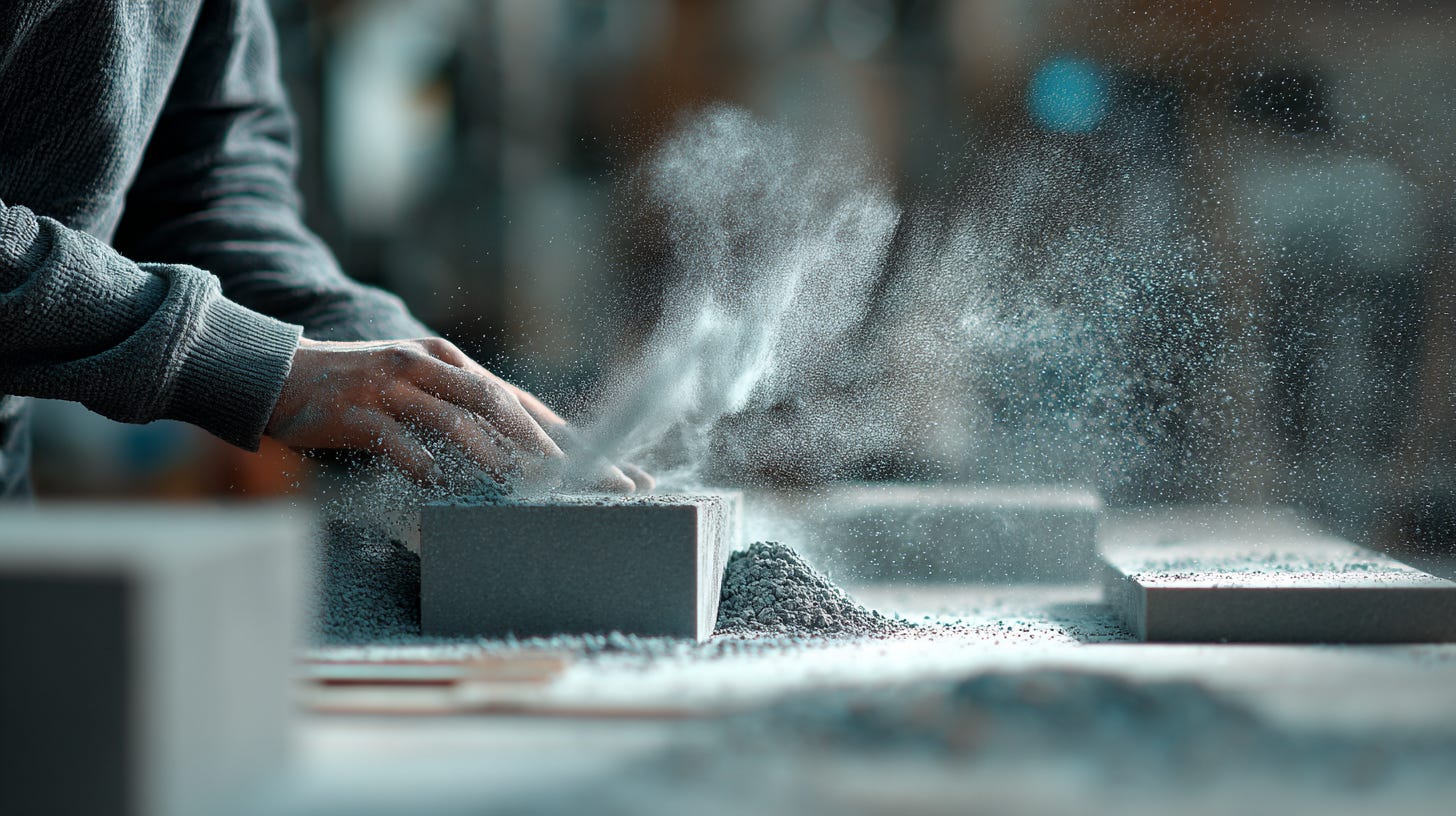
Engineered stone — often marketed as quartz — is typically made with more than 90% crystalline silica. When cut, ground, or polished, it releases microscopic dust particles that can lodge deep in the lungs.
The result is silicosis, a progressive disease that scars lung tissue and can lead to respiratory failure. There is no cure; in severe cases, patients require lung transplants that often extend life only modestly.
What began as a localized cluster has quickly escalated. California health officials have confirmed more than 500 cases of silicosis tied to engineered stone, including dozens of deaths.
Researchers and physicians say similar cases are emerging elsewhere in the U.S., including Texas, Colorado, Washington, and Massachusetts, as demand for quartz countertops has surged.
From local outbreak to national warning
The current wave of illness first drew attention in Los Angeles-area fabrication shops, where many workers — often young immigrants — were exposed to high concentrations of silica dust over relatively short periods.
But occupational health experts warn the pattern reflects a broader national risk tied to a booming home renovation market and widespread use of engineered stone.
Even with safety measures like wet cutting, ventilation, and protective gear, some researchers argue the material itself may be inherently hazardous when processed.
“Every jurisdiction that has reduced disease has done so by eliminating the material,” one group of medical experts told California regulators in a petition urging a ban.
Industry pushback and regulatory divide
Manufacturers and industry groups dispute that conclusion, arguing that existing safety rules — if properly followed — can protect workers.
Companies say the problem lies with noncompliant fabrication shops rather than the material itself, and warn that a ban could disrupt a major segment of the U.S. construction and home improvement market.
The debate reflects a familiar regulatory tension: whether to tighten enforcement of workplace standards or eliminate a product deemed too risky.
California has already taken intermediate steps, including stricter silica dust controls and hundreds of inspections uncovering widespread violations.
Global precedent — and a possible U.S. tipping point
Internationally, regulators have begun to act more decisively. Australia implemented a nationwide ban on engineered stone in 2024 after a similar surge in silicosis cases.
That move is increasingly cited by U.S. health advocates as a model — and a warning.
Legal pressure is also mounting. Hundreds of lawsuits have been filed against manufacturers, and a California jury awarded more than $50 million in damages in one high-profile case involving a worker who developed silicosis.
What it means for consumers
For homeowners, experts emphasize that installed countertops pose little to no risk. The danger arises primarily during fabrication and installation, when silica dust becomes airborne, according to Prevention.
Still, a broader regulatory crackdown could affect pricing, availability, and material choices in the home renovation market nationwide.
What comes next
California’s Occupational Safety and Health Standards Board is expected to continue reviewing the proposal in the coming months, with a potential vote later this year.
A ban would likely face legal challenges — but it could also set a precedent for other states and federal regulators.
For now, what began as a regional health investigation has evolved into a national test case over how far regulators should go to protect workers from a product deeply embedded in modern home construction.
Affordability Watch: A ban could reshape kitchen remodel costs
Quartz dominates midrange remodels — changes could ripple through home renovation budgets
Safer alternatives exist, but often come with tradeoffs in price, durability, or availability
Short-term disruption could push prices higher before markets adjust
Quartz became the default — for a reason
Engineered stone countertops — commonly marketed as “quartz” — have become a go-to choice for American homeowners over the past decade, prized for their durability, uniform look, and relatively moderate cost compared to high-end natural stone.
A potential ban in California — and any copycat policies in other states — could disrupt that balance, especially in the midrange renovation market where quartz has largely replaced laminate and competed with granite.
What happens to prices?
In the near term, a ban or strict limits could push countertop prices higher, particularly in states with heavy construction demand.
That’s because:
Quartz supply chains are well-established and scaled
Alternatives may not be able to ramp up quickly
Fabrication shops may face new compliance or retooling costs
Homeowners could see:
Higher quotes for kitchen remodels
Longer wait times for installation
Fewer “budget-friendly premium” options
The alternatives — and their tradeoffs
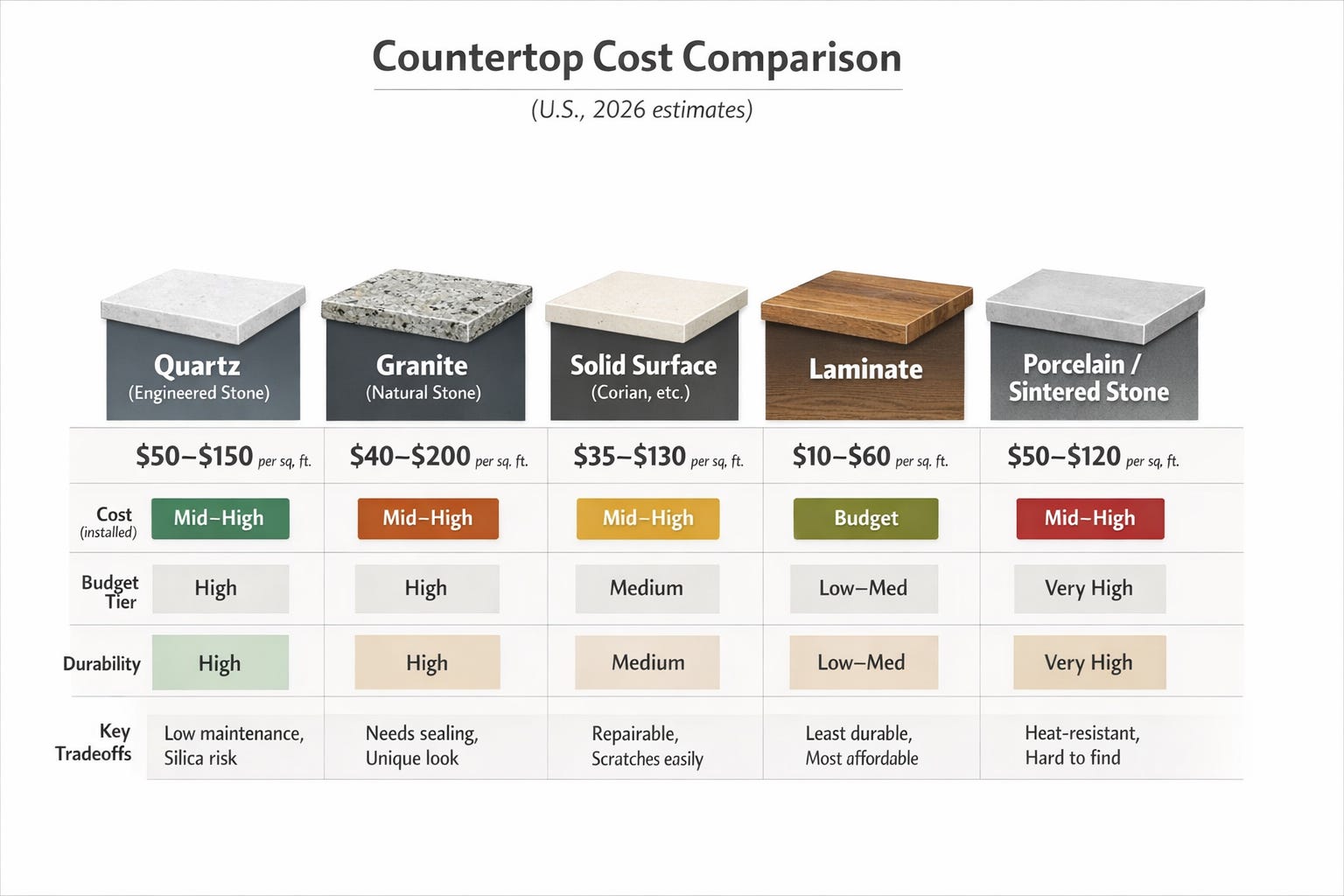
If engineered stone use declines, consumers will likely shift to a mix of materials:
Granite (natural stone)
Often more expensive and less uniform; requires periodic sealingLaminate
Cheapest option, but less durable and less desirable for resaleSolid surface (e.g., Corian)
Midrange pricing, but more prone to scratching and heat damagePorcelain or sintered stone
Growing category with strong durability, but often higher cost and limited installers
Each option comes with a different cost–durability tradeoff — meaning consumers may have to compromise more than they did with quartz.
Labor costs could rise, too
Even beyond materials, stricter silica rules — or a shift away from engineered stone — could increase labor costs.
Fabricators may need:
New equipment or dust-control systems
Additional worker protections and training
More time-intensive cutting processes for alternative materials
Those costs are likely to be passed on to homeowners.
A familiar pattern in consumer safety
The situation mirrors other product safety crackdowns: initial price spikes followed by longer-term market adjustment.
If regulators act, expect:
Short-term cost increases and supply disruptions
Medium-term innovation in safer materials
Longer-term stabilization as new standards take hold
Bottom line
For now, quartz remains widely available and safe in finished installations. But if California moves forward — and other states follow — the humble kitchen countertop could become the latest example of how worker safety rules reshape consumer prices.