

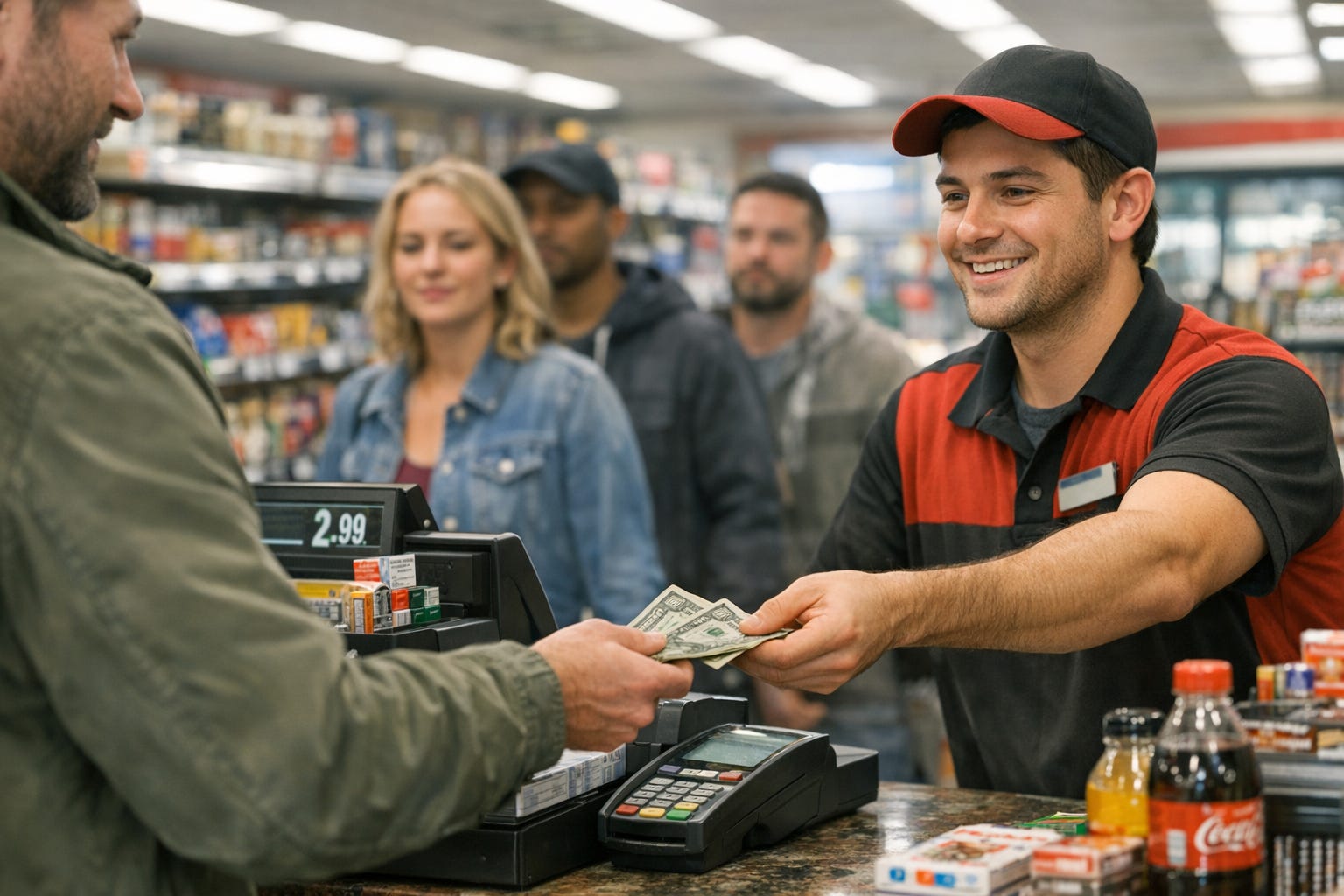
It wasn’t all that long ago that you had to ask whether a business took credit cards. Now you have to ask if they take cash. That’s because, contrary to popular belief, there’s no federal law that requires a retailer or other business to take cash.
Many businesses don’t like to handle money. It’s dirty, hard to keep track of and attractive to small-time thieves. And in fact, most states don’t require that stores take money.
But, you say, isn’t it “legal tender?” Yes, it is but according to the Federal Reserve, that only applies to paying debts. For all other transactions, it’s up to the parties involved unless a local or state law provides otherwise.
It’s an issue because about 5.6 million Americans are unbanked and about 19 million are underbanked, according to the FDIC. That means they don’t have a pocketful of credit and debit cards, meaning that cash bans can exclude low-income or older consumers.
Businesses argue that no-cash systems are faster, safer and cheaper.
A few exceptions to the no-cash rule
There are a few states that do require retailers to take cash — namely Massachusetts, New Jersey, Rhode Island and Colorado. New York City, Boston, San Francisco, D.C. and Detroit also require cash acceptance.
But just before the pendulum swings to far towards the no-cash position, New York State has a new law that requires stores throughout the state to let customers to pay in cash.
“New Yorkers have a right to service no matter how they choose to pay,” said Attorney General Letitia James. “Businesses cannot deny New Yorkers access to necessities like food and clothing by refusing to take cash, or charging shoppers more for paying in cash. I will not hesitate to enforce this law to protect consumers across our state.”
The new law takes effect today (March 21). It mirrors a similar New York City law that has been in effect since 2020.
Under the new law, food stores and other retail establishments cannot require consumers to pay by credit card or use another cashless transaction method to complete their purchase. They also cannot charge consumers a higher price if they pay in cash. Stores that violate the new law will face maximum civil penalties of $1,000 for the first violation and $1,500 for each succeeding violation.
The new law has a few exceptions:
Stores do not have to accept bills in denominations above twenty dollars;
Stores do not have to accept cash for orders made by telephone, mail, or internet, unless that transaction takes place at the store;
The new law also does not apply if a store provides a device on its premises to convert cash into a prepaid card. However, the store cannot charge a fee or require that the prepaid card be loaded with a minimum amount above one dollar.