


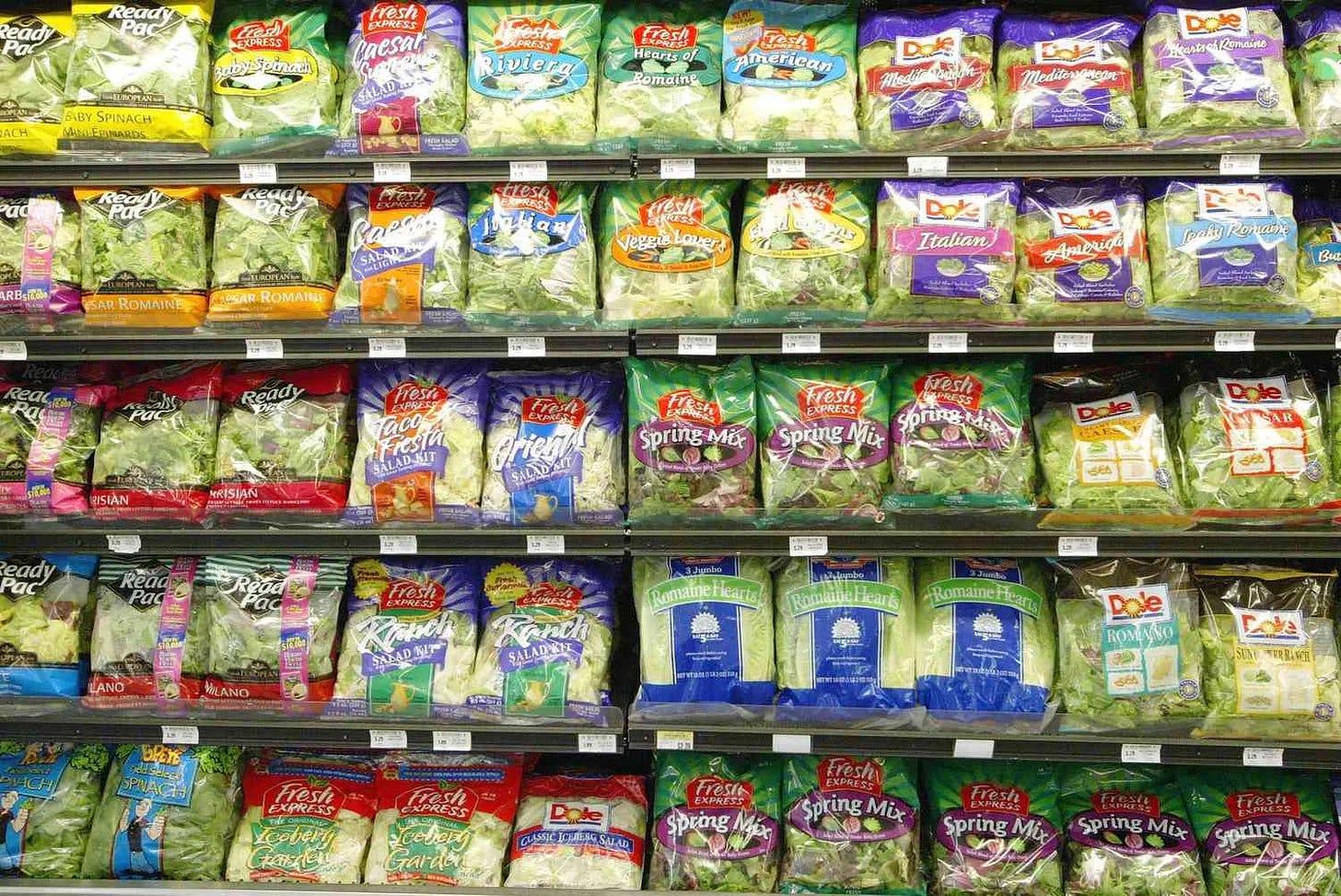
Vegetables are good for you, right? Well, yes, as long as they’re not contaminated with any of the various deadly poisons commonly found on fresh produce in the United States.
Unfortunately, according to an FDA report, vegetables accounted for 55 percent of outbreak-related illnesses linked to FDA-regulated foods in 2024—far outpacing all other categories.
Other food categories trailed significantly:
Multi-ingredient foods: 20%
Dairy products: 10%
Fruits, shell eggs, and nuts/seeds: 5% each
Leafy greens and fresh herb — romaine lettuce, spinach, cucumbers, jalapeño peppers, carrots, onions, basil, parsley, and sprouts, among others — have long carried higher food safety risks both because they are often eaten raw and because they are more likely to carry pathogens that are not eliminated by cooking.
Vegetables that are eaten raw—especially leafy greens and herbs—are more likely to harbor harmful bacteria such as E. coli or Salmonella to reach consumers.
Contamination can occur at multiple points:
On farms, through contaminated water or soil
During harvesting and processing
In transportation and storage
At retail or in home kitchens
The globalization of the food supply also complicates traceability, particularly for imported produce.
Besides the lowly vegetable, the FDA identified a variety of other foods linked to outbreaks:
Multi-ingredient foods: frozen shakes, shrimp salad, chocolates, gummies, and bagged salad mixes
Dairy: raw cheddar cheese, queso fresco, cotija cheese
Fruits: mangoes
Nuts and seeds: organic walnuts
Shell eggs: eggs
What It Means for Consumers
While the report underscores systemic risks, it also highlights the importance of basic food safety practices at home. Consumers are advised to:
Wash produce thoroughly under running water
Refrigerate perishable items promptly
Avoid cross-contamination with raw foods
Pay attention to recall notices and FDA advisories
Still, many outbreaks occur upstream, beyond the consumer’s control—placing continued pressure on regulators and the food industry to improve safety practices.
The findings come from the agency’s Office of Coordinated Outbreak Response, Evaluation, & Emergency Preparedness (CORE+EP), which tracks, investigates, and helps prevent foodborne illness incidents across the United States.