

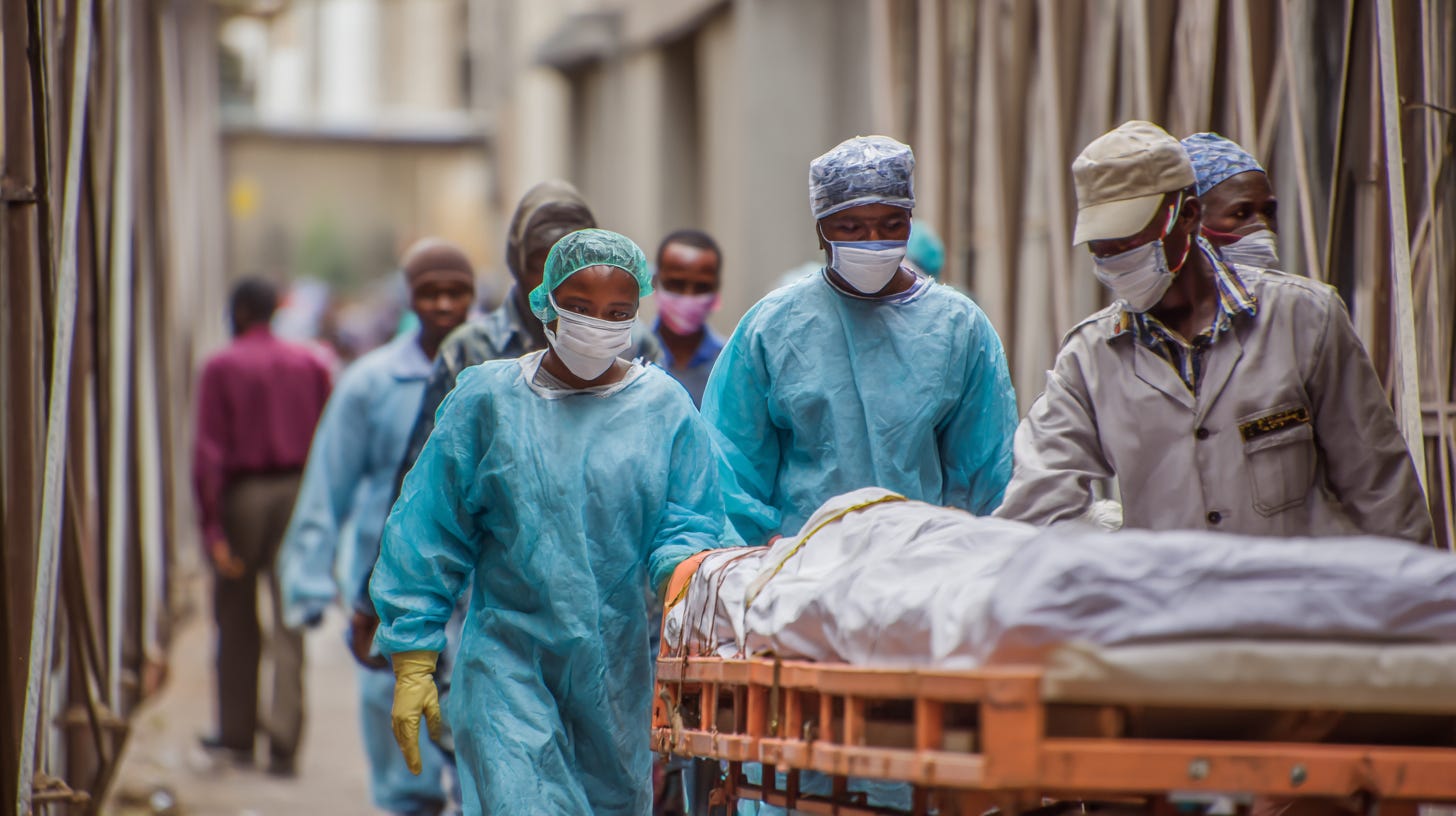
The Centers for Disease Control and Prevention is mobilizing an international response to a rapidly expanding Ebola outbreak in Central and East Africa that has already killed dozens of people and prompted the World Health Organization to declare a global public health emergency.
The outbreak, centered in the Democratic Republic of Congo’s Ituri Province and spreading into neighboring Uganda, is being caused by the Bundibugyo strain of Ebola — a less common form of the virus that has no approved vaccine and no FDA-approved targeted treatment, CDC said.
CDC officials said the agency has activated its Emergency Response Center and is deploying additional staff to help with surveillance, contact tracing, laboratory testing, border health screening and infection-control efforts.
“As mentioned earlier in the week, CDC is responding to an outbreak of Ebola disease in the Democratic Republic of Congo and Uganda,” CDC officials said in a public briefing Sunday. “CDC is urgently coordinating with our interagency partners on this outbreak to ensure the outbreak is managed and prevent further spread of Ebola.”
According to WHO and CDC updates, the outbreak has spread across multiple health zones in eastern Congo, with imported cases confirmed in Uganda. WHO officials warned Tuesday that the outbreak is growing quickly and could worsen because of armed conflict, population movement and strained health systems in the region, Reuters reported.
WHO Director-General Dr. Tedros Adhanom Ghebreyesus said he is “deeply concerned” about the speed and scale of the outbreak.
Why this outbreak is drawing unusual concern
Ebola outbreaks are not uncommon in parts of Central Africa, but public health experts say several factors make this episode especially worrying.
First, the Bundibugyo strain is relatively rare. Unlike the Zaire strain of Ebola — the version involved in the devastating 2014-2016 West Africa epidemic — there is currently no licensed vaccine specifically approved for Bundibugyo virus disease, according to the World Health Organization.
Second, the outbreak has reportedly reached urban areas and major transit corridors, increasing the risk of cross-border spread. WHO officials say cases have appeared in or near densely populated areas including Kampala, Uganda’s capital.
Third, several infections have reportedly involved healthcare workers, a warning sign that infection-control systems are being strained.
The WHO has already released emergency funding and elevated the outbreak to a “Public Health Emergency of International Concern,” its highest alert level, WHO said.
What consumers and travelers should know
CDC officials stress that the risk to the general U.S. public remains low. Ebola spreads through direct contact with bodily fluids of infected individuals or contaminated materials — not through casual airborne transmission like influenza or COVID-19.
Still, federal officials are tightening travel precautions.
CDC, the Department of Homeland Security and other agencies announced enhanced screening and travel restrictions Monday aimed at preventing the virus from entering the United States.
Travel health notices have been issued for both Congo and Uganda.
Some reports also indicate that several Americans working in the region may have been exposed and are being monitored or evacuated.
Public health experts say Americans are unlikely to face widespread risk unless sustained community transmission occurs outside Africa — something officials say has not happened.
Lessons from COVID still shape the response
The aggressive international response reflects how dramatically global public-health strategy changed after COVID-19.
During the 2014 West Africa Ebola epidemic, critics accused governments and health agencies of reacting too slowly as infections spread through Guinea, Liberia and Sierra Leone, eventually causing more than 11,000 deaths worldwide.
This time, WHO declared a global emergency much earlier in the outbreak’s trajectory.
CDC is also moving faster on airport screening, travel notices and interagency coordination than in many previous outbreaks.
At the same time, some infectious-disease specialists warn against panic.
Ebola is far harder to spread than respiratory viruses, and outbreaks historically have been contained through aggressive contact tracing, isolation and protective equipment protocols. Still, experts caution that unstable conditions in eastern Congo could complicate those efforts.
Data Box: Ebola by the numbers
More than 300 suspected cases reported in Congo and Uganda (Al Jazeera)
At least 80 to 130 suspected deaths, depending on reporting period (World Health Organization)
Nine affected health zones in eastern Congo (CDC)
No approved vaccine for the Bundibugyo strain (CDC)
WHO emergency declaration issued May 16-17 (World Health Organization)
What consumers can do
Health officials say most Americans do not need to alter daily routines, but travelers to affected regions should:
Monitor CDC travel advisories
Avoid contact with sick individuals or bodily fluids
Avoid handling wild animals or bushmeat
Seek medical care immediately if symptoms develop after travel
Symptoms can include fever, weakness, vomiting, diarrhea and bleeding, typically appearing between two and 21 days after exposure.
Public health agencies are expected to provide additional updates this week as case numbers evolve and more testing data becomes available.