

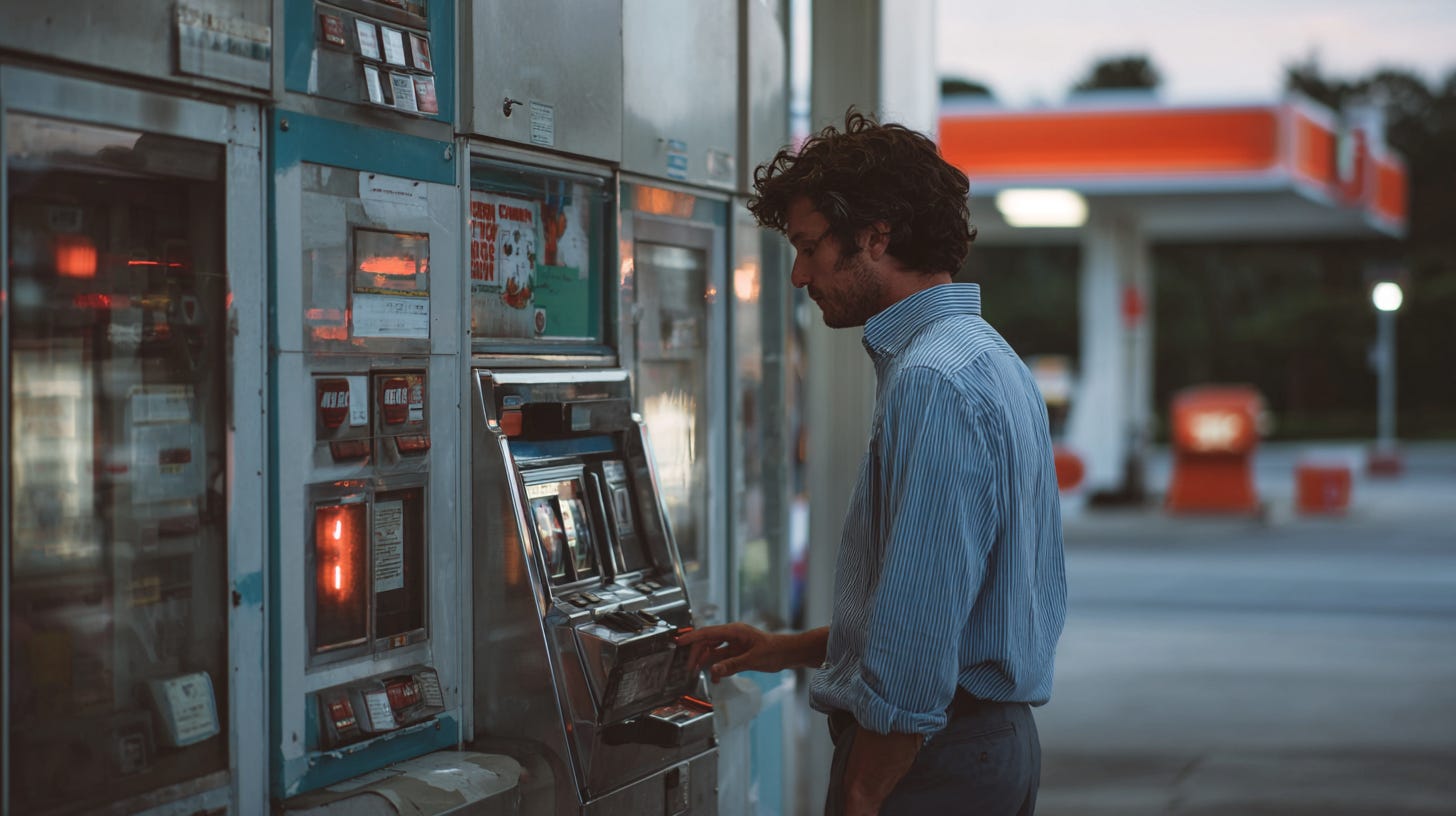
If you’re looking for an afternoon of pumping funds into an armless one-armed bandit, you should cross Missouri off your list. It’s among the states that are mounting aggressive takedown efforts of electronic slot machines, which they say are illegal gambling devices.
Missouri Attorney General Catherine Hanaway announced Friday that Torch Electronics had agreed to suspend all operations in the state, following an ongoing joint criminal investigation by federal and state agencies.
“While this is a tremendous step forward for Missouri, our office will continue to investigate and seek enforcement action against other operators, manufacturers, and retail stores facilitating this illegal activity,” Hanaway said in a statement.
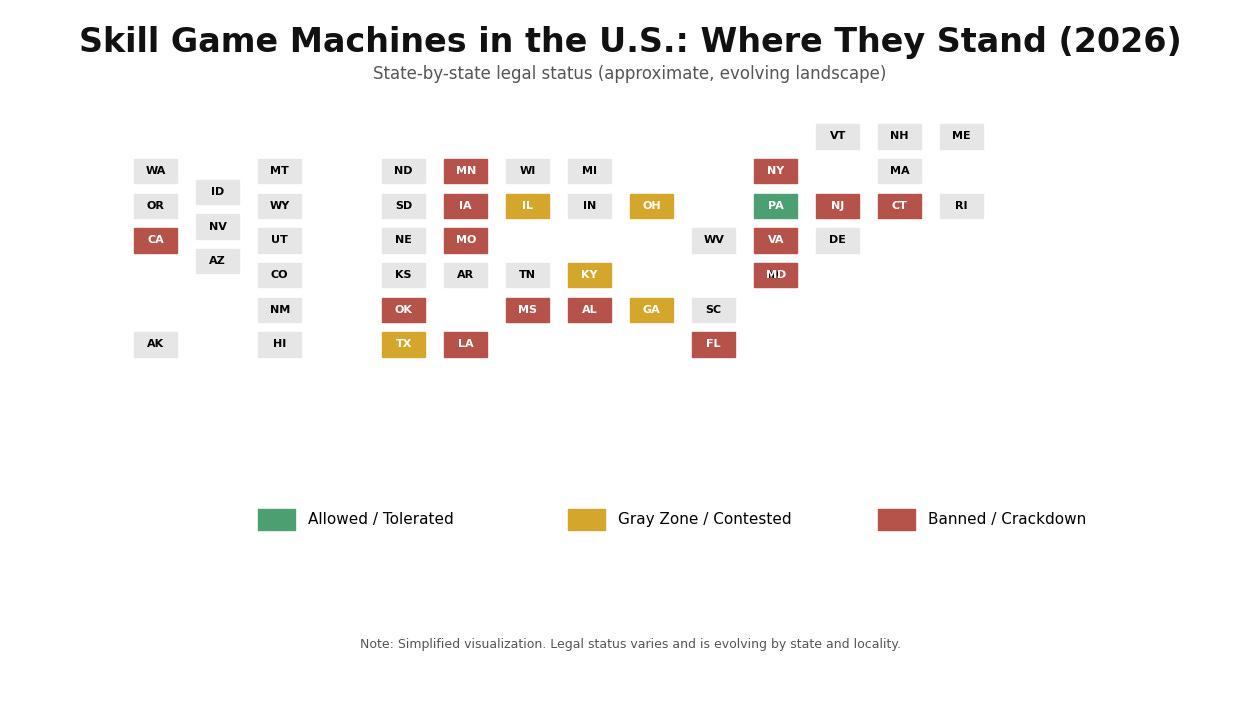
That leaves Pennsylvania as the largest and most stable “semi-legal” market. A 2014 court ruling found the machines are not slot machines, allowing widespread unregulated and untaxed use. Legal appeals are pending, though, so that could change at some point.
Banned outright
Many states have gone to war against the machines, most notably Virginia, where a statewide ban was reinstated in 2023, making the devices clearly illegal. The ban had originally gone into effect in 2021 but was challenged by a truck stop owner on First Amendment grounds.
Historically, the wannabe slot machines have been popular in gas stations, convenience stores and bars in states that have highways with a lot of truck traffic — Virginia’s I-95, the Pennsylvania Turnpike and Missouri’s I-40, among others.
In many states, the devices have been operating in a gray market but a strong trend is developing to regulate them as illegal gambling devices. States actively working the issue include:
Minnesota – bills advancing to outlaw sweepstakes/gray-market gambling;
California & New York – already moved to restrict similar “sweepstakes casino” models;
Mississippi, Iowa, Oklahoma – legislation targeting unregulated gambling formats;
Connecticut, Michigan, Maryland, West Virginia, Louisiana, New Jersey – cease-and-desist orders or new laws against similar models.
About 27 states have gambling-related bills in play in 2026 alone, according to Gambling Insider.
At the state level, 27 states have introduced proposals that range from gambling legalization (casino or sports betting), taxation, lottery measures, and restrictions to outright bans on sweepstakes casinos.
Why the shift?
Across the country, state regulators and courts are converging on the same conclusions:
These machines function like slot machines.
They often:
Avoid taxes;
Bypass licensing;
Lack consumer protections.
Courts increasingly reject the argument that they are “games of skill.” Missouri’s ruling is part of that broader shift:
Judges are explicitly finding “elements of chance” → illegal gambling
Congress more sympathetic to gamblers
While gas-station machines are having a bad time at the state level, Congress is coming to the aid of gamblers who feel unduly burdened by President Trump’s One Big Beautiful Bill.
A bipartisan effort in Congress is specifically designed to repeal the 10% shaving of gambling losses deductions introduced by the Trump measure. It would restore the tax code to its original condition, allowing gamblers to deduct 100% of their losses against their winnings. This would effectively remove the federal ‘phantom income’ tax.
In plain language, Congress accidentally (or maybe intentionally) created a rule where gamblers can be taxed on money they didn’t actually earn — and now a bipartisan bill aims to fix it by restoring the old system.
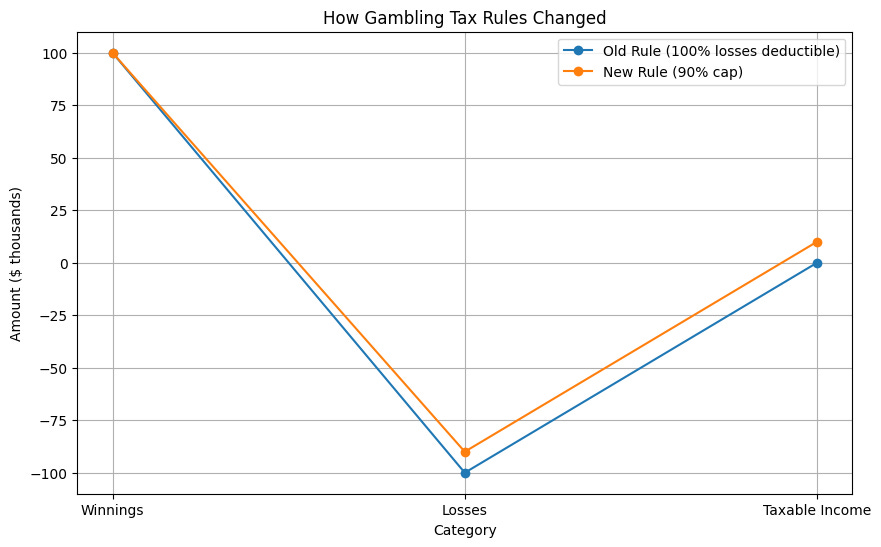
The current tax code can treat break-even gamblers as profitable — taxing “phantom income” — and the Full House Act would reverse that by restoring the traditional rule that only real winnings are taxed.
Prediction markets, like Kalshi, are yet another gambling market that’s in play. The federal government has sued states that have tried to regulate it, saying that right is reserved to the Commodity Futures Trading Commission (CFTC), which recently filed lawsuits against several states.