


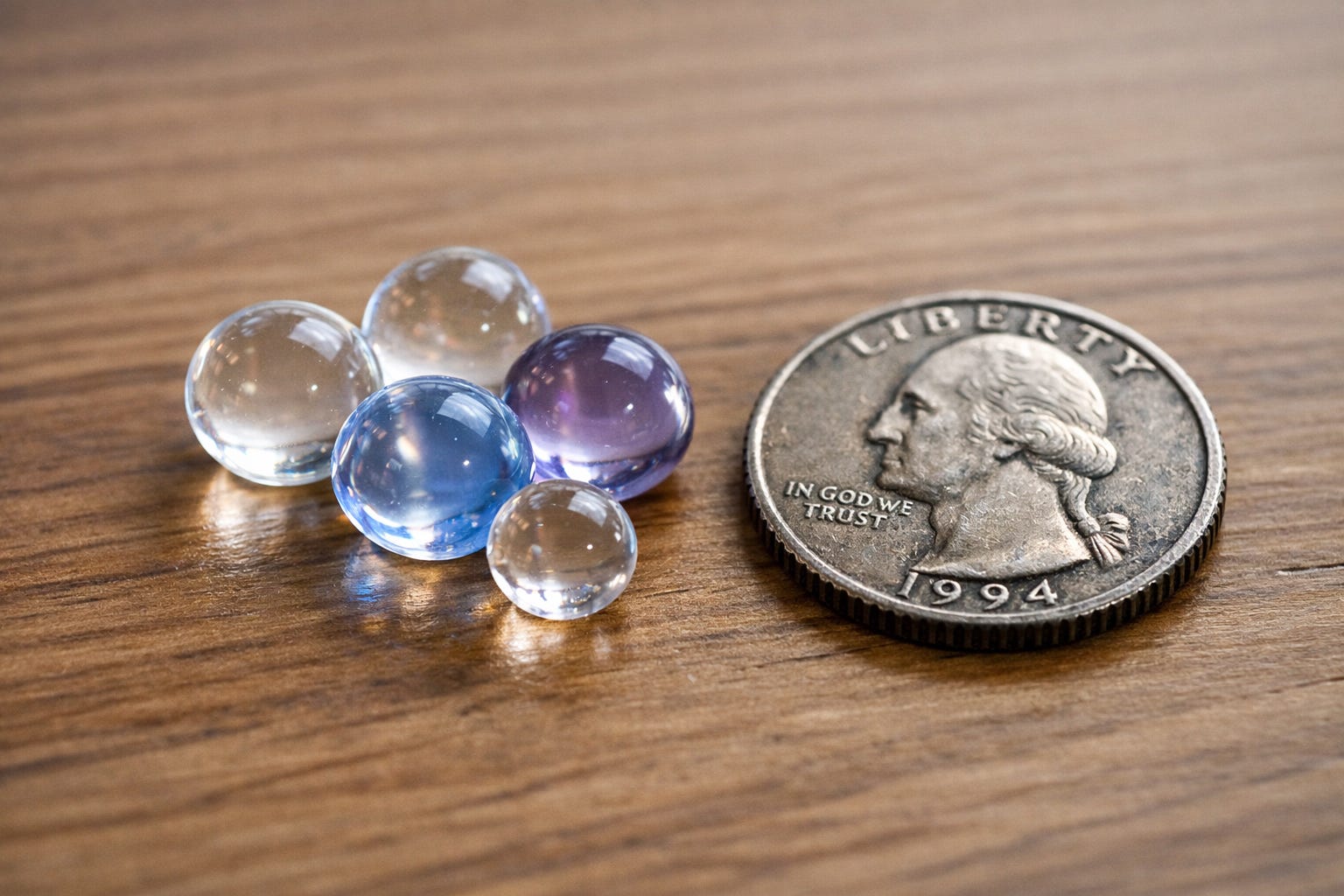
A popular children’s toy linked to thousands of emergency room visits will face strict new federal safety rules beginning Thursday, after years of warnings from consumer advocates and safety regulators.
The new rules from the U.S. Consumer Product Safety Commission (CPSC) limit how much water beads — small, colorful pellets that swell dramatically when exposed to liquid — can expand and restrict the amount of a potentially carcinogenic chemical used in their manufacture. The changes effectively make the most dangerous versions of the toy illegal to sell in the United States.
Consumer safety advocates say the move is long overdue.
“This overdue, commonsense step should reduce the risk of playtime turning into tragedy,” said Teresa Murray, consumer watchdog director for the U.S. PIRG Education Fund. “Children will be safer going forward because it’ll be difficult if not impossible to find these toys for sale, but this doesn’t eliminate the risk posed by water beads already in people’s homes.”
Tiny beads, big dangers
Water beads start out tiny — often no bigger than a pea or a sprinkle — but can grow many times their original size when soaked in water. They are commonly sold as children’s toys or used inside sensory products, and have also been marketed for decorative purposes or for plant hydration.
But the same expanding property that makes them appealing for play can also create serious health risks.
Because the beads are brightly colored and resemble candy, young children may swallow them. Once ingested, the beads can continue expanding inside the body as they absorb fluids. That can cause choking, intestinal blockages or other life-threatening internal injuries.
Safety advocates say the risks are amplified because the beads are often sold in packages containing hundreds or even thousands of tiny pellets, making it easy for individual beads to fall onto floors or surfaces where children may find them.
Thousands of injuries, one fatality
Concerns about water beads intensified in recent years as reports of injuries mounted.
According to the Consumer Product Safety Commission, about 6,000 people — mostly children — were treated in emergency rooms in 2023 alone for injuries related to water beads.
The issue gained national attention after the death of a 10-month-old child in Wisconsin, who died after ingesting water beads. The tragedy prompted renewed calls from lawmakers, safety advocates and parents for stronger federal oversight.
Pressure on retailers followed as well. In December 2023, several major chains — including Amazon, Target and Walmart — pledged to stop selling water beads marketed as toys after a campaign led by Consumer Reports and other consumer groups.
Congress stalled, regulators acted
Lawmakers also attempted to address the problem through legislation.
Two bills were introduced in Congress: the Ban Water Beads Act in 2023 and Esther’s Law in 2024, named after the Wisconsin infant who died after swallowing the beads. Both proposals aimed to prohibit the toys entirely.
Neither bill advanced out of congressional committees.
With legislation stalled, the CPSC moved forward with its own regulatory approach. The agency proposed new safety rules in 2024, culminating in the standards that take effect this week.
Under the new rules, water bead toys must meet strict limits on how much they can expand. The regulations also require “strongly worded, conspicuous warnings” on packaging and place caps on the amount of acrylamide, a chemical used in manufacturing the beads that is considered a carcinogen.
Products that exceed the expansion limit will be illegal to sell as toys in the United States.
Not a complete ban
Despite the tougher standards, the new rules stop short of a total prohibition.
Water beads will still be allowed for non-toy uses, such as plant hydration or decorative displays. That means the products could still appear in homes, schools or daycare facilities even after the new regulations take effect.
Consumer advocates warn that distinction may create confusion for parents and caregivers who assume the toys have been banned outright.
“It’s important for parents to realize the rules don’t affect water beads already in a home or daycare,” Murray said.
Safety advice for families
Because millions of water bead kits have already been sold over the past decade, safety groups say families should take immediate precautions.
Their top recommendation is simple: avoid having water beads anywhere around children.
Advocates say that advice applies regardless of how the beads are marketed — whether as toys, sensory products, decorative items or plant accessories.
Even a single bead can pose a risk if swallowed, they warn.
Parents should also be aware that water beads may appear inside other toys or activity kits, meaning children could encounter them even if families have never purchased a dedicated water bead product.
A long-running safety fight
For consumer safety groups, the new regulations represent a significant step — but also the end of a long and often frustrating campaign.
Advocates spent years urging federal regulators and lawmakers to address the hazards posed by the expanding beads. Those efforts intensified after pediatricians and poison control centers began reporting a growing number of cases involving swallowed beads.
Because the beads do not show up clearly on X-rays and can continue swelling inside the body, doctors say diagnosing the problem can be difficult, sometimes delaying treatment.
Consumer groups say those challenges helped convince regulators that stronger safeguards were necessary.
Still, they emphasize that the rules are only part of the solution.
“The safest option,” Murray said, “is simply not having water beads in environments where children are present.”
What consumers should know
As the new federal rules take effect, consumer advocates offer several reminders:
The regulations limit expansion size for water beads sold as toys.
Products must include clear safety warnings.
Manufacturers must meet strict limits on acrylamide, a chemical linked to cancer.
The rules do not apply to decorative or plant-hydration water beads.
The changes do not affect products already in homes.
For families who already own water bead products, safety advocates recommend removing them from areas accessible to children and disposing of unused beads securely.
With the new standards now in place, regulators and consumer groups hope the brightly colored beads — once a staple in many toy aisles — will become far less common.
Whether that will be enough to prevent future tragedies, they say, will depend largely on awareness among parents and caregivers about the risks still lurking in homes.