


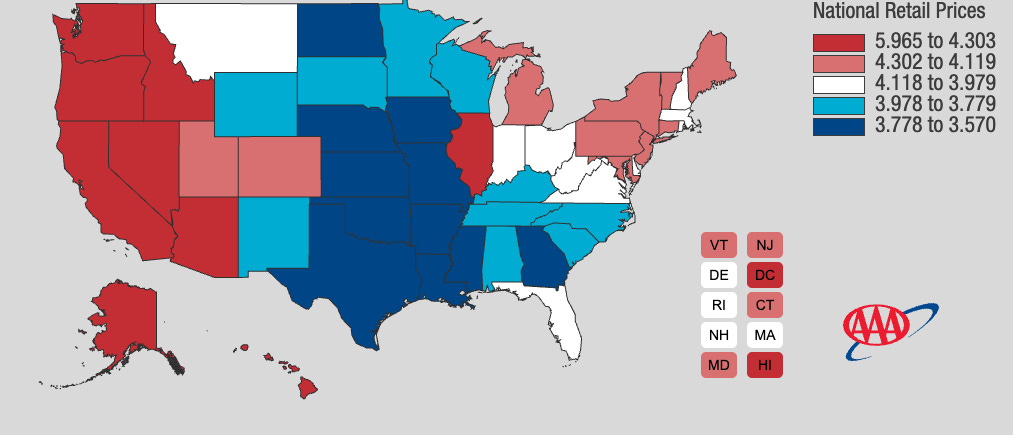
Prices spike as oil supply tightens
U.S. gasoline prices have surged to their highest levels in years, with the national average hitting roughly $4.18 per gallon this week as the war involving Iran continues to disrupt global oil markets.
That marks a sharp climb of more than $1 per gallon since late February, when the conflict began, underscoring how quickly geopolitical shocks can ripple through to everyday costs for American drivers, The Wall Street Journal reported.
The spike is being driven by rising crude oil prices, which have climbed toward $110 per barrel amid fears of prolonged supply disruptions and limited progress in peace talks, according to The Economic Times.
At the center of the crisis is the Strait of Hormuz, a critical chokepoint through which roughly 20% of the world’s oil supply normally flows. Disruptions there have tightened global supply and sent energy markets into turmoil.
A rapid, uneven surge across the U.S.
While prices are up nationwide, the increases have been uneven:
Midwestern states have seen some of the steepest weekly jumps, with prices rising more than 6% in some areas
Western states—including California, Washington, and Oregon—are already seeing averages above $5 per gallon
Hawaii remains among the most expensive markets despite slight recent declines
The speed of the increase has caught many consumers off guard. Gas prices rose more than 6 cents in a single day at one point this week, reflecting extreme volatility in oil markets.
Inflation pressure builds
The surge in fuel costs is already feeding broader inflation concerns. Rising gasoline prices contributed to one of the largest monthly increases in consumer prices in decades earlier this spring, and economists warn the pressure is far from over, according to AP News.
Higher fuel costs ripple through the economy in multiple ways:
Increased transportation costs push up prices for groceries and goods
Airlines and shipping companies pass on higher fuel expenses
Household budgets tighten, especially for lower- and middle-income families
Consumer sentiment surveys show Americans remain deeply concerned about rising prices, even as other economic indicators show modest resilience.
Oil companies and markets reap gains
While consumers feel the squeeze, energy companies are benefiting from the surge. Major oil firms have reported sharply higher profits due to elevated crude prices and trading gains during the conflict, The Guardian reported.
That dynamic—higher corporate profits alongside rising household costs—has reignited political debate over price gouging, windfall taxes, and whether regulators should take a more aggressive role in energy markets.
What happens next?
The trajectory of gas prices now hinges largely on geopolitics.
Some officials have suggested prices could fall if the conflict de-escalates and oil flows normalize. But analysts caution that even in a best-case scenario, relief may not come quickly.
That’s because:
Supply chains disrupted by the war will take time to rebuild
Global inventories have already been drawn down
Markets remain highly sensitive to any new escalation
In the meantime, many economists warn that gas prices could climb further—potentially approaching or exceeding $5 per gallon nationally—if the conflict drags on or worsens.
What this means for consumers
For American households, the renewed spike in gas prices is a familiar but painful reminder of how global events translate into everyday costs.
Expect:
Higher commuting and travel expenses heading into summer
Continued pressure on grocery and retail prices
Potential knock-on effects in insurance, shipping, and services
In short, the pump is once again becoming a frontline indicator of global instability—and a key driver of consumer affordability concerns in 2026.