

Google’s Gemini AI shopping push raises new questions about hidden advertising and paid product placement
Ads, paid placements, sponsored content, user reviews - is there a difference anymore?

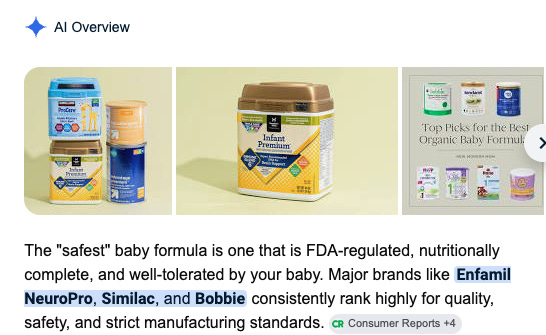
As Google rolls out new Gemini-powered shopping and product-review features, consumer advocates and advertising watchdogs are warning that shoppers may not realize how deeply commercial interests are shaping the AI’s recommendations.
The new tools, integrated into Google Search and its Gemini AI assistant, are supposedly designed to help consumers compare products, summarize reviews and receive personalized buying advice in a conversational format. But unlike traditional search results, the new AI-generated answers can also contain sponsored products, paid placements and AI-written promotional summaries woven directly into the conversation.
Google has openly acknowledged that advertising will play a major role in the system. At recent industry presentations, the company showcased Gemini-generated shopping experiences that include “Sponsored Products” and AI-enhanced advertising integrated directly into search responses.
Instead of simply displaying a banner ad or sponsored link, Gemini can generate what appears to be a neutral recommendation while incorporating advertiser-funded products and merchant data behind the scenes.
That has sparked growing concern among researchers, regulators and consumer advocates who say the approach risks making advertising far less recognizable.
“This is fundamentally different from the old search model where ads were more clearly separated from organic results,” said one digital advertising analyst who studies AI commerce systems. “Now the AI itself may be generating the sales pitch.”
A shift from search engine to shopping intermediary
The rollout reflects Google’s broader strategy to transform its AI systems into a full-scale shopping platform that handles everything from product discovery to recommendations and eventually even checkout.
Gemini shopping tools now draw from multiple sources simultaneously, including:
online product reviews,
retailer feeds,
Google Shopping data,
user behavior signals,
advertiser campaigns,
pricing information,
and merchant-sponsored content.
Google says the system is designed to provide “helpful and relevant” shopping guidance tailored to individual users. But critics argue the enormous complexity of the underlying system makes it difficult for consumers to know when commercial incentives are influencing the advice they receive.
Industry analysts say merchants participating in Google’s shopping and advertising ecosystem may gain visibility advantages inside Gemini-generated responses, even if consumers never see an explicit “ad” label.
In many cases, AI-generated summaries may synthesize both organic reviews and paid promotional material into a single conversational answer.
Consumer groups warn of “invisible advertising”
Consumer advocates say the concern is not simply that ads exist — consumers have long dealt with sponsored search results — but that AI systems may obscure where marketing ends and neutral information begins.
Several digital rights groups have warned that conversational AI interfaces can create what researchers sometimes call “trust laundering,” in which advertising is presented with the tone and authority of an impartial assistant.
That risk becomes especially significant when users ask highly specific shopping questions such as:
“What’s the best refrigerator for reliability?”
“Which baby formula is safest?”
“What laptop has the fewest problems?”
or “Which insurance company has the best customer service?”
In those cases, consumers may assume the AI is independently evaluating products when commercial relationships may also be influencing the response.
Researchers have also raised concerns that AI shopping systems could amplify existing marketplace distortions by favoring:
large advertisers,
dominant retail platforms,
companies with richer product feeds,
or merchants spending heavily on AI-optimized ad campaigns.
Regulators already scrutinizing “dark patterns”
The debate comes as federal regulators are increasingly focused on so-called “dark patterns” — digital design techniques that manipulate consumer behavior or disguise advertising.
The Federal Trade Commission has repeatedly warned technology companies that advertising disclosures must remain “clear and conspicuous,” even in emerging AI interfaces.
While Google says sponsored shopping results are labeled, critics argue the disclosures may become less obvious inside conversational AI systems where users are focused on the natural-language response rather than scanning for ad markers.
Some experts say AI-generated commerce recommendations could eventually become one of the biggest consumer-protection battlegrounds in the technology industry.
“Search advertising was already enormously powerful,” one consumer policy researcher said. “But when the AI becomes the trusted advisor making personalized recommendations in human language, the influence becomes even greater.”
Why it matters to consumers
For consumers, the changes could affect:
how products are ranked and recommended,
which reviews are emphasized,
what prices and offers are shown,
and whether cheaper or better alternatives are surfaced at all.
The rise of AI shopping assistants also raises broader questions about transparency and accountability:
Are recommendations truly independent?
Are merchants effectively paying for visibility?
Can consumers tell the difference?
And who audits the AI systems making those choices?
For now, the answers remain murky.
What is clear is that the next generation of online shopping may no longer look like traditional advertising at all — even when advertising is deeply embedded in the experience.
What about the others?
Google’s Gemini is not alone. Although the approaches differ widely, most major AI companies are actively exploring or already deploying some form of monetized recommendations, affiliate commerce, sponsored content or paid integrations.
What separates them right now is mostly:
how aggressively commercialization is being rolled out,
how visible the sponsorship is,
and whether the system is positioned as a neutral assistant versus a commerce platform.
Here’s the current landscape:
OpenAI (ChatGPT)
OpenAI has so far been more restrained than Google about advertising inside ChatGPT itself, but the company has openly discussed commerce integrations and shopping features.
Recent ChatGPT shopping and product recommendation features generally rely on:
structured product feeds,
retailer information,
review summaries,
and web search integrations.
OpenAI executives have publicly said they are interested in affiliate-style commerce models in the future, particularly where users make purchases directly from recommendations. But OpenAI has also said it wants to avoid making ChatGPT feel overloaded with ads.
At present:
there is no broad traditional ad network embedded in ChatGPT responses,
but commerce partnerships and transactional integrations are increasingly likely,
especially as AI assistants evolve into shopping intermediaries.
The key distinction is that OpenAI currently appears to emphasize subscription revenue over advertising revenue.
Microsoft Copilot
Microsoft has experimented heavily with ads in AI search and chatbot experiences through Bing and Copilot.
That includes:
sponsored search-style insertions,
shopping recommendations,
affiliate-style product suggestions,
and travel/hotel commerce integrations.
Microsoft Advertising has discussed “conversational ads” designed specifically for AI assistants.
Because Copilot is deeply integrated with Bing search, sponsored content can influence responses similarly to traditional search advertising.
Meta AI
Meta’s entire business model revolves around advertising, so most analysts expect Meta AI eventually to become highly commercialized.
Meta has already explored:
AI-generated product discovery,
conversational shopping,
Instagram and Facebook commerce integrations,
and personalized advertising through AI assistants.
Meta’s vast behavioral advertising infrastructure gives it unusual targeting power if AI recommendations become ad-driven.
Anthropic (Claude)
Anthropic has so far taken a more cautious public posture toward advertising and monetized recommendations.
Claude currently appears less commerce-focused than Gemini or Copilot. The company emphasizes:
enterprise subscriptions,
API licensing,
safety,
and constitutional AI principles.
However, analysts expect economic pressure eventually to push nearly all major LLM providers toward some type of monetization beyond subscriptions alone.
Perplexity AI
Perplexity has already begun integrating shopping features and merchant links into some responses.
The company has reportedly explored:
affiliate commerce,
sponsored answer modules,
and merchant partnerships.
Because Perplexity markets itself as an “answer engine,” questions about neutrality and commercial influence have already surfaced.
Why this matters
The central consumer-protection concern is that AI systems speak with an authoritative, conversational voice that users may perceive as neutral or trustworthy — even when commercial incentives are influencing the output.
That creates several risks:
sponsored recommendations may feel like objective advice,
paid placement may become harder to identify,
affiliate incentives may shape rankings,
and consumers may not know why certain products appear first.
Regulators are increasingly focused on whether AI-generated recommendations require stronger disclosure rules than traditional digital advertising.
The FTC has already warned companies that AI systems do not exempt them from truth-in-advertising laws or disclosure requirements.
The broader industry trend is becoming clear:
AI companies are rapidly evolving from information tools into transaction and recommendation platforms — and wherever recommendations influence purchases, advertising and commercial incentives usually follow.
—
Research from ChatGPT was used in preparing this article.