

Who’s to blame for sky-high egg prices? It’s not the chickens. As American families face another round of rising grocery bills, a group of Senate Democrats says it’s corporate behavior that is making things worse.
In a letter to the U.S. Department of Justice and the Federal Trade Commission, lawmakers led by Elizabeth Warren (D-MA) and Chuck Schumer (D-NY) are calling for an aggressive crackdown on alleged price-fixing and anticompetitive practices across the food and agriculture industries.
The push comes as geopolitical tensions tied to the Iran conflict 2026 ripple through global supply chains, driving up key inputs like fuel and fertilizer — costs that typically end up in consumers’ grocery carts.
Lawmakers: “Get serious” about food prices
The senators argue that while external shocks are raising costs, consolidation among major food producers, suppliers and retailers is amplifying the impact.
“Now, more than ever, it is time for the Administration to get serious about addressing these problems,” the lawmakers wrote, pointing to what they described as a lack of meaningful enforcement action so far.
They are urging regulators to investigate dominant players in sectors such as meatpacking, fertilizer, seeds and farm equipment — industries that have seen decades of mergers and shrinking competition.
Other signers of the letter include Richard Blumenthal, Cory Booker, Bernie Sanders and Peter Welch.
Supply shocks meet market power
A key concern: the intersection of global disruption and concentrated corporate power.
The lawmakers point to the closure of the Strait of Hormuz — a critical global shipping chokepoint — which they say has halted roughly one-third of global fertilizer shipments. Fertilizer is a cornerstone input for modern agriculture, and spikes in its price tend to cascade quickly into higher food costs.
Economists broadly agree that input shocks like fuel and fertilizer can push grocery prices higher within months. But consumer advocates say concentrated markets can make those increases “stickier,” allowing companies to maintain elevated prices even after costs stabilize.
Grocery bills outpacing inflation
The pressure is already showing up in household budgets.
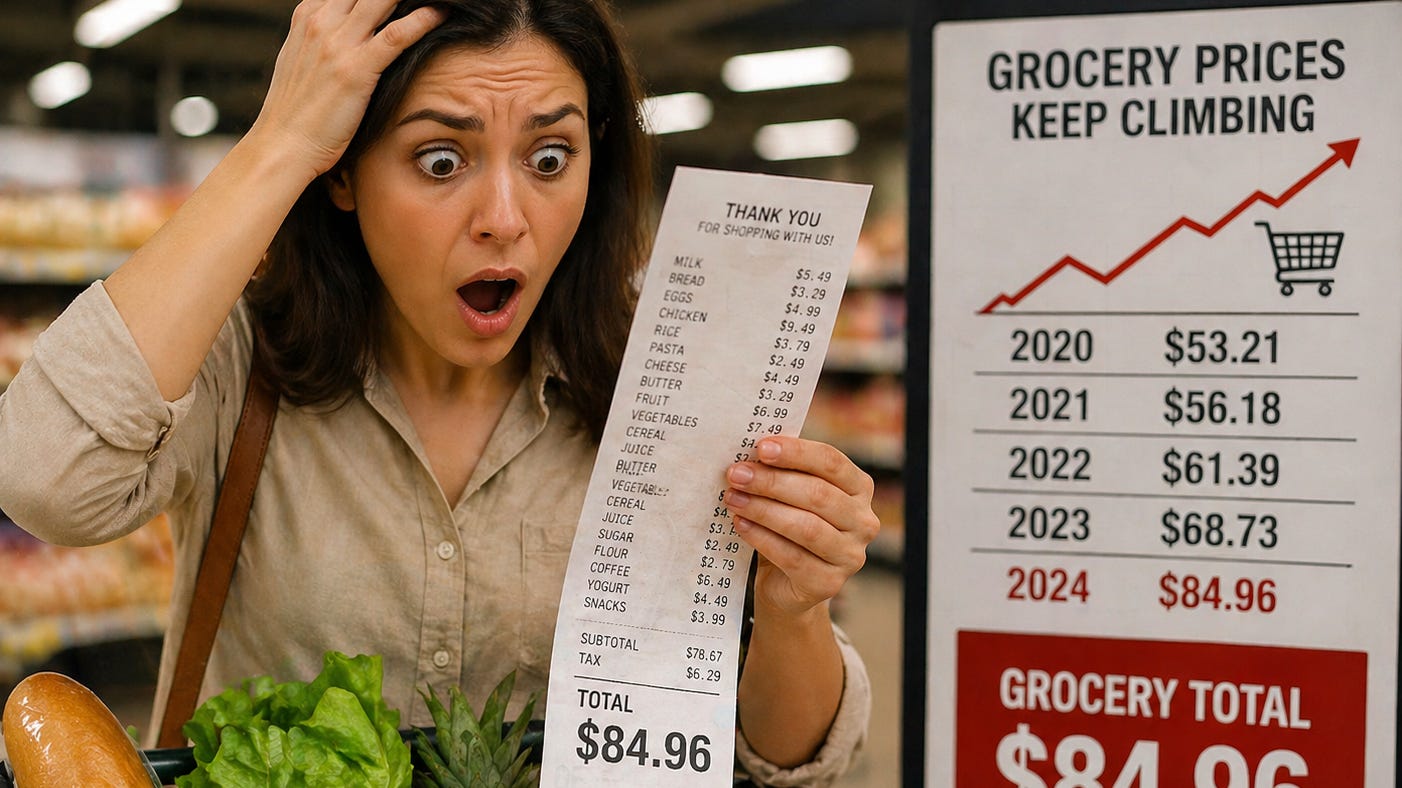
Lawmakers cited data indicating Americans paid about $310 more for groceries last year compared with 2024, with food prices rising faster than overall inflation — a trend that has persisted intermittently since the pandemic-era supply chain disruptions.
Recent data from the Bureau of Labor Statistics has similarly shown food-at-home prices remaining volatile, particularly for staples like eggs, meat and processed foods.
Scrutiny of “surveillance pricing”
Beyond traditional price-fixing concerns, the senators are also zeroing in on newer pricing strategies.
They are urging the FTC to revive an investigation into so-called “surveillance pricing” — the practice of using consumer data to tailor prices individually.
Consumer advocates have warned that such systems, powered by online tracking and purchase histories, could allow retailers to charge different customers different prices for the same product — potentially pushing costs higher for certain groups.
The FTC previously signaled concern about these practices but has not finalized enforcement action or rules.
What regulators are being asked to do
The letter outlines a sweeping set of demands aimed at reshaping the food marketplace:
Investigate and prosecute antitrust violations in agriculture and food sectors
Block or more closely scrutinize mergers among major suppliers and retailers
Enforce the Robinson-Patman Act, which targets discriminatory pricing practices
Issue new rules addressing exclusionary contracts and rebate systems
Reopen investigations into data-driven pricing strategies
The lawmakers also floated the possibility of breaking up dominant firms — a step regulators have taken only rarely in recent decades but that has gained renewed attention amid broader antitrust debates.
Industry pushback likely
Food industry groups and large retailers have historically pushed back on claims of widespread price manipulation, arguing that rising costs are driven primarily by global factors — including energy prices, labor shortages and supply disruptions.
They also warn that aggressive antitrust action could reduce efficiency and raise costs further.
Still, consumer advocates counter that highly concentrated markets — where a handful of firms dominate — can reduce competition and make it easier for companies to raise prices without losing customers.
What this means for consumers
For households already stretched by housing, insurance and debt costs, grocery prices remain one of the most visible and immediate financial pressures.
If regulators act on the senators’ requests, it could eventually lead to:
More scrutiny of mergers and pricing practices
Potential legal action against dominant firms
New rules governing how companies set prices
But any impact on grocery bills would likely take time.
In the near term, analysts say global supply disruptions — especially those tied to energy and fertilizer — will continue to play a major role in what Americans pay at the checkout line.
The bottom line
The clash highlights a growing debate in Washington: how much of today’s high prices are driven by global crises — and how much may be tied to corporate power at home.
With lawmakers demanding answers and a response deadline already passed, pressure is building on regulators to decide whether — and how aggressively — to step in.