



No thanks to the phone companies, which have largely neglected their legal responsibilities to squash scam calls and robocalls, but the average loss per call increased $283 to $3,973 during the first half of 2026, up 8% from last year.
Scam text messages are also doing well. The average loss per scam text was $1,960 during the first half of the year, an increase of $508, or 35%, during the first half of 2026, according to the Federal Trade Commission.
The rising success rates for cybercrooks results largely from phone companies not doing their job while artificial intelligence steps up to the plate and knocks it out of the park by helping scam artists find likely prospects and helping them hone their pitch to appeal to individual victims.
Phone companies calling it in
The phone companies contribute to the problem by not installing the anti-robocall technology required by law. Only 42% of phone companies have installed the gear that tells them exactly who is making a call, according to a study by U.S. PIRG Education Fund.
This isn’t a case of the companies being slow to improve their act. They’re actually going backward, according to the Federal Communications Commission’s Robocall Mitigation Database.
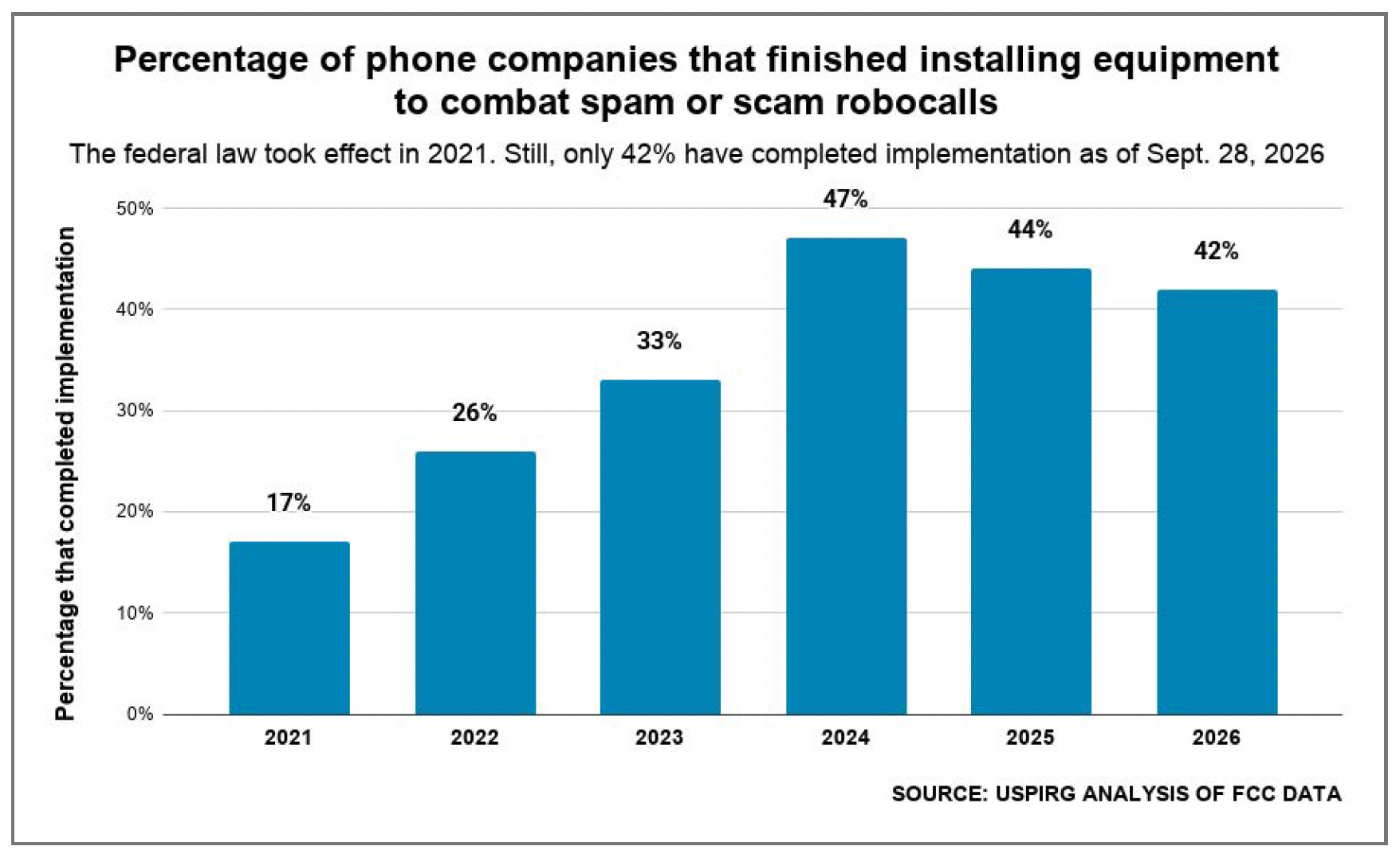
Now, you might think there are only three or four phone companies so why can’t they get their acts together? In fact, there are 11,467 phone companies, believe it or not, and 6,614 of them have not installed the anti-robocall technology.
Admittedly, many of these companies are small; they may, for example, handle calls only from state prisons. Those companies tend to be highly profitable, however, since they have what you might call a captive population. (Also, at least some of their clients are themselves former cybercriminals who have a lot of time on their hands).
Without the anti-robocall equipment, it’s relatively easy for a scammer to “spoof” a number, making it look like a call is coming from the FBI, your bank or some other trusted agency.
Scammers now have the 411
For those of a tender age, 411 was once the go-to number for information. You could get phone numbers for just about anybody. That’s now old hat. With AI, anybody can build a shockingly complete portfolio on individuals, groups and demographic sectors.
Want proof? An April 2026 survey released by a scam call tracking company, Truecaller, found that one out of four Americans said they lost money to a scam call in the past year.
The company says the problem is worsening, thanks to deepfake calls produced by AI. Besides helping to identify victims, AI can generate deepfake calls that impersonate someone known to the victim — a family member, politician or celebrity. Truecaller says one in three people have received a deepfake call.
“The notion of scam calls leading to bigger financial losses when they’re more believable is frightening, given the skyrocketing capabilities of artificial intelligence to scrape social media for personal information, hack into financial accounts and mimic a loved one’s voice based on a few seconds of audio,” PIRG said in a news release.