



If you’ve been thinking of selling your house, you may want to find something else to think about for awhile.
The affordability phenomenon has hit housing in a big way. Sales of previously owned U.S. homes dropped 5.5% in October, dipping to a seasonally adjusted rate of 3.75 million. That’s the slowest pace since August 2010 and 8.8 percent below last year, according to the National Association of Realtors.
It was the third consecutive month the sales fell below a 4 million annual pace, leaving the market near a 30-year low even as the latest monthly decline was the steepest since January.
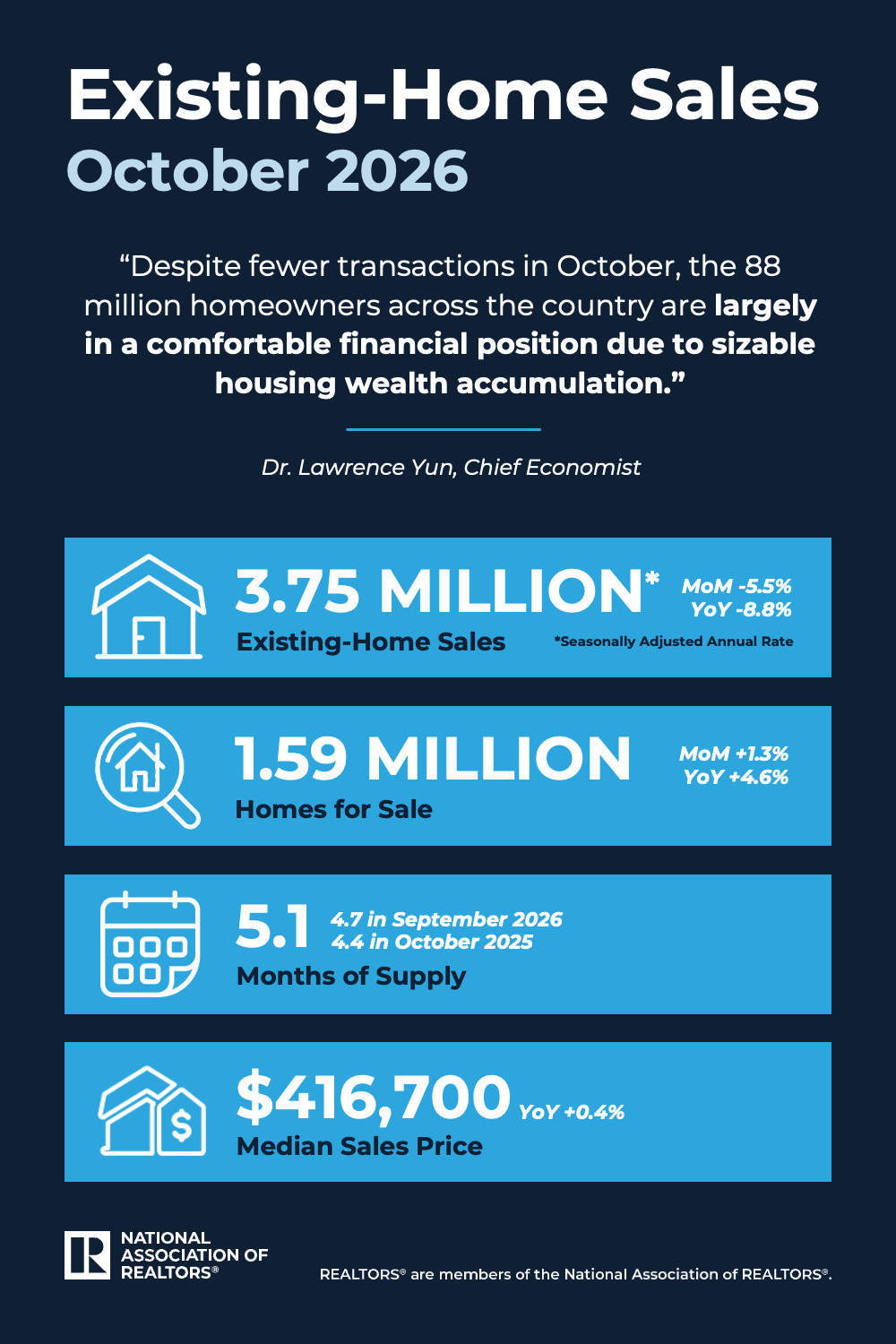
“Home buying is difficult when mortgage rates have climbed to their highest levels since 2000, aside from a single month in 2023. As a result, home sales fell to their lowest level since August 2010,” said NAR Chief Economist Lawrence Yun.
Don’t blame the Boomers
Until recently, the Boomers have been blamed for the housing crisis, as younger generations complain that their parents aren’t moving out of their big old houses on schedule, leaving the youngsters jammed into 800-square-foot apartments.
But real estate brokers, economists and other beady-eyed observers say the Boomers aren’t really to blame, even though they don’t like cramped apartments either.
The issue now, say the experts, is affordability, not simply a shortage of willing buyers. Mortgage rates and home prices remain high enough to keep many would-be buyers on the sidelines, and the first-time buyer share was 29 percent, according to the Realtors’ data cited by the Associated Press.
BMO Capital Markets economist Priscilla Thiagamoorthy wrote that “With sales at a 16-year low, and the Fed poised to raise rates further, housing will remain under pressure for some time.” Translation: Maybe the Boomers should finish the basement or attic and let the kids move in.
Mortgage rates eased for a fourth straight week, but the improvement is modest against the year-earlier comparison. The average 30-year fixed rate was 7.11 percent, down from 7.18 percent the previous week but above 6.24 percent a year earlier, Freddie Mac data showed, the AP said.
On a $400,000 loan, that gap means a monthly payment roughly $300 higher than when rates were just below 6 percent.
Rising consumer prices don’t help
Rising consumer prices are aggravating the situation. Consumer prices rose 0.4 percent in October from September, more than the 0.3 percent forecast in a Dow Jones survey, while core prices excluding food and energy rose 0.3 percent against a 0.2 percent forecast, CNBC reported.
Inflation has run above the Federal Reserve’s 2 percent target for more than five years and no immediate relief is in sight. Nearly 88 percent of traders expected a quarter-point rate increase at the Fed’s December meeting, according to CME FedWatch data.
That outlook matters to consumers and would-be home buyers because an extended fight against inflation can keep pressure on new borrowing even when some market rates briefly retreat.
The mortgage-rate average remains 7.11 percent, and Fed officials have discussed another increase as they weigh persistent price growth against a labor market that has not produced a surge in layoffs.