

Friday is the day when bad news is released in Washington and yesterday was no exception. Among the developments:
Inflation saw the largest one-month jump since the pandemic and reached its highest level since May 2024, thanks largely to the surge in gas prices caused by the Iran war.
Analysts warned the worst may still be ahead as energy costs spread into food, travel and everyday goods.
Amid those price spikes, consumer sentiment plunged to the lowest level ever recorded in the 74-year history of a University of Michigan survey.
Gallup pollsters find that nearly six in 10 Americans say their taxes are too high.
Inflation: up, up and away
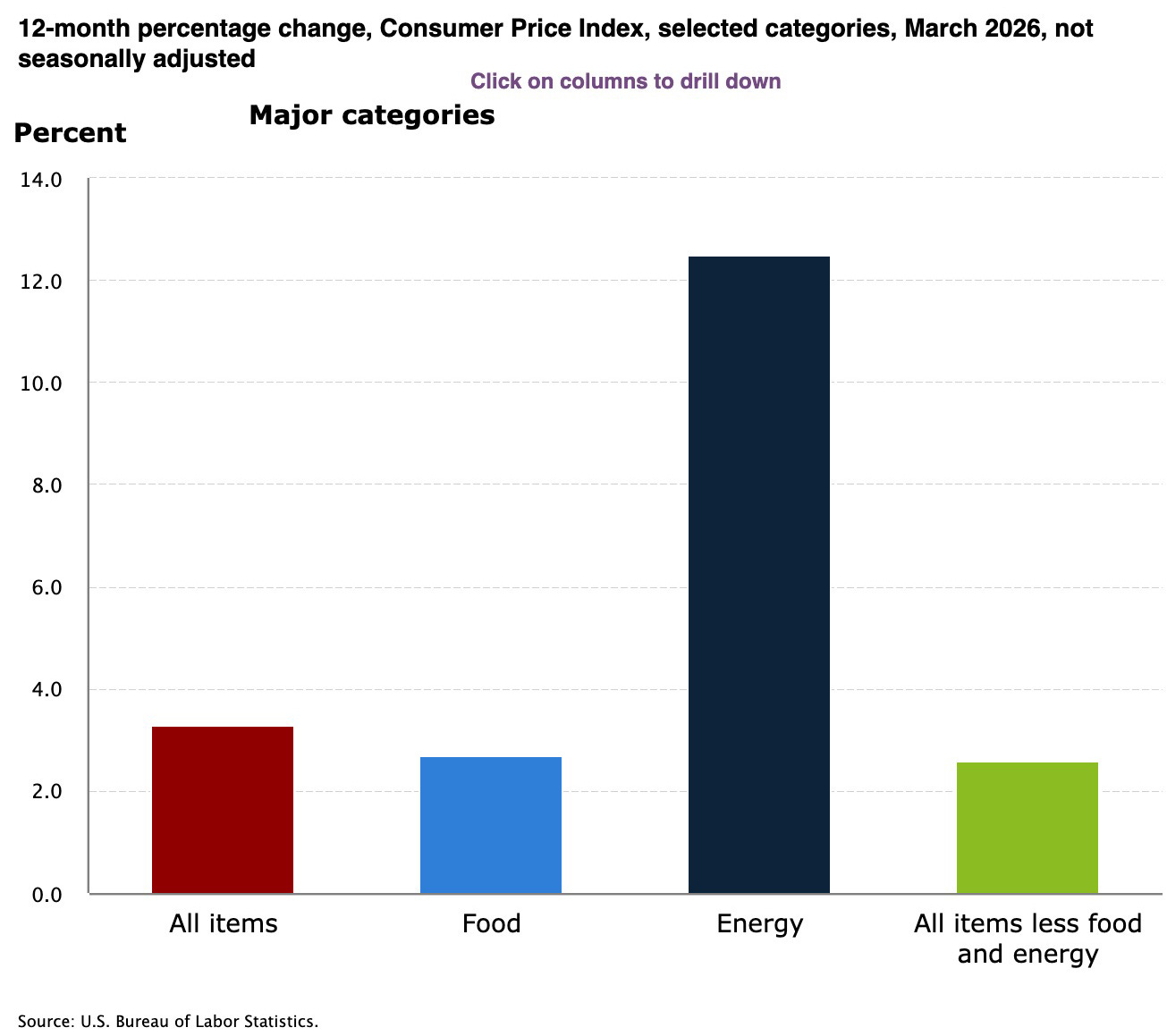
A sharp surge in energy prices tied to the war with Iran drove U.S. inflation to its highest level in nearly two years in March, according to new data from the U.S. Bureau of Labor Statistics.
The Consumer Price Index rose 0.9% for the month — the largest increase since 2022 — pushing annual inflation to 3.3%. The spike was fueled largely by disruptions in global oil markets following the closure of the Strait of Hormuz and concerns about damage to Persian Gulf energy infrastructure.
Gasoline prices soared 21.2% in just one month, while fuel oil jumped 31%, delivering an immediate hit to household budgets.
Core inflation — which strips out volatile food and energy prices — was more subdued, rising 0.2% monthly and 2.6% annually. Still, it remains above the Federal Reserve’s 2% target, and economists caution that the relatively calm core reading may not last.
Airfares, for example, have already begun climbing as jet fuel prices have more than doubled since the conflict began.
White House highlights falling food prices
The White House sought to emphasize signs of resilience in the data.
Top economic adviser Kevin Hassett pointed to falling grocery costs, noting that egg prices are down sharply over the past year. Officials also highlighted stable or declining prices for items such as beef, dairy and prescription drugs.
At the same time, administration spokesperson Kush Desai acknowledged the strain caused by the conflict, describing the current moment as one of “short-term disruptions” tied to military operations in the Middle East.
Democrats, however, placed responsibility squarely on the administration. Sen. Elizabeth Warren said rising prices at the pump and grocery store are being felt directly by American families and blamed current policies for worsening conditions.
Analysts warn of a second wave of inflation
Economists quoted by The Fiscal Times say the March data likely represents only the first phase of a broader inflationary surge.
RSM Chief Economist Joseph Brusuelas described the current moment as a two-stage shock: an initial spike in energy prices followed by a broader wave affecting transportation, food and services.
“The size of the energy shock is such that businesses and households should not anticipate any near-term relief,” Brusuelas said, warning that higher costs could persist throughout the year.
Other analysts expect April’s inflation numbers to worsen as the ripple effects spread. Michael Pearce of Oxford Economics said the near-term outlook is “painful,” though he suggested the spike may resemble a short, sharp shock rather than the prolonged inflation seen after Russia’s invasion of Ukraine in 2022.
Still, Fitch Ratings economist Olu Sonola warned that consumers are likely to feel the impact widely. Rising fuel costs are expected to show up as surcharges and higher prices across everyday goods and services — not just in discretionary spending like travel.
Consumer sentiment collapses to historic low
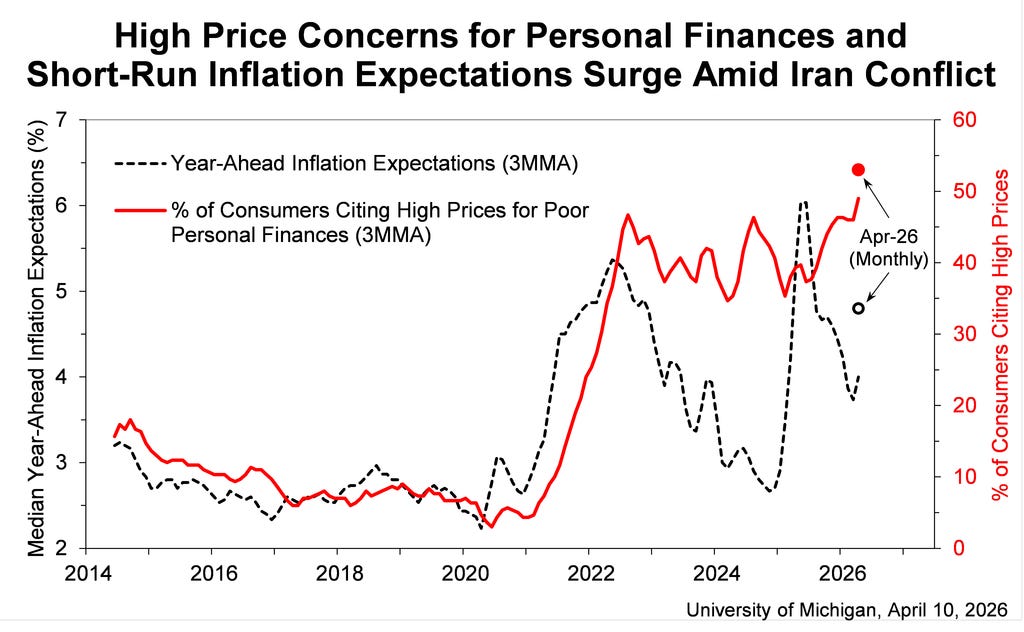
At the same time inflation is accelerating, Americans’ confidence in the economy is deteriorating rapidly.
The University of Michigan reported that its consumer sentiment index fell 11% in April to 47.6 — the lowest level recorded since the survey began in 1952.
The drop surpasses the previous low reached in 2022, when inflation peaked at multi-decade highs.
The decline was broad-based, cutting across age, income and political groups. Americans’ views of current economic conditions fell more than 10% from March, while expectations for the year ahead dropped sharply.
Inflation expectations also jumped, with consumers now anticipating 4.8% inflation over the next year — a full percentage point increase in just one month.
Survey director Joanne Hsu said respondents cited rising prices and declining financial security, with many explicitly pointing to the Iran war as a key factor.
Economic policy concerns intensify
Public dissatisfaction with government economic policy is also rising.
Economist Claudia Sahm noted that more than 70% of Americans now say the government is doing a poor job managing the economy — a level of discontent not seen in decades.
The backlash appears tied both to last year’s tariffs and the current surge in gas prices, underscoring how inflation remains a politically potent issue.
Tax frustration adds to economic strain
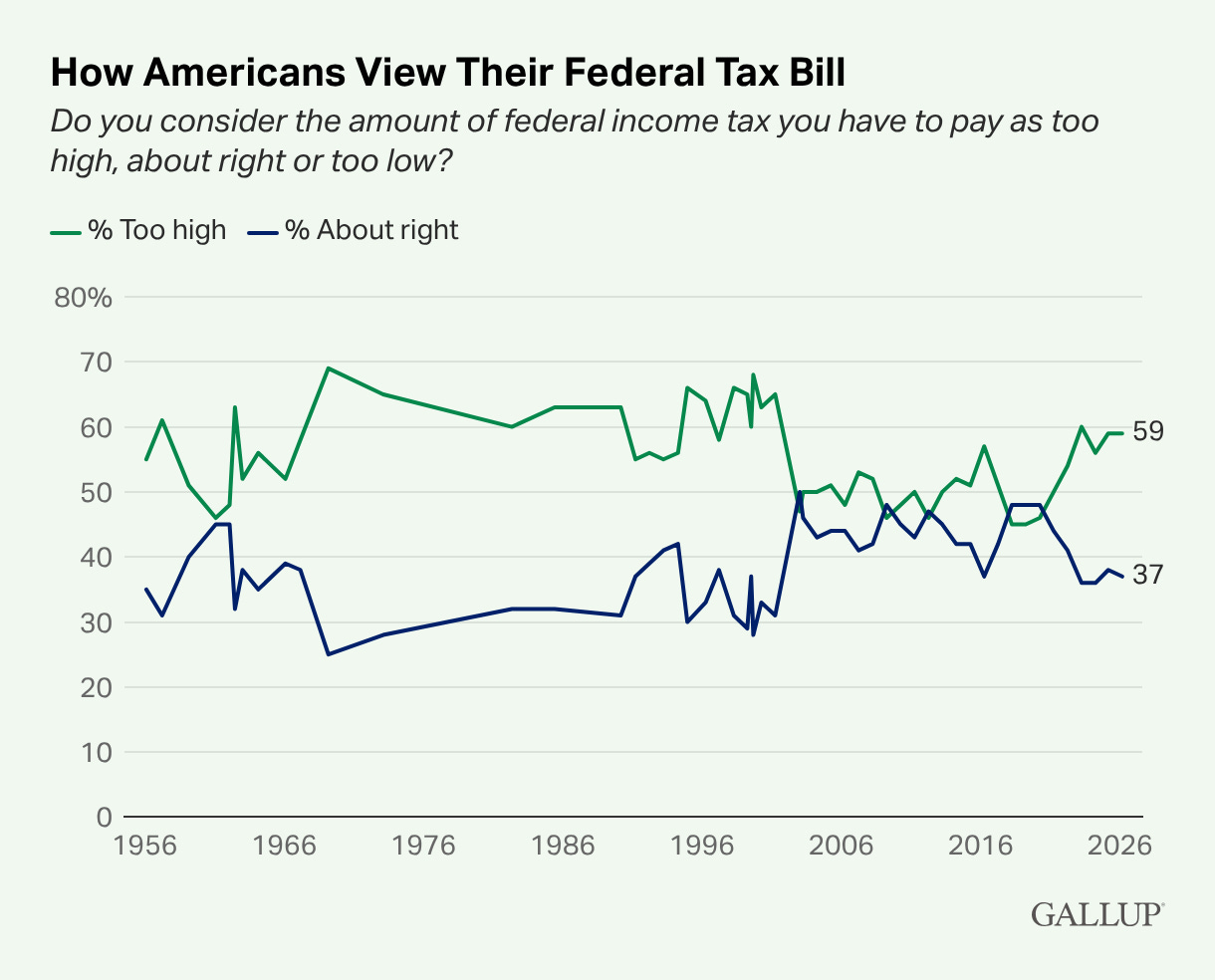
Compounding concerns about inflation, Americans remain deeply unhappy with their tax burden.
A new survey from Gallup finds that nearly six in 10 Americans say their taxes are too high — a level that has persisted for four consecutive years.
While slightly below peaks seen in the 1970s through 1990s, the share is well above early-2000s levels following the Bush-era tax cuts.
The survey also shows growing dissatisfaction with fairness: nearly half of Americans say their taxes are not fair, near historic highs.
Notably, recent tax cuts enacted last year have not yet improved public perceptions — suggesting that rising prices may be overshadowing any perceived benefits.
What it means
The U.S. economy is entering a volatile phase where external shocks — particularly from global conflicts — are once again driving inflation.
While underlying price pressures remain relatively contained for now, the energy shock is already hitting consumers directly and is expected to spread more broadly in the coming months.
At the same time, confidence in the economy is collapsing, with Americans increasingly pessimistic about both current conditions and the future.
A recently announced ceasefire between Iran and its adversaries could ease some pressure if it holds, particularly by stabilizing oil markets. But analysts caution that supply disruptions may take time to unwind — meaning relief at the gas pump, and in broader prices, may not come quickly.
For consumers, the combination of rising costs, falling confidence and persistent tax frustration underscores a difficult economic moment — one that could define the months ahead.