


A new front in war: the cloud
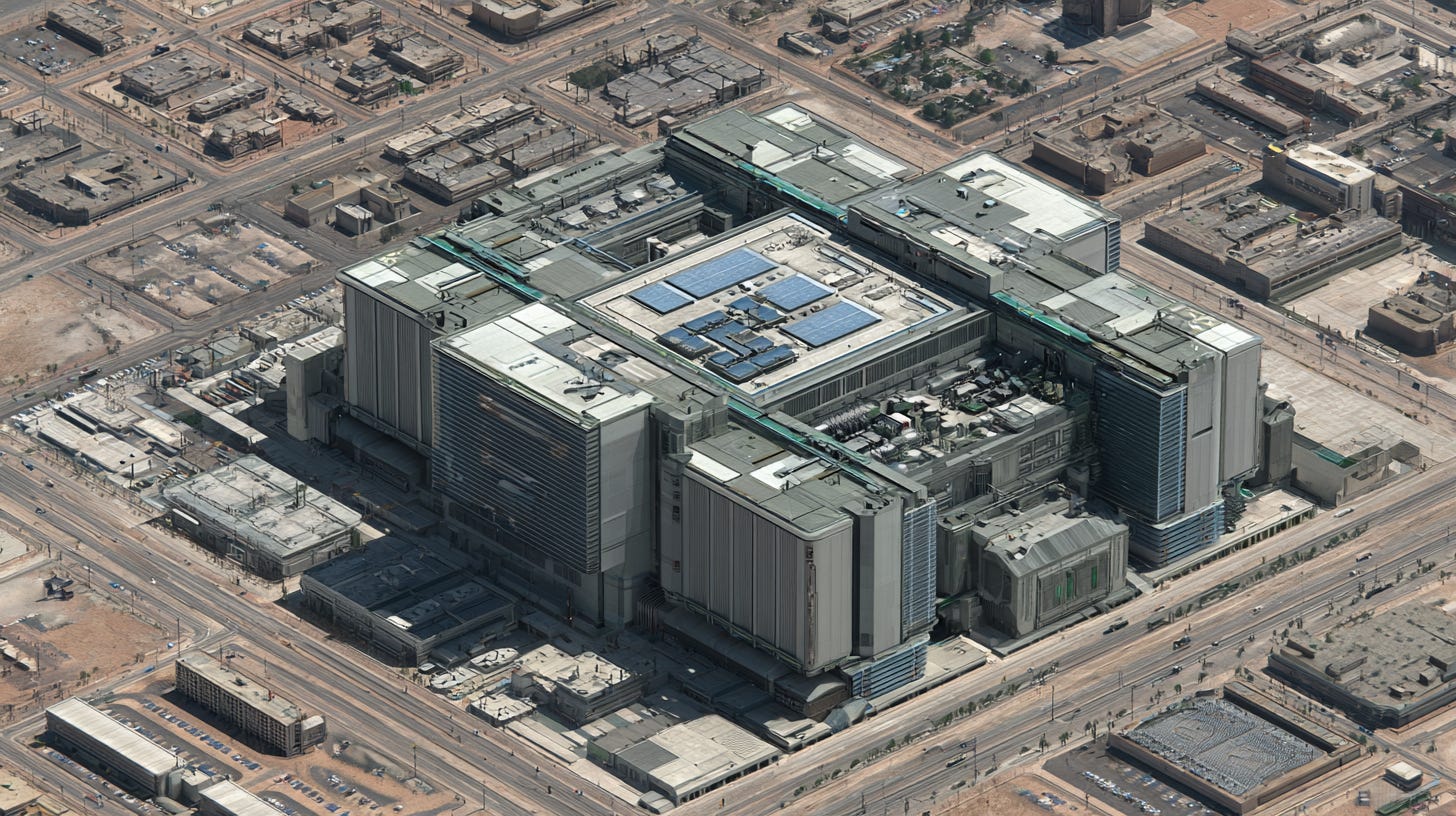
Iran has formally declared that data centers operated by Amazon Web Services, Google Cloud, and Microsoft Azure are legitimate military targets—an escalation that could redefine how modern warfare treats digital infrastructure.
The declaration, issued in late March amid the expanding 2026 Iran war, argues that facilities hosting U.S. military workloads — especially artificial intelligence systems used for intelligence and logistics — have lost their protected civilian status under international humanitarian law, according to a report in Silicon Canals.
At the center of the dispute is a simple but destabilizing fact: the same cloud servers that process sensitive Pentagon data also host consumer banking, streaming services, and hospital records.
The legal argument: when civilian becomes military
Iran’s position relies on the “principle of distinction” under the Geneva Conventions, which requires separating civilian and military targets. By placing defense workloads inside commercial cloud systems, Iran argues, the U.S. has blurred that line.
The Pentagon’s Joint Warfighting Cloud Capability (JWCC) contract — worth up to $9 billion — spreads classified and unclassified workloads across multiple providers, embedding military functions into shared infrastructure.
That architecture creates a difficult legal question: If a data center simultaneously supports battlefield communications and civilian hospital systems, can it still be considered off-limits?
Experts say the answer is increasingly unclear—and that ambiguity is exactly what makes the situation dangerous.
Real-world strikes already underway
The debate is no longer theoretical.
Recent reporting indicates that Iranian forces have already targeted cloud infrastructure in the Gulf, including facilities linked to AWS in Bahrain and the United Arab Emirates, causing outages that disrupted banking and consumer services, a recent CSIS report found.
Iran has also publicly threatened a broader list of U.S. tech firms — including Google, Microsoft, and others — warning that facilities tied to military operations could face further attacks.
Analysts say this marks the first time hyperscale cloud infrastructure has been treated as a direct battlefield asset.
What this means for consumers
For ordinary users, the implications are significant — and largely invisible until something breaks.
Cloud data centers underpin:
Banking and payment systems
Electronic health records
Streaming platforms and communications apps
Government and emergency services
When a single facility goes offline, the disruption can cascade across multiple industries at once.
Earlier strikes in the region temporarily knocked out services ranging from ride-hailing apps to financial platforms, underscoring how tightly everyday life is tied to cloud infrastructure, according to CSIS.
Industry reckoning: risk, insurance, and redesign
The shift is already forcing changes across the tech sector.
Cloud providers and their customers are reassessing:
Geographic risk: Data center locations in conflict-prone regions
Insurance exposure: War exclusions may leave companies uncovered
System design: Greater redundancy and potential moves toward distributed or even space-based computing
The traditional assumption — that the cloud is “everywhere and nowhere,” and therefore insulated from geopolitical risk — is rapidly eroding.
The bigger picture
At its core, the dispute highlights a deeper transformation: data itself has become a strategic asset in warfare.
Military operations increasingly rely on commercial infrastructure, while civilian systems depend on the same networks. That overlap is turning previously neutral digital spaces into contested territory.
As one analysis put it, data centers are no longer just infrastructure — they are now part of the battlefield.
Takeaway for consumers
Research across legal, military, and tech policy fields converges on one point:
The integration of military systems into commercial cloud infrastructure has fundamentally changed the risk profile of the internet itself.
What used to be neutral infrastructure is now contested space — and the consequences are likely to be felt far beyond the battlefield.