


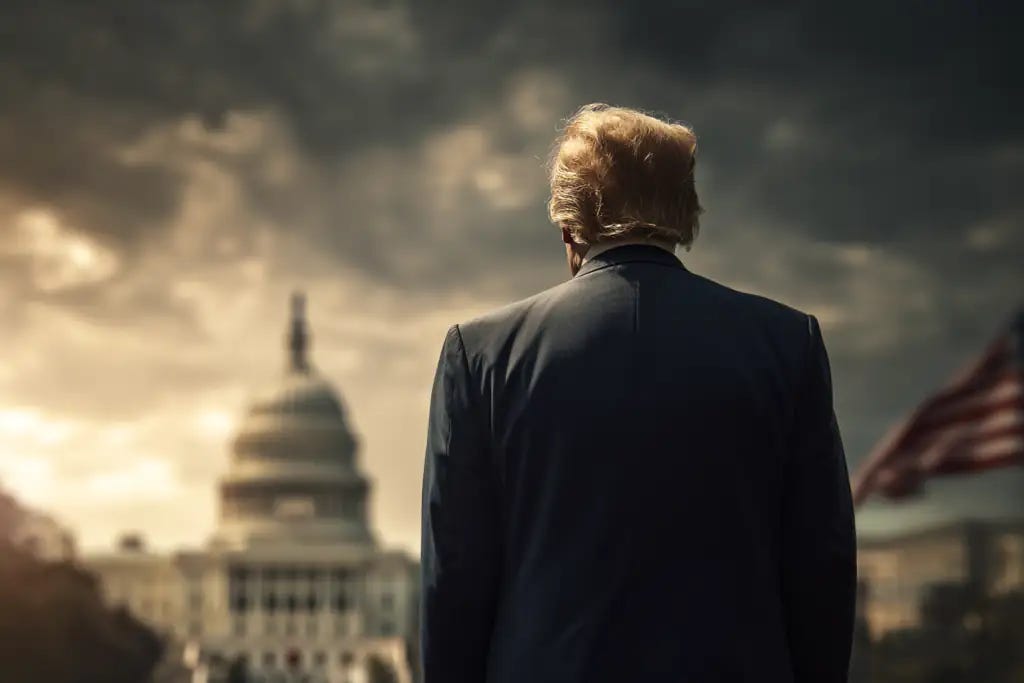
Legal scholars argue the Trump administration’s “pocket rescission” strategy violates federal law and the Constitution.
Impoundment Control Act was designed to limit, not expand, presidential power to withhold funds.
Supreme Court precedent and GAO findings reinforce that only Congress controls the federal purse.
The Trump Administration has ridden roughshod over Congressionally-approved programs that have existed for decades, cutting funding with no notice to foreign aid and numerous other programs, leaving federal employees, contractors and partner countries in the lurch.
The response to this by many is that Trump won the election and he’s in charge. This is not, however, hOW things work under the Constitution.
“a radical and unconstitutional power grab”
A new opinion paper by legal experts David Super and Sam Berger warns that the Trump Administration’s use of so-called “pocket rescissions” to block federal spending is illegal, unconstitutional, and a direct attack on Congress’s power of the purse.
The practice, which involves proposing rescissions of federal funds so late in the fiscal year that the money expires before Congress can act, was championed by former Office of Management and Budget Director Russell Vought as a way to bypass Congressional appropriations. The authors, and other Constitutional experts, argue this tactic distorts the Impoundment Control Act (ICA), a 1974 law passed to rein in presidential impoundments after Richard Nixon’s attempts to withhold funds unilaterally.
Why “pocket rescissions” fail the legal test
According to the paper, published by the Center for Budget and Policy Priorities, there are four key reasons the approach is unlawful:
The ICA was explicitly enacted to stop unilateral presidential impoundments.
The law requires funds to be spent where Congress directs, forbidding presidential delays that undermine authorizing statutes.
The ICA requires prompt submission of rescission requests, not last-minute proposals timed to let funds expire.
The Supreme Court struck down the line-item veto in 1998, a nearly identical maneuver.
The Government Accountability Office has also made clear that the ICA does not allow presidents to withhold funds through their expiration dates, emphasizing that Congress alone holds spending authority.
“A pocket rescission is illegal as we explained in our most recent decision on pocket rescissions.” the GAO said in an Aug. 6 post. “Congress holds the power of the purse—approving a budget and appropriating funds. Presidents and executive branch agencies are responsible for administering those funds.”
There’s nothing new about this. Pocket rescissions have been used for years, mostly by President Trump. But just because one or more people routinely violate the law doesn’t mean it’s OK to do so.
Trump-Era “Pocket Rescissions” at a Glance
What they are: Attempts to withhold or delay congressionally approved funds near the end of a fiscal year, effectively canceling them without Congress voting.
Key Episodes
Ukraine Aid Freeze (2019)
OMB held back nearly $400M in security assistance.
• GAO finding: Violation of the Impoundment Control Act.
• Reaction: Cited in Trump’s first impeachment; lawmakers warned it set a dangerous precedent.Foreign Aid Pause (2019)
White House ordered State/USAID to stop obligations while considering rescissions.
• Reaction: Bipartisan backlash; watchdogs said it disrupted operations. The freeze was lifted after pushback.$15B Rescissions Package (2018)
A formal request under the ICA, not a pocket rescission.
• Outcome: Senate narrowly rejected cuts that targeted CHIP and domestic programs.Second-Term Foreign Aid Withholding (2025)
Broad freezes revived the tactic.
• Court action: D.C. Circuit let the freeze stand on technical grounds.
• Reaction: Humanitarian groups warned of global fallout; dissenting judge called it a threat to checks and balances.
Constitutional clash
The CBPP report stresses that even if the ICA could be reinterpreted to allow pocket rescissions, the approach would run afoul of Article I of the Constitution, which vests all legislative power in Congress. The Supreme Court’s 1998 decision striking down the Line Item Veto Act affirmed that presidents cannot cancel spending items without congressional approval.
The authors conclude that pocket rescissions are “a radical and unconstitutional power grab” that undermine democratic checks and balances. They call on Congress and regulators to defend the ICA’s original purpose and prevent future administrations from unilaterally canceling appropriated funds.