

Meta glasses brighten some days, darken others
Privacy fears may overshadow the interest of blind and vision-impaired people

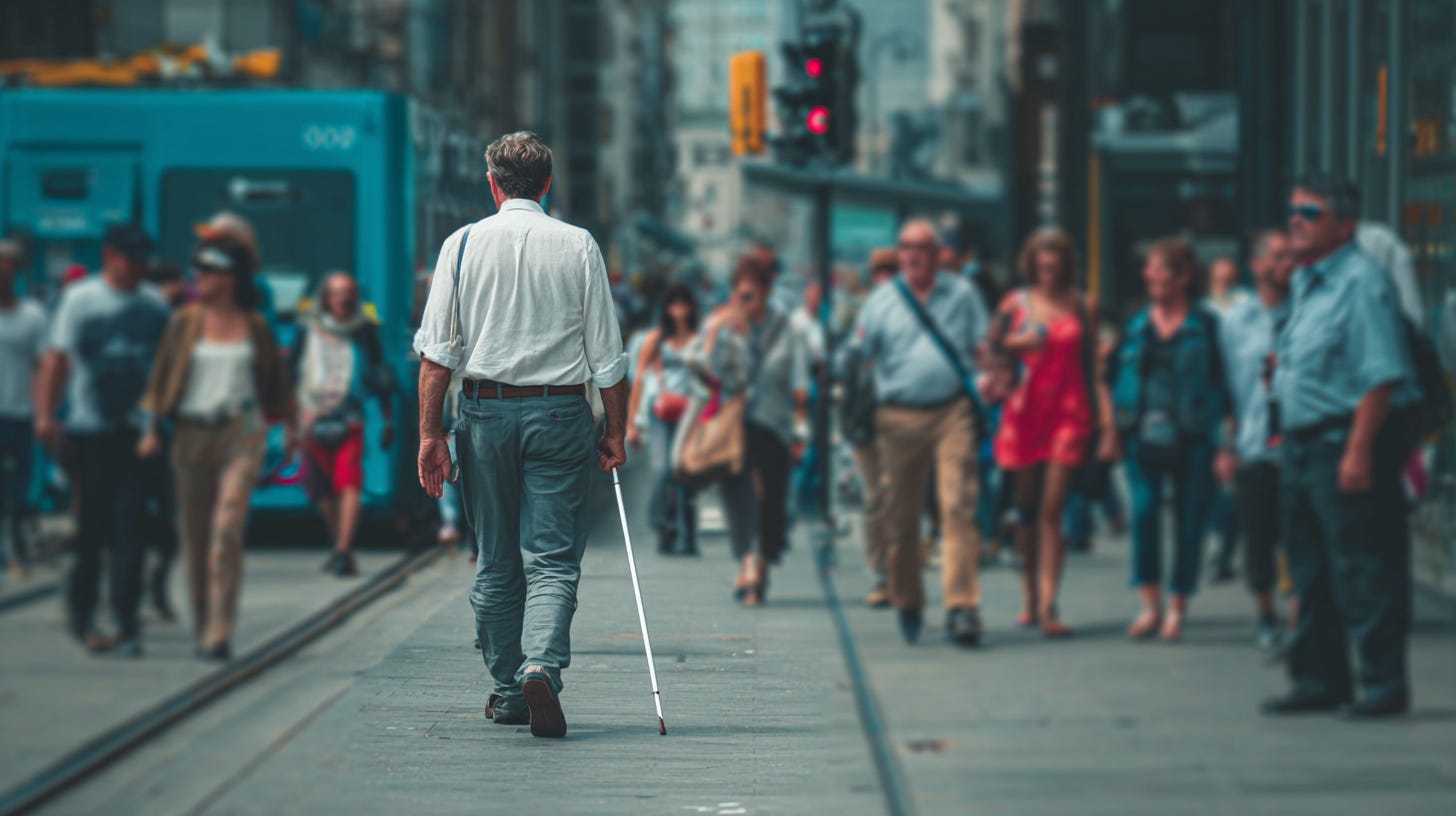
Do blind people want to know who’s standing in front of them? Maybe, but a coalition of consumer organizations says it’s “reckless and dangerous” to include facial recognition technology in the Meta Ray-Ban Display Meta glasses. Those are the new AI-driven eyeglasses that can help blind and vision-impaired people “see” the world around them as well as perform useful tasks for those with normal vision.
The coalition, led by the Consumer Federation of America, says that integrating facial recognition into the glasses would provide tools to scammers, blackmailers, stalkers and child abusers.
But not all blind people see it that way. Marshall, a Sacramento man with macular degeneration who agreed to speak with us, said he hasn’t thought that much about facial recognition because he is still learning about more essential capabilities after having had the glasses for a few weeks.
He said they have “opened up the world in a number of ways.” Most significantly, he’s able to read the previously useless Uber app on his smartphone, enabling him to get around.
He is now able to clearly “see” items on supermarket shelves, read text on a computer and read important healthcare documents, he said. The glasses are able to remember what they have seen, which he said is very useful in dealing with the mountain of paperwork from doctors, hospitals and insurers that he faces each day.
As for facial recognition, Marshall said he hasn’t thought that much about it, since it is not yet available, at least on his glasses.
Marshall’s view seems typical of the blind and low-vision community, which is strongly supportive of the glasses’ more essential capabilities.
Disability technology advocates note that smart glasses are hands-free, which matters when someone is using a cane, holding a guide dog harness, or navigating stairs, and they support real-time decision-making that is essential when barriers appear unexpectedly.
Consumer Reports, in a first-person review by a blind user and disability advocate, found the glasses “promising” — able to describe objects, read signs and dashboards, and provide independence.
On facial recognition specifically, critics acknowledge the technology could genuinely help those who are hard of seeing or who suffer from prosopagnosia — the neurological condition causing literal face blindness — to recognize friends or family members.
Does Meta have ulterior motives?
Meta is most certainly not a charitable institution and its own internal documents seemingly undercut the sincerity of its enthusiastic framing of the glasses’ usefulness to the blind.
Documents viewed by the New York Times reportedly showed Meta planning to introduce the “Name Tag” facial recognition feature as an accessibility feature at a conference for blind users before releasing it to the general public — a rollout that critics characterized as using the disabled community to launder a controversial product launch. That conference demo never happened.
The same internal memo also argued that domestic political turmoil made for appealing timing to release the feature, on the theory that civil society groups would have their resources focused elsewhere.
The bottom line
Genuine support for facial recognition in this application does exist — primarily from blind individuals and low-vision advocacy groups who experience real, daily friction that face-identification could ease.
Organizations like Be My Eyes and the American Foundation for the Blind have been generally enthusiastic about the glasses. A reviewer writing on the Be My Eyes website called them “magic glasses” as he listed the many benefits they could offer blind and vision-impaired users.
But critics say the technology’s benefits must be weighed against the potential privacy issues they outlined. Privacy groups and a number of politicians were quick to jump on the issue although no new legislation or regulations have yet been enacted.
Dismissing filming in public may seem like a no-brainer but it’s a thorny issue when given a close examination. For example, while restaurant servers and others have been vocal about saying they feel that being recorded while doing their job is intrusive, it’s worth noting that filming in public spaces is broadly protected by the First Amendment — the same protection that is cited by activists who record police arrests of demonstrators.
Some states already require consent from both parties but make exceptions for recording in public spaces or when a recording might be seen to be in the public interest. It’s basically a grey area at the moment and likely to remain so for quite some time, as any new laws or regulations will face vigorous court challenges from groups that have a real or imagined vital interest at stake.
Blind people? They’re once again in danger of becoming invisible.