
Microdosing GLP-1: Too little of a good thing?
Marketers and their publicists are hawking tiny doses of GLP-1 but there's no evidence it's effective

Do you ever wonder how goofy, non-scientific health fads get started? It’s not by accident, that’s for sure.
The other day, we received a chirpy little email from a p.r. agency in Springfield, Mass., touting the supposed benefits of microdosing GLP-1, the diabetes-turned-weight loss drug that is effective but costly.
“This approach offers patients the potential to reduce side effects and dependencies while maintaining weight loss results after treatment ends,” said Christina, the publicist. She didn’t cite any evidence for the claim — no peer-reviewed articles or FDA findings.
Instead, she quoted a local physician who is getting on the microdosing wagon. And just by chance, she said, the good doctor was “available to provide expert commentary on this intriguing development.
“He can explain how microdosing fits into a comprehensive, evidence-based approach to weight management that combines lifestyle changes, nutritional guidance, pharmacological support and behavioral therapy,” she said.
Oh and by the way, she said, the doc isn’t doing house calls but “is available for interviews, written Q&A or bylined articles.” This kind of flimsy “news” gets picked up more often than you’d think by harried editors digging through piles of bilge in search of one more story.
We haven’t heard from any influencers yet but they’re undoubtedly out there too, posting lively little tidbits on TikTok, YouTube and so forth. Many influencers routinely claim that they themselves use and endorse the products they’re pushing, which is a step that even goes beyond the few strictures on more traditional p.r. practitioners.
Not much scientific evidence
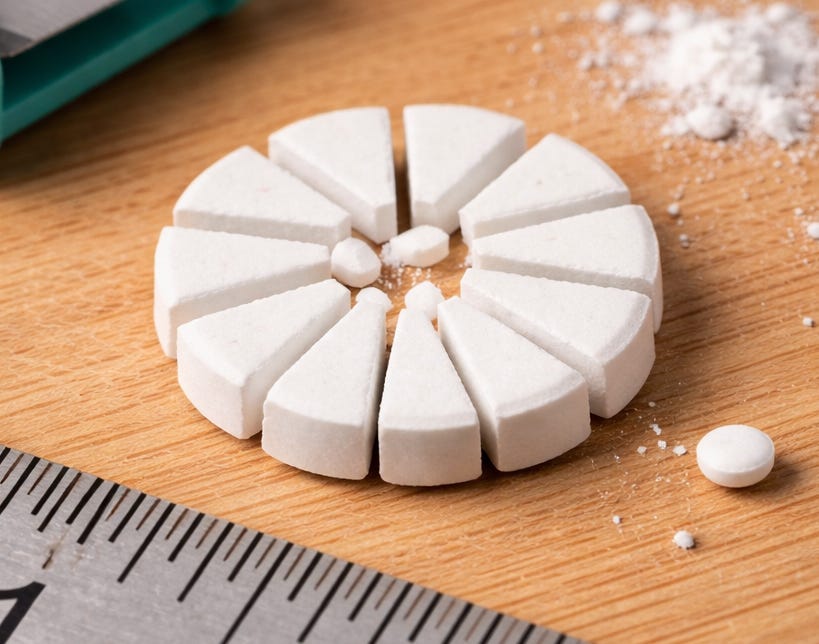
But paid mouthpieces aside, there is virtually no published scientific evidence that proves taking smaller-than-standard doses of tirzepatide or semaglutide — the active ingredients in Zepbound and Ozempic, respectively — is safe or effective. That, of course, doesn’t stop patients and promoters from trying nonstandard doses for a broad array of reasons, including expectations of improved wellness and longevity.
Telehealth companies are rushing get in on the action, hoping to cater to the surging interest. The phenomenon shows how consumers are turning to social media and commercial sources on the internet to try unorthodox ways of improving their health, getting ahead of mainstream medicine.
In a recent report, The Washington Post found at least 15 telehealth firms and medical practices across the country that promote microdosing GLP-1 drugs for longevity as well as weight loss, a strategy that is also unproven.
The commercially-driven buzz is an example of how a few well-placed advertising dollars and “honoraria” can produce big results for marketers by quoting snippets of research and applying it in a different context or before it has been tested in a peer-reviewed study.
It is true that studies using standard doses of GLP-1 drugs have revealed a connection between the brain and the gut, where the hormone is naturally produced. That has helped to explain how boosting GLP-1 production induces the brain to send a signal to lower inflammation throughout the body.
There is also evidence that stimulating the GLP-1 hormone can guard against inflammation in the brain itself, which is linked to Alzheimer’s and Parkinson’s. None of that has anything firm to do with GLP-1, at least so far.
Is less really more?
It’s easy to think that all the chatter adds up to something. But it’s important to remember that paid endorsements — public relations pitches, influencer babble and social media verbiage — don’t demonstrate that tiny doses of the drug will achieve similar benefits. And as any research scientist will tell you, common sense doesn’t apply in research situations. What you think is likely to happen often doesn’t, to put it plainly.
Nevertheless, some patients, promoters and a few doctors say they’ve seen benefits in microdosing. And, they say, taking less medicine not only costs less than the $1,000 a month the drugs often go for but may reduce unpleasant side effects, though there’s no rigorously-tested evidence of that either.
For their part, Eli Lilly and Novo Nordisk, GLP-1’s primary manufacturers, are pushing back aggressively, filing lawsuits that accuse companies of mass-prescribing compounded versions under the guise of customization, which is permitted in certain limited circumstances.
“Lilly does not have any data on the benefits or risks of microdosing of Zepbound or Mounjaro,” the company said in a statement. It also noted that its vials contain no preservatives and are intended for single use. They could become contaminated if used more than once.
Novo Nordisk echoed those concerns, saying it is “deeply concerned about companies promoting and selling compounded, non-FDA approved knock-off versions of ‘semaglutide’ and sources spreading misinformation about GLP-1s to the public.”
For now, experts say patients tempted by microdosing should proceed with caution — and with their eyes open and their ears closed to claims from people who stand to profit from selling microdoses.
The science behind GLP-1 drugs is advancing rapidly. But when it comes to tiny doses taken for longevity and health, researchers say the evidence simply isn’t there yet.