

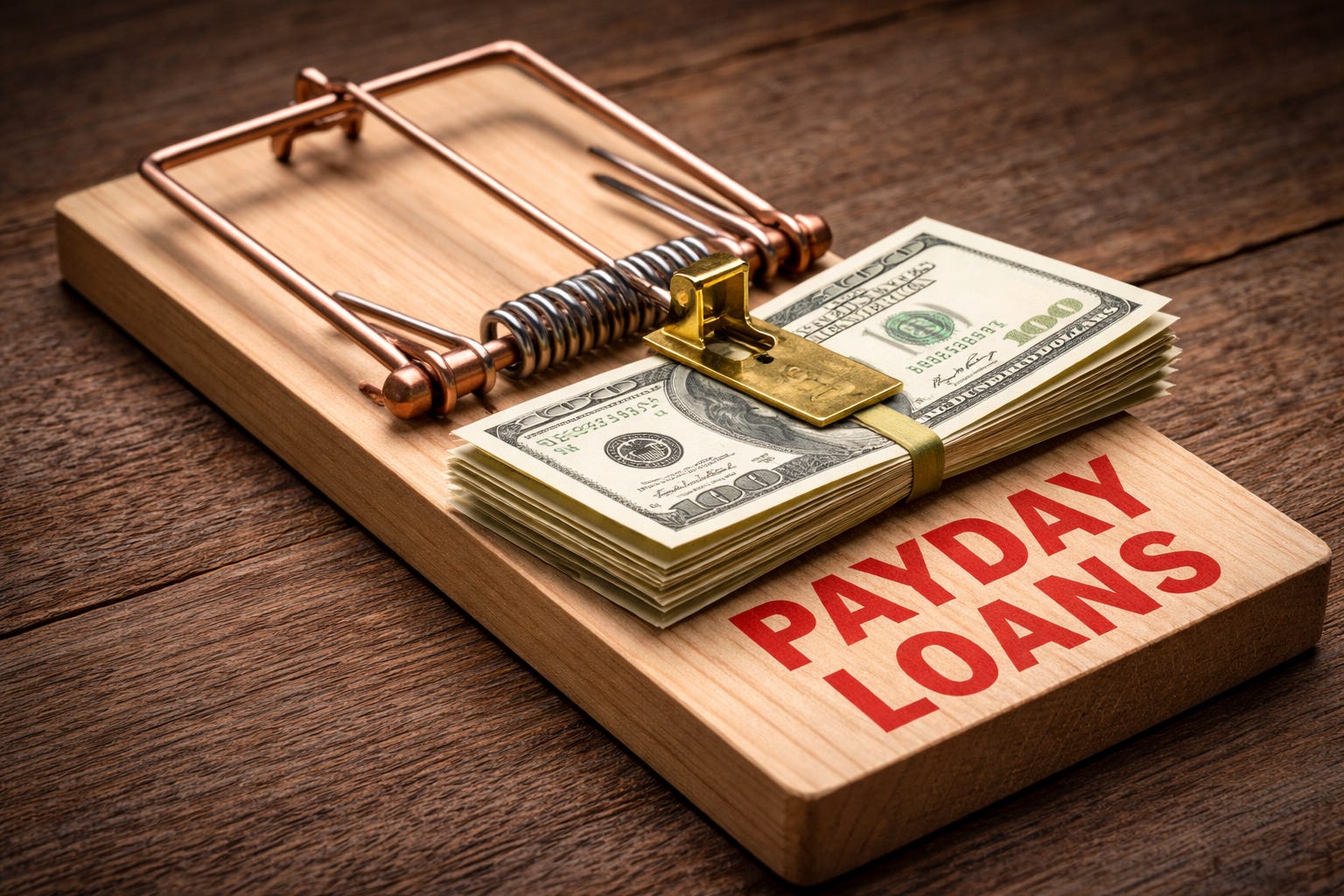
Payday loans victimize cash-short consumers with exorbitant interest rates while Immigration and Customs Enforcement has become known for beating, kidnaping and killing protestors and random individuals.
Both seem to have met their fate in Minnesota. Protestors have filled the streets of Minneapolis, harassing and chasing ICE agents while Minnesota has set an annual percentage rate of 36% as the limit on payday loans.
The ICE saga is still playing out while the payday loan battle has subsided, except online, where payday lenders can often get around, or simply ignore, state lending laws.
While President Trump’s feelings about immigration have long been well-known, many were surprised recently when he proposed a nationwide 10% limit on credit card debt as part of an attempt to embrace the concept of affordability.
Bankers quickly shot down the idea, saying it would force them to deny credit cards to all but the wealthiest customers while driving everyone else into the hands of payday lenders and other predatory operators.
This illustrates why it’s so hard to stamp out payday loans, something 21 or so states have accomplished to one degree or another: people who need credit the most can’t get it from banks and other traditional lenders. They’re thus easy pickings for predators.
Any improvement counts
It’s easy to shrug and say that ultra-high interest is the price poor people pay for being poor and it’s true that, like alcohol, tobacco and other self-harm, payday loan customers become habituated and are unable to break free, as their loans are “renewed” and even more interest is added on to what’s already due, often pushing the effective APR beyond 400%.
Minnesota and 20 other states have put strict limits on storefront payday loans but it will take federal action to finally cap the online lending sites — and the search engines and review sites that infest the web and claim to rank the “best” payday lenders.
Taking stock of what’s been done so far, the Center for Responsible Lending and Minnesota-based Exodus Lending recently released a report on Minnesota’s recently enacted state rate cap, “Escape from the Debt Trap: Relief for Minnesotans After State Ends Payday Lending.”
Minnesotans had been paying a 220% Annual Percentage Rate (APR) on the typical storefront payday loan, but this shameless larceny ended in 2024 when the strong interest rate cap went into effect.
“Payday lenders can no longer drown underpaid, low-income Minnesotans in debt,” said Lucia Constantine, report co-author and senior researcher at the Center for Responsible Lending. “Without these debt traps, Minnesotans are better positioned to meet essential expenses, build an emergency fund, and achieve greater financial stability.”
Key findings
The report features focus groups of former payday loan borrowers from across Minnesota. The report’s key findings are:
Storefront payday lending exacerbated financial instability and imposed significant emotional burdens on Minnesota borrowers.
Borrowers demonstrate adaptive strategies in the absence of storefront payday lending.
Online lenders continue illegally targeting financially vulnerable Minnesotans.
Borrowers express relief that storefront payday lending is gone and show strong support for continued regulation.
“Payday lenders had wreaked havoc on many Minnesotans’ lives. The departure of these predatory lenders will bring monetary and emotional relief to Minnesota families. This usury law is a victory for people over predatory lending, and it was enacted with the support of a broad coalition putting in the work,” said Meghan Olsen Biebighauser, report co-author and policy and partnerships director at Exodus Lending.
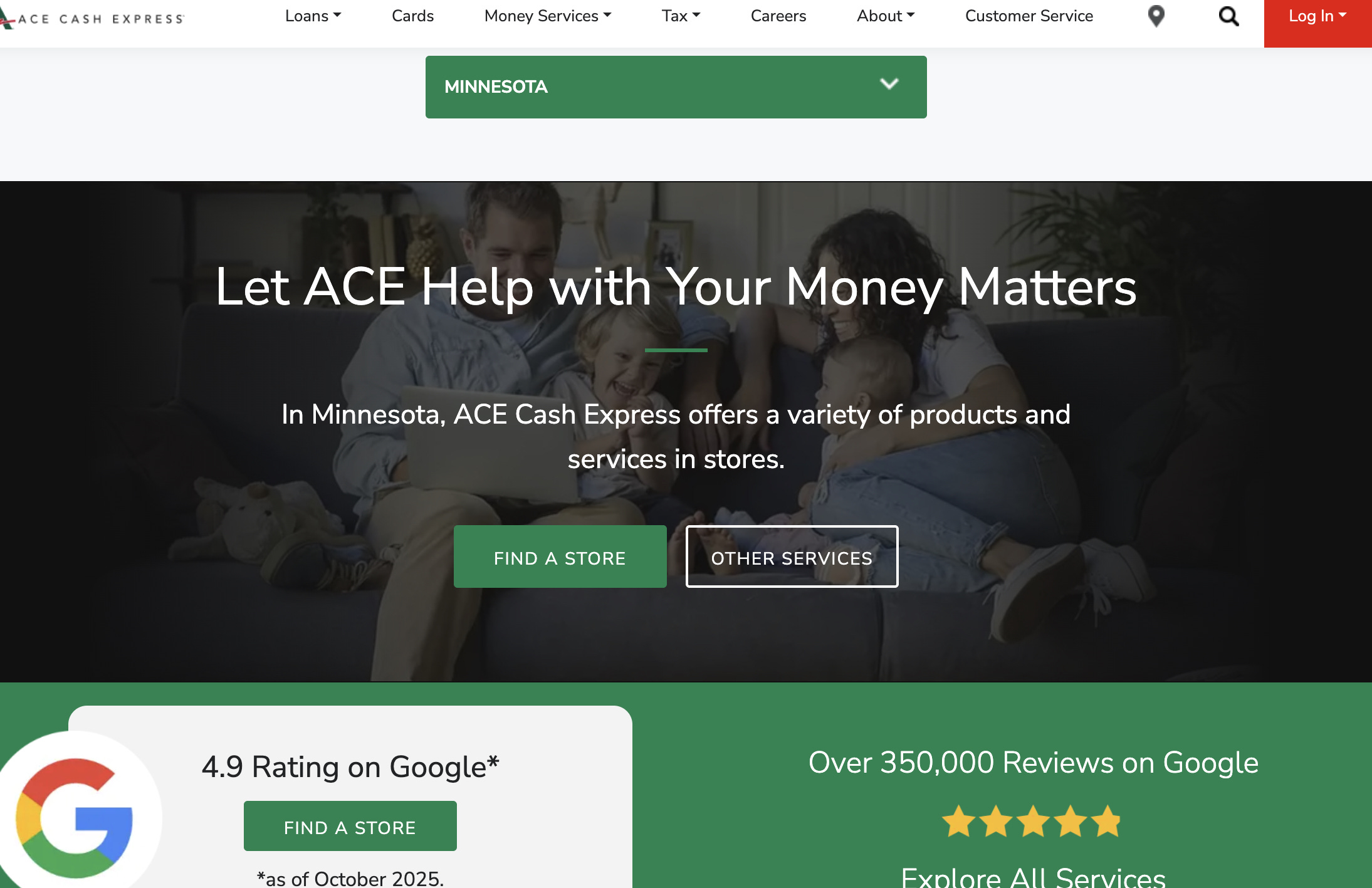
A few payday lenders are still operating in Minnesota under the new regulations.
Return to “normalcy”
With only 21 states regulating and restricting payday lending, usury is basically accepted as a normal business practice in most of the U.S. Some cynics say that 220% APR payday loans have made credit cards and other expensive forms of debt look respectable.
With an average APR of 22.3% in the United States, according to NerdWallet, that flip bit of cynicism may not be far from the truth.
Until 1995, Minnesota had an interest rate cap of 36% APR, which effectively made it unprofitable for payday lenders to operate there. But state legislatures are notoriously receptive to skillful lobbying and after years of steady effort, Minnesota removed the cap in 1995.
Minnesota was hardly alone. In the late 1990s, the payday loan industry was flexing its muscle, as relentless lobbying efforts began paying off when the administration of Democratic President Bill Clinton went along with a deregulatory climate that was sweeping through government.
Lobbyists cloaked their arguments skillfully, arguing that payday loans would be merely a stopgap for most consumers, providing small amounts of cash on rare occasions. Instead, unwary consumers soon found themselves sucked into a black hole of debt, held down by choking interest and high fees.
Taking it to the streets
Like the brave Minnesotans who confronted ICE in recent weeks, grassroots organizers and vocal advocates came forward to end the payday loan curse in their state. Most payday lenders closed up shop once the 36% limit went into effect.
With payday lenders largely gone, Minnesotans are projected to save more than $4.5 million in fees annually, money that can be used to bolster savings, support households and bolster local economies.
Needed next: A crackdown on Google and the other lords of the internet who, like ICE, feel they are above abiding by local and state laws.