


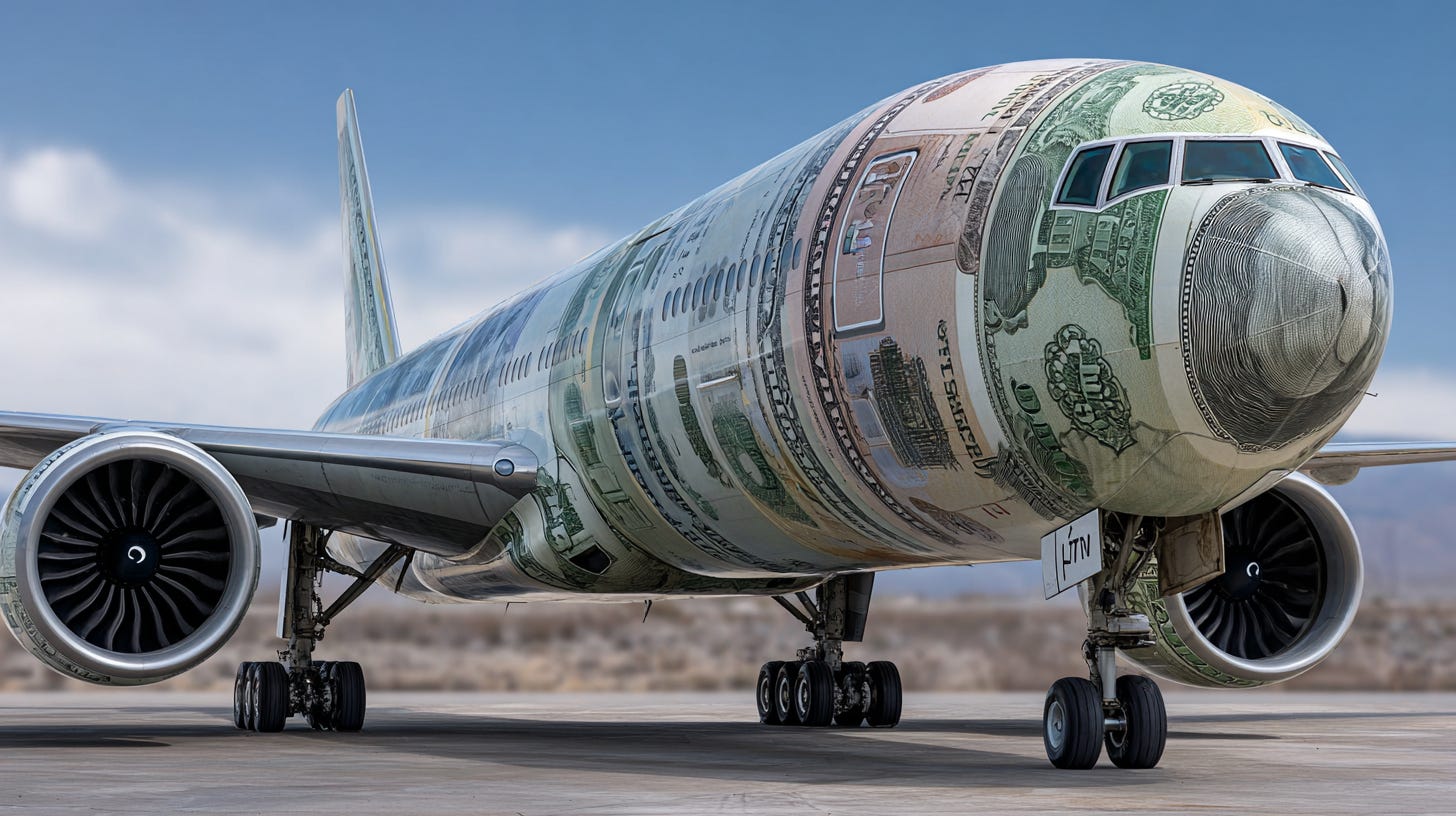
If you were planning to go somewhere, we hope you’re there by now. Otherwise, getting there (and getting back) is liable to be more costly than you imagined. The Iran conflict and other Middle East tensions are spiking fuel prices.
Recent reports say fuel costs have jumped 50% or more this year, nearly doubling for some carriers, according to The Washington Post. Even dogs are getting trimmed. United Airlines is now charging $150 to let Fluffy travel under your seat.
When fuel costs spike, airlines don’t have much choice but to pass at least some of the increase along to passengers. That means airfares, fuel surcharges and fees for checked bags and seat selection rise rapidly.
You may not feel this for previously scheduled domestic travel but last-minute and long-haul trips are definitely getting pricier at warp speed.
Pricier and fewer
Flights are not only getting more expensive, there are fewer of them. As costs rise, airlines respond by cutting less popular routes, reducing flight frequency and even canceling some flights outright.
This is especially true in Europe and the Middle East, where many airlines have been flying longer routes to avoid war-torn areas that might be hazardous or canceling flights altogether.
Airlines are also responding by grounding older, less fuel-efficient planes, Reuters reports.
Bottom line: Higher fares, fewer options and more crowded flights.
U.S. is better off … for now
The situation is more critical iin Europe and the Middle East. There, it’s not just soaring prices but the very real possibility of serious fuel shortages affecting travel.
International Energy Agency (IEA) Director Fatih Birol told AP that Europe has “maybe six weeks” of remaining jet fuel supplies and that the global economy faces its "largest energy crisis”.
Who gets hit hardest
Leisure travelers: More price-sensitive, more likely to cancel or delay trips
Families: Higher total trip costs multiply quickly across multiple tickets
Rural/smaller markets: Fewer routes mean fewer alternatives
Budget flyers: Ultra-low-cost deals become harder to find
What it means for travelers
Book earlier to avoid price spikes
Expect fewer deals and discounts
Be flexible with routes and timing
Watch for added surcharges even after booking
Look into alternatives: trains, buses, driving, going virtual.
What to watch next
Further fare increases if fuel prices remain elevated
Additional route cuts heading into peak travel seasons
More aggressive fee strategies from major carriers
For consumers already dealing with rising costs — from groceries to insurance — higher airfares add another layer of pressure. Travel is becoming less spontaneous, less flexible, and increasingly out of reach for price-sensitive households.
What if fuel costs come down?
We know what you’re saying: “Sure, they jack the fares up when fuel prices go up but when do they ever come back down?”
Good question and it’s one that Rep. Ritchie Torres (D-NY) is asking. He’s written to the CEOs of Delta, United, JetBlue and Southwest.
“I call on you to publicly commit to lowering costs associated with air travel should jet fuel prices decline. The American people deserve fairness and pricing models that do not only reflect market conditions, but also economic justice.” Torres said in a letter to the CEOs, according to CNBC.
“If airline pricing is truly tied to global fuel costs, then it must be truly responsive when those costs decline,” Torres said.