


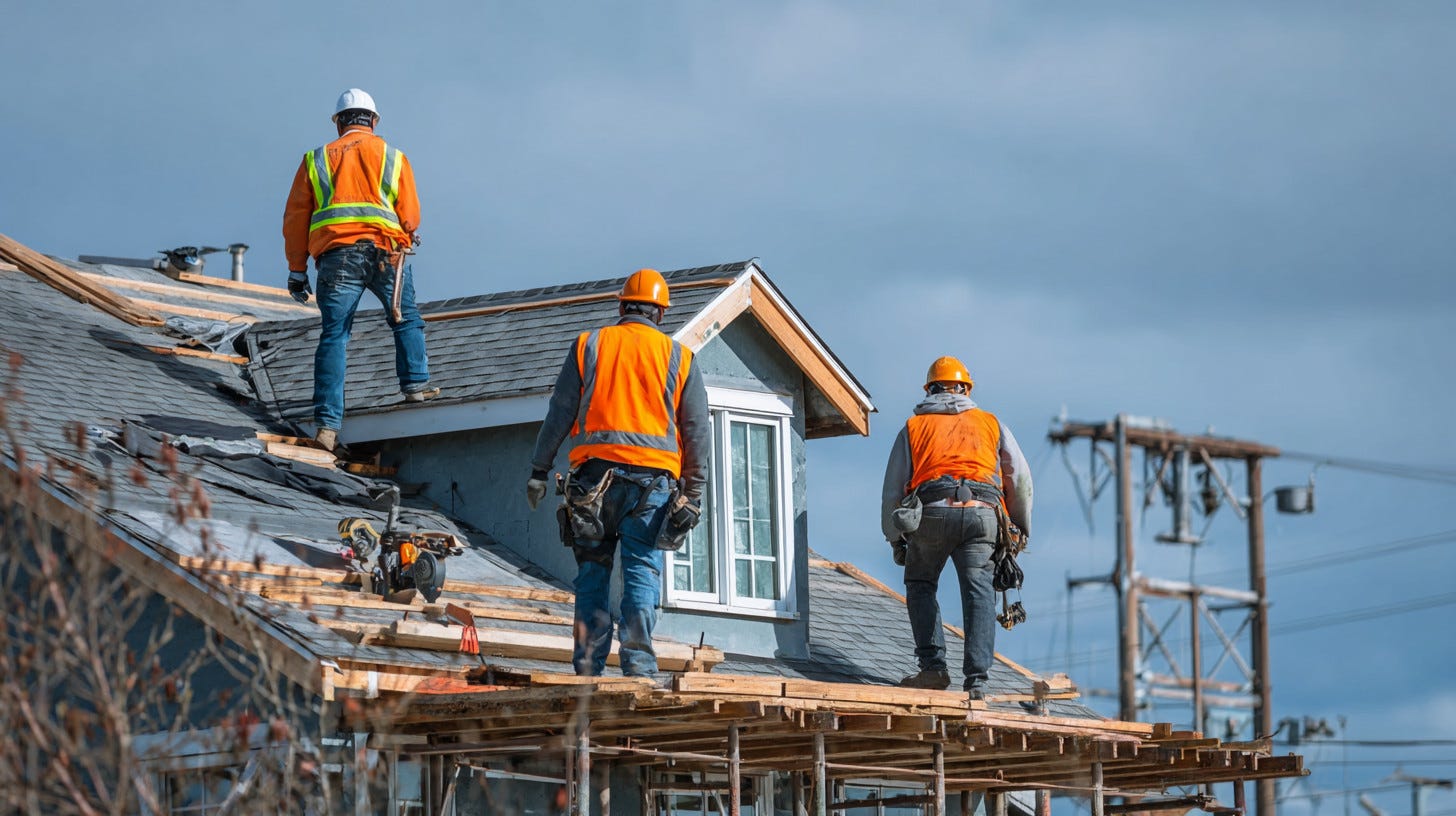
If you own or rent a house, condo or other dwelling, chances are pretty good it has a roof — and it won’t be too long before that roof needs repairs or replacement. The odds are also that it won’t be cheap.
A report from data analytics firm Verisk finds roof replacement costs climbed sharply in 2025 even as overall property claims declined, with hail volatility and aging roofs pushing up severity.
Recent research published in Nature found that storms capable of producing large hail are projected to become substantially more common as the climate warms, AP News reported. Depending on future emissions, storms producing hail larger than a large marble could increase by roughly 38%–47% by the end of the century, scientists say.
Verisk said average U.S. residential roof replacement costs jumped 33% in 2025 compared with the prior four-year average, while average repair costs rose 25%. The average replacement job reached $17,631, with repairs averaging $4,699. Overall residential roof replacement cost value slipped to $23 billion from an average of $24.4 billion between 2021 and 2024, a drop the firm attributed to a relatively quiet U.S. landfall hurricane season.
Roof losses remained elevated even as overall claims volume fell 20% in 2025, highlighting how roofs are driving a larger share of loss costs. Roofing line items now account for about 30% of all line items in property claims estimates, and Verisk said roofing trends often mirror broader claims patterns.
What Homeowners Can Do Now
Check your roof’s age and condition. If your roof is more than 15–20 years old, or you can see curling, missing shingles or patches of discoloration from the ground, it may be time for a professional inspection.
Schedule a pro inspection after hail. Even if a hailstorm looks “minor,” ask a licensed roofer or independent inspector to check for hidden damage that could worsen over time.
Document everything. Take clear, date‑stamped photos of your roof and exterior now, and again after major storms. Good records make it easier to support an insurance claim later.
Review your homeowners policy. Confirm your coverage for wind and hail, your deductibles, and whether your insurer pays for full replacement cost or actual cash value (which deducts for age and wear).
Ask about roof discounts. Some insurers offer lower premiums for impact‑resistant shingles or other upgrades; check whether a planned replacement could qualify you for a break on your rate.
Don’t wait on small repairs. Fix loose flashing, minor leaks and missing shingles quickly. Deferred maintenance can give insurers grounds to deny or reduce a claim if damage gets worse.
Hail and aging roofs
The Verisk study found that hail volatility and an aging national roof inventory are increasing risk across insurance, construction and housing markets. In states Verisk designates as hail-prone, 57% of residential properties have roofs nine years old or newer, compared with 38% in non-hail states, indicating faster replacement cycles in those regions.
The Midwest and Northeast have the highest concentrations of older roofs, with 17% and 18% of residential roofs respectively at least 31 years old, compared with just 4% in the South. Verisk said roofs in moderate to poor condition show roughly 60% higher loss costs than those in good or excellent condition, based on its 2025 Roof Condition Score baseline data.
Hail patterns by region
Severe hail, defined as stones at least 1 inch in diameter, was concentrated in the Central Plains in 2025, after earlier years that hit the Northern and Southern Plains more heavily. Arkansas, Kansas, Nebraska, Oklahoma and South Dakota ranked among the top states by the share of roofs impacted by severe hail, and 16 states saw severe hail affect more than 20% of roofs, up from 12 states in 2024.
Verisk reported that “giant” hail of at least 2 inches tends to follow relatively stable geographic patterns year to year, while “large” hail in the 1–2 inch range shows much greater metro-level volatility. Hundreds of local markets experienced meaningful year-to-year increases in large hail activity, creating what the study described as unexpected concentrations of damage.
“Hail risk is not just about one monster storm; it’s the cadence of frequent, smaller-scale events that can rapidly age and weaken a roof,” said Tory Farney, vice president at Verisk Weather Solutions in an Insurance Journal report. He said large hail may cause less damage per event than giant hail, but its wider footprint and annual variability can drive clusters of losses, underscoring the need for insurers, contractors and communities to anticipate where hail is most likely to cluster.
Roof age mix by region
Verisk’s analysis of the nation’s roof inventory showed marked regional differences.
In the South, 28% of roofs are 0–4 years old and only 4% are at least 31 years old, reflecting rapid turnover driven by severe weather and strong housing growth.
In the Midwest, 21% of roofs are 0–4 years old and 17% are 31 years or older;
In the Northeast, the shares are 14% and 18%, respectively;
In the West, 20% of roofs are 0–4 years old and 11% are at least 31 years old.
“Accurately assessing roof age, condition and remaining life is a critical part of understanding a property’s vulnerability to wind and hail,” said Ryan D’Amario, senior vice president of property product management at Verisk. He said aerial imagery analytics show that as of 2025, 38% of U.S. residential homes have roofs in moderate to poor condition, often with visible defects that can materially affect performance in severe weather.
D’Amario added that when more than a third of the housing stock falls into that category, roof condition becomes a core underwriting signal with significant implications for risk selection, loss predictability and pricing accuracy.
Cost pressures and inflation
The report also pointed to inflation dynamics that are helping to keep roofing costs elevated. Verisk said roofing material inflation continues to outpace labor, with roofer labor costs up 0.79% in 2025 versus a 1.48% increase in material costs.
Those national averages mask wide state-level swings: roofing material costs jumped 10.37% in Nevada in 2025 while falling 15.80% in New Hampshire. Verisk said such sharp regional discrepancies in material pricing, layered on top of hail volatility and aging stock, are compounding the challenges for carriers and contractors managing roof-related risk.