


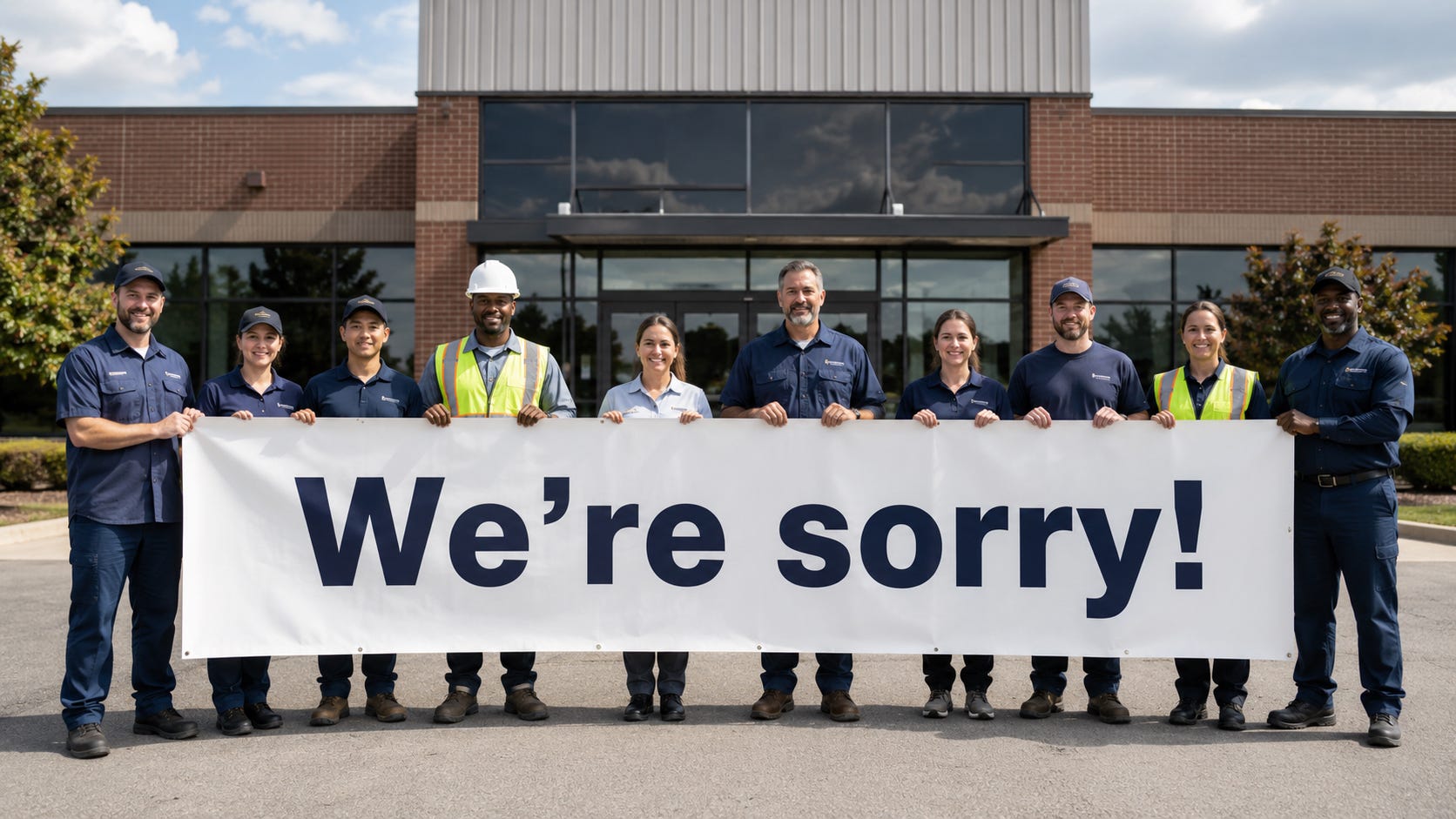
A new study in the University of Oxford-published Journal of Consumer Research is challenging one of corporate America’s favorite crisis-management assumptions: that apologizing to customers is always the safest move.
The study found that proactive apologies can actually reduce customer trust and satisfaction when consumers were not previously aware a problem had occurred.
The researchers — Mason R. Jenkins, Paul W. Fombelle and Mary Steffel — conducted five experiments, including a large field study, and found that apologies often create awareness of a failure that customers otherwise would have ignored or never noticed.
The researchers concluded that apologies lowered:
customer satisfaction,
trust,
recommendation intentions, and
willingness to return,
when customers did not already know about the problem.
‘Failure’ is the key word
The key mechanism: apologies frame an event as a “failure,” not merely an inconvenience or minor issue.
A related Harvard Business Review analysis summarized the finding this way: when customers are unaware of a problem, an apology can “increase awareness” and make consumers judge the company more harshly.
The research appears especially relevant in an era of predictive AI systems and automated customer-service alerts, where companies increasingly notify customers about delays, glitches or disruptions before consumers even notice them.
But the broader literature on apologies is more nuanced — and in some cases contradictory.
On the other hand …
Older service-recovery research has generally found apologies helpful when customers already know something went wrong. A widely cited 2004 study in the International Journal of Service Industry Management found apologies improved post-recovery satisfaction when paired with quick action and fair treatment.
Similarly, a 2018 study on trust repair after service failures found apologies can be effective when consumers have already experienced a visible problem and are seeking reassurance or accountability.
Another 2024 study in the Journal of Business Research argued that apologies work largely because they signal reform and reduced chances of repeat misconduct. Researchers found that although apologies can increase perceptions of corporate culpability, consumers may still respond positively if they believe the company is genuinely changing behavior.
Other research suggests apologies can backfire under very different circumstances than the Oxford study examined.
A 2023 study on corporate hypocrisy found apologies worsened consumer reactions when watchdog groups or NGOs had exposed misconduct first, because consumers perceived the company as insincere or opportunistic.
And a 2021 study highlighted by Arizona State University found public corporate apologies after crises sometimes damage reputations in the short term by reminding consumers of the wrongdoing.
Taken together, the emerging research suggests that whether an apology helps or hurts depends heavily on context:
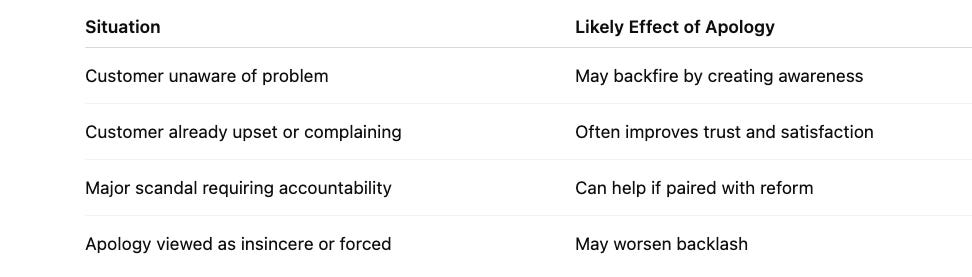
The Oxford researchers themselves emphasized that apologies still have value when customers are already aware of a service failure. In those cases, apologies boosted perceptions of warmth and honesty.
The findings could complicate customer-service playbooks across industries ranging from airlines and food delivery apps to banks and streaming services, where automated “we apologize for the inconvenience” messages have become routine.
What about AI?
The debate also extends beyond human customer service. Researchers studying AI systems and chatbots are increasingly examining whether machine-generated apologies can repair trust — or simply sound hollow and manipulative.