


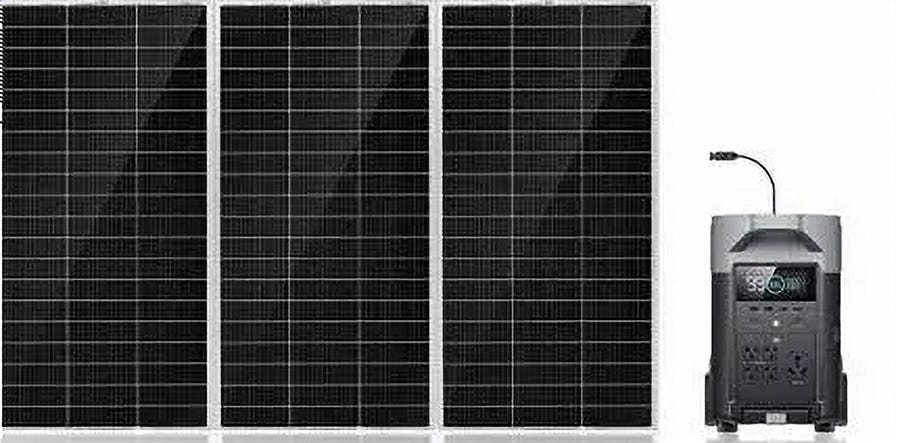
The Trump Administration is doing all it can to stymie development of solar energy and has canceled federal programs that offered rebates to homeowners who put in whole-house solar systems.
But while whole-house installations have been sidelined, interest in stand-alone solar backup systems seems to be increasing rapidly, judging from the response to our recent article on home solar systems. We heard from readers who had been frozen out, burned out, flooded out, wind-blown or otherwise mistreated by the freakish storms of the last year or two and left for days or weeks with no power.
Many homeowners don’t want or can’t afford a whole-house solution. Instead, they’re looking for a simple backup power source to run a few lights, a refrigerator, laptop and other small essentials — something that doesn’t burn gas, isn’t noisy, won’t generate fumes and doesn’t need the kind of routine maintenance gas-powered devices demand.
The feds have fallen silent but at least 24 states are rushing to empower homeowners who want to install just such a system on porches, balconies or in their backyard. Utah last year became the first state to pass a law that lets residents set up small solar systems without getting the permission of their local utility.
Safe and simple
These small units are safe and simple to use. The panels must be securely fastened down and extension cords have to be routed so no one trips on them but otherwise, they’re relatively trouble-free. You may not need an electrician, depending on local laws and your degree of comfort with electricity.
Warning: A recent article in The New York Times refers to “plug-in” systems — something homeowners can simply “plug … straight into a wall socket.” It’s true that the latest models include this feature but some older ones do not.
That’s because the newer ones include a inverter — a device that, among other things, monitors the power coming from your home’s outlets. It can turn your backup system on when the grid fails and, even more important, turn it off when the grid comes back on. This is very important. Without the automatic on-off, you could electrocute a utility worker trying to restore power after an outage.
Simple takeaway: If you’re going to plug your system into your home’s wiring, be sure it’s described as a “plug-in” model. Otherwise, you’ll have to run extension cords to hook up your appliances. (Older systems have inverters too but may not include the automatic on-off).
There are a few other “howevers.” While these self-contained units don’t require a permit from your utility company as whole-house systems do, they may require a permit or license of some kind from your city, county or state. How to find out? It’s best to start with your city or county building department. It may take a little digging but someone there should be able to answer your questions.
Rules vary by location, so:
Contact your local building department — confirm if permits are needed for your specific system size and setup.
Ask about electrical inspection requirements even for off-grid systems.
If you’re interested in plug-in systems tied to your home circuit or outlet, ask specifically about local interpretation of utility interconnection, “plug-in” or “appliance” exemptions.
States getting charged up
Utah is the only state we know of that has actually enacted legislation (HB 340) in 2025 that explicitly allows portable or plug-in solar systems up to about 1,200 watts without the typical utility interconnection approvals or permits that larger grid-tied systems require. Utah is the first state with clear statutory language on this.
The Utah bill defines a portable solar generation device as a movable PV system that:
Produces less than 1,200 watts
Connects via a standard 120-volt outlet
Meets safety standards (NEC and UL certification)
The law exempts these systems from several requirements that normally apply to solar:
1. No utility interconnection requirements
No interconnection applications or agreements for qualifying systems
2. No utility approval or fees
Utilities cannot require approval or impose additional technical conditions beyond safety standards
3. Not eligible for net metering
These systems are treated as self-consumption devices, not grid export resources
Other states
Other states are in various stages of writing, introducing and considering similar legislation. According to the advocacy group Solar United Neighbors, they include:
Arizona
California (introduced legislation to allow plug-in solar without utility authorization)
Colorado
Hawai‘i
Iowa
Illinois
Indiana
Maine
Maryland
Missouri
New Hampshire
New Jersey
New Mexico
New York
Oklahoma
Oregon
Pennsylvania
Rhode Island
South Carolina
Vermont
Virginia
Washington
Getting the gear
Ready to go? Here are some typical specs for a small homeowner job:
Power requirement For a standard household refrigerator plus LED lights and occasional other loads:
~800–1,200 Watts of solar panels
Battery bank of 1–3 kWh
Inverter rated ≥1500 W
This lets you generate enough daily energy while the sun is out and store enough to keep the fridge running overnight.
Complete Off-Grid Solar Kits
These kits contain a traditional solar array + battery bank setup for an off-grid cabin, shed, RV, or home power. Prices are approximate. Google the brand name and model for outlets and exact pricing. This is not an advertisement. It was compiled from publicly available information by ChatGPT. We are not compensated in any way.
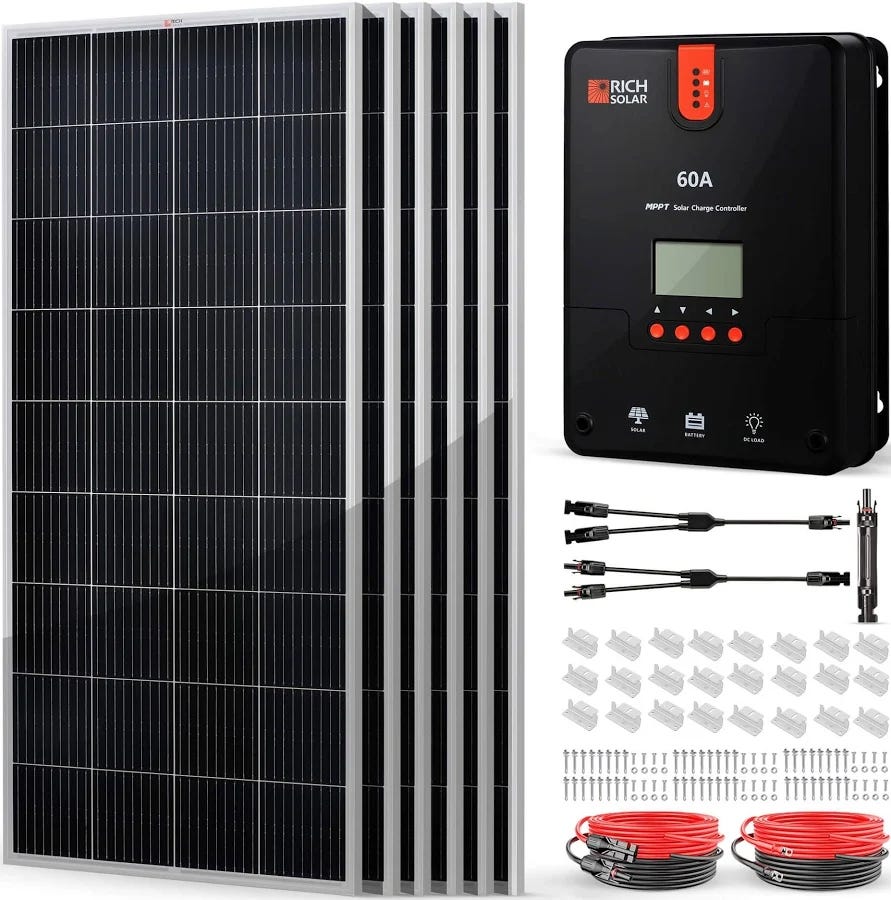
Rich Solar 1200W Solar Kit · $1,899.99 A solid 1.2 kW panel kit with MPPT controller you’d pair with batteries; good for powering lights and a fridge if sized right.
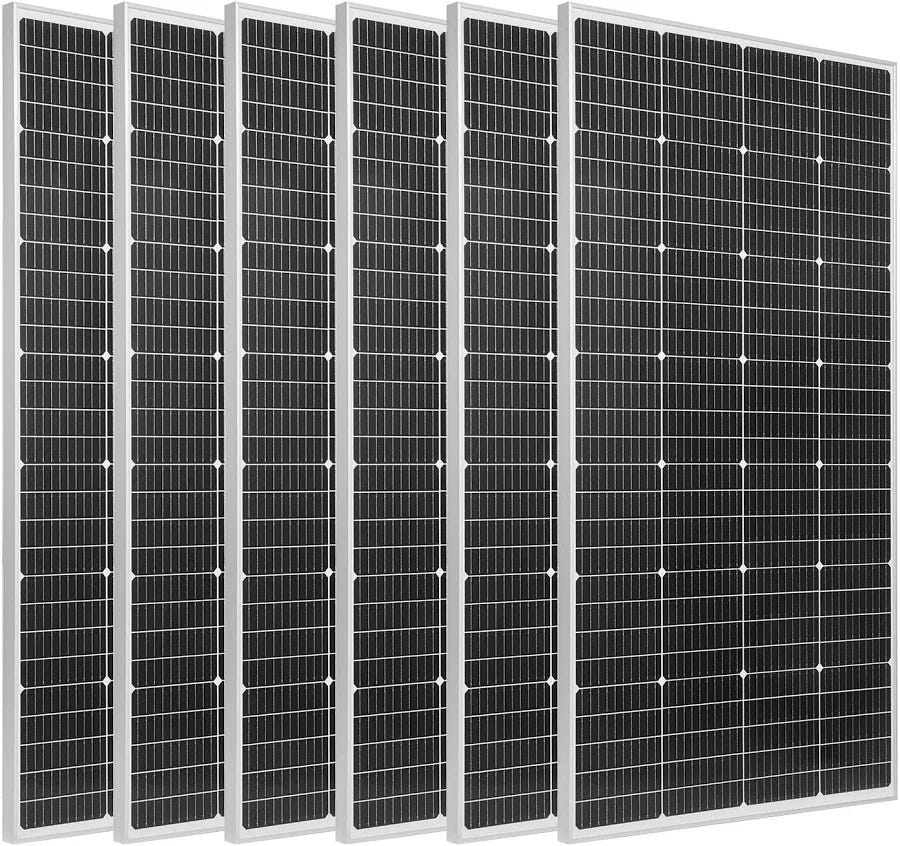
VEVOR 1200W Solar Power Kit · $2,118.99 Includes panels and battery + inverter in one package — more plug-and-play.
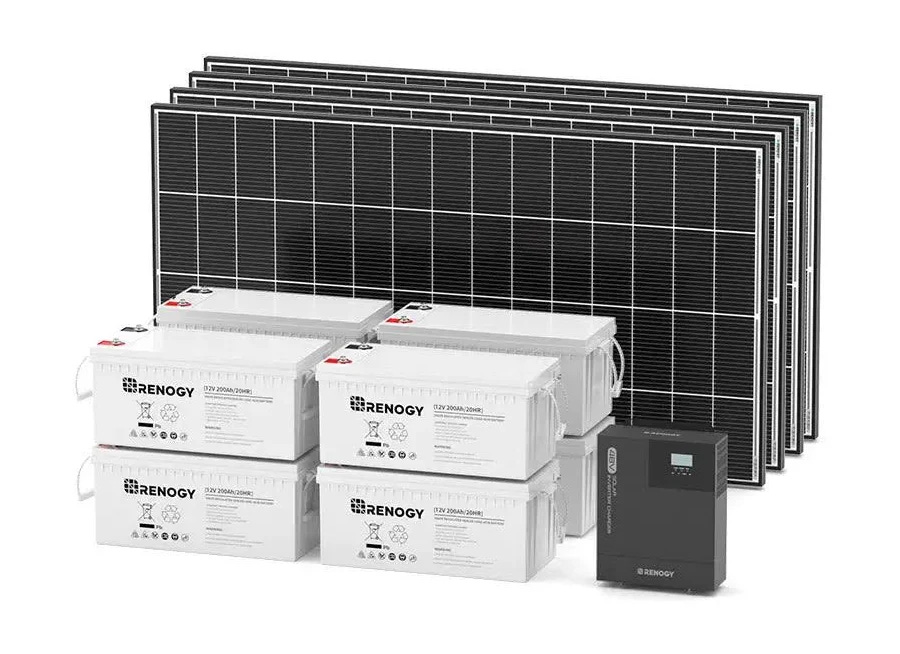
Renogy Essential Solar Kit · $4,399.99 Complete entry-level off-grid system with inverter, battery, and monitoring — ideal for essential loads.
Jupiter 1200W Off‑Grid Kit · $2,999.99 A larger off-grid kit with a substantial battery and high AC output for more stable fridge operation.
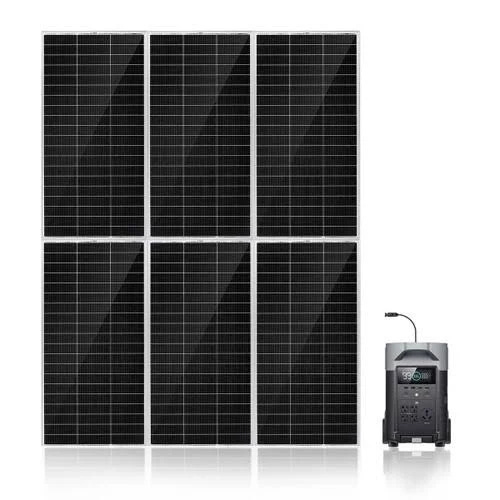
Plug ‘n play
One of these kits is all you need to keep the lights on when the power goes out, at least as long as the sun shines and your batteries hold up. Be sure to get a “plug-in” model for ease of use and safety. Let us know how it works!