


Fuel shock hits at the worst possible moment
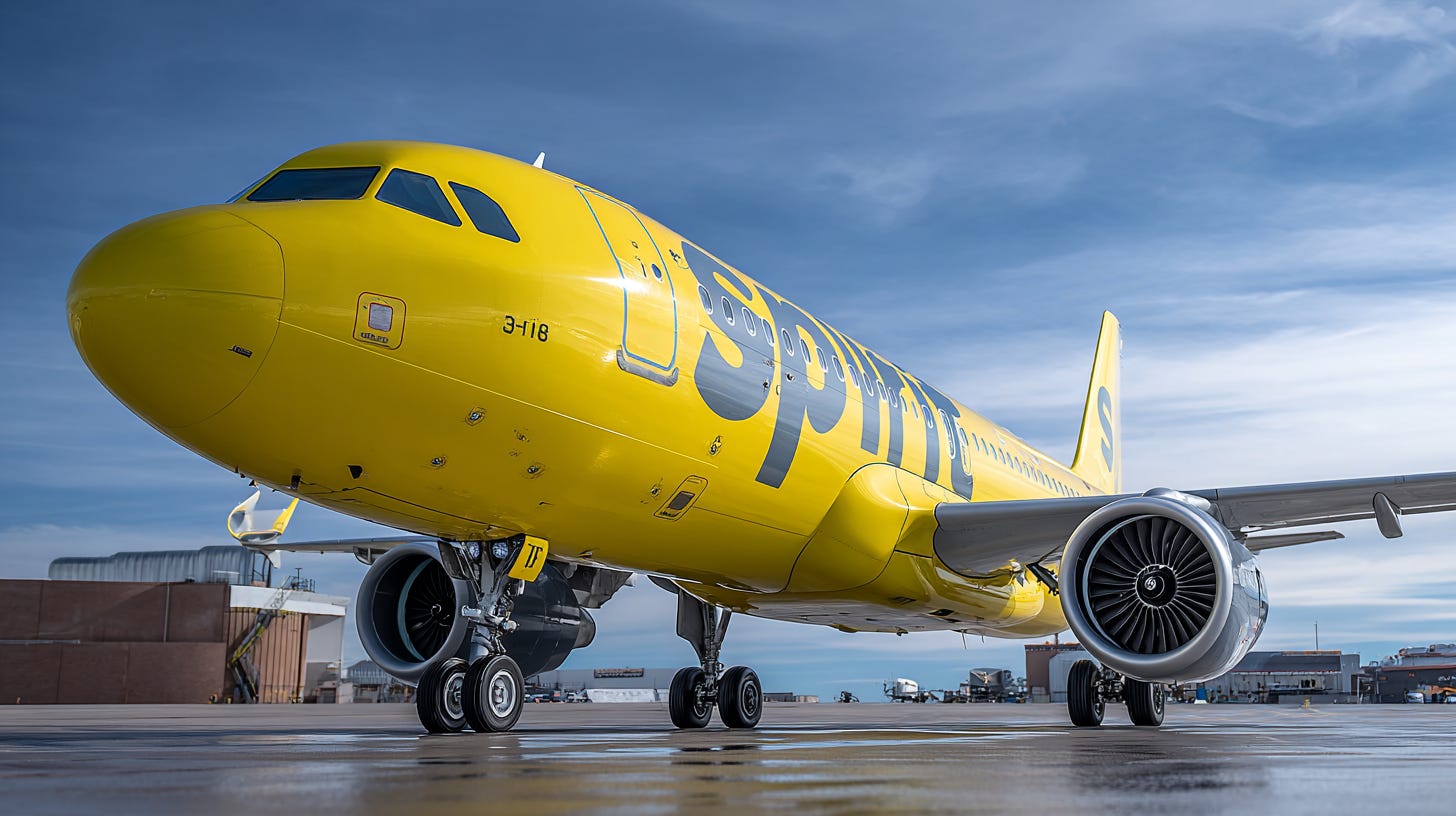
Spirit Airlines is under renewed pressure as a surge in global fuel prices collides with its ongoing bankruptcy restructuring.
Jet fuel prices have climbed sharply in recent weeks — driven in part by geopolitical disruptions in oil markets — and are now far above the assumptions baked into Spirit’s recovery plan.
For airlines, fuel is often the single largest operating cost. For Spirit, which built its model on ultra-low fares and razor-thin margins, the impact is especially severe.
Analysts say the spike could add hundreds of millions of dollars in unexpected costs, threatening to derail the company’s path out of bankruptcy.
A business model with little room for error
Spirit’s vulnerability goes beyond fuel prices.
The airline has struggled for years with:
Persistent losses since the pandemic;
A blocked merger with JetBlue Airways;
Failed or stalled consolidation efforts with Frontier Airlines;
Limited ability to raise fares without losing budget-conscious travelers.
Unlike larger carriers, Spirit has little flexibility to pass higher costs on to customers. Even modest fare increases risk undermining its core “bare fare” model.
That leaves the airline unusually exposed when costs spike.
Bankruptcy exit now in doubt
Spirit has been operating under Chapter 11 protection while trying to restructure its debt and stabilize operations.
But the fuel surge has raised new concerns among creditors and analysts about whether the airline’s plan is still viable.
Some reports suggest Spirit could face:
Emergency financing efforts;
Asset sales or a renewed push for a merger;
Or, in a worst-case scenario, full liquidation.
While no final decision has been made, the situation is increasingly fluid — and time-sensitive.
Airline pushes back on collapse talk
Spirit says operations remain normal and has downplayed speculation about an imminent shutdown.
Flights are continuing, tickets are still being sold, and the airline has not announced any cancellation of service.
Still, industry observers note that airline collapses can happen quickly once liquidity runs out — especially during bankruptcy proceedings.
What this means for travelers
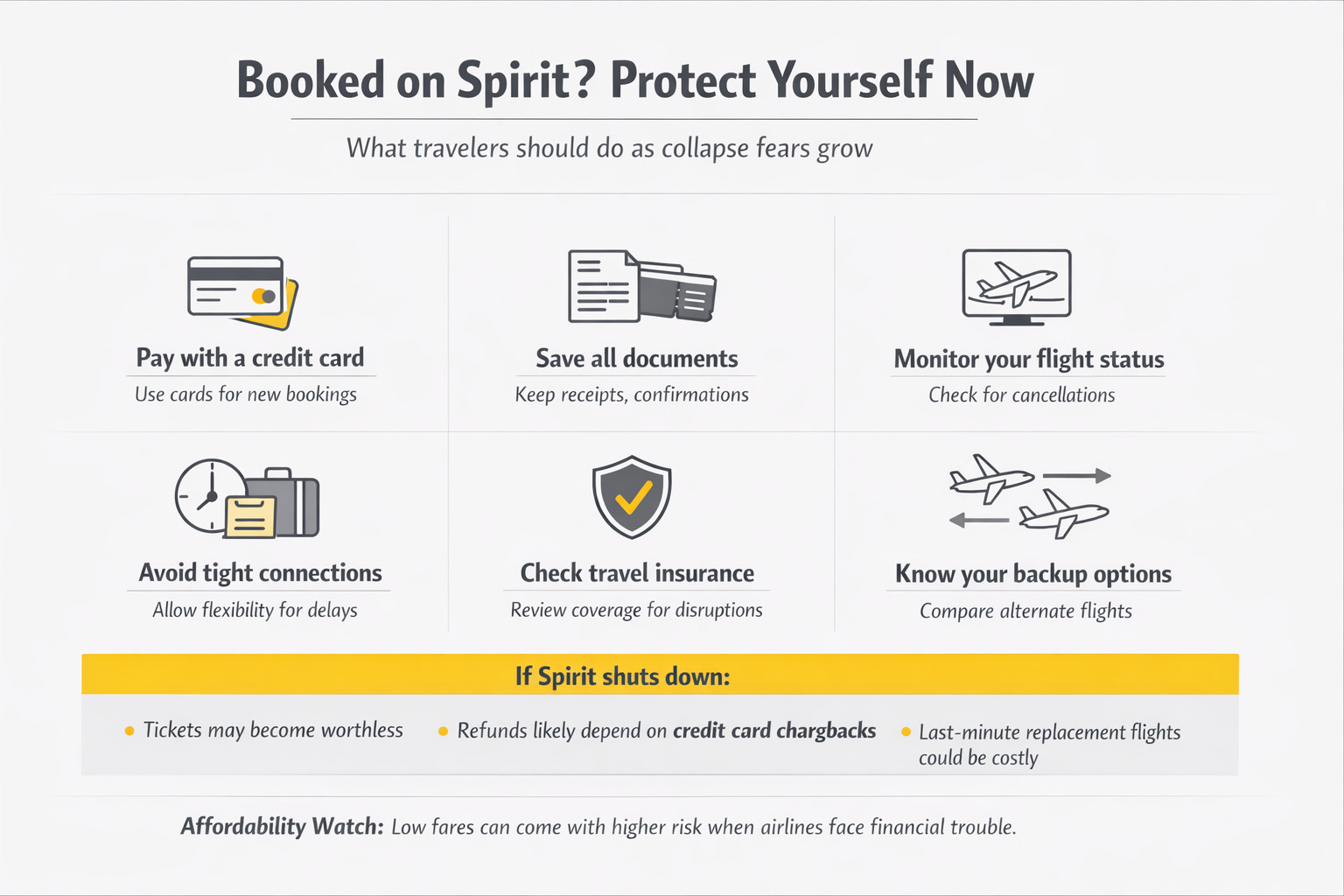
If you already have a ticket:
Flights are still operating — but monitor updates closely;
Consider using a credit card (if booking new travel) for added protection;
Keep documentation in case a chargeback becomes necessary.
If Spirit shuts down:
Tickets could become worthless in a liquidation;
Refunds would likely depend on credit card disputes or travel insurance;
Rebooking on other airlines could be costly, especially at the last minute.
Affordability Watch: cheap fares, higher risks
Spirit has long been one of the cheapest ways to fly in the U.S., helping keep fares low across the industry.
If the airline disappears:
Budget travelers could face higher prices and fewer options;
Competition on many domestic routes would shrink;
Larger airlines could gain more pricing power.
In that sense, Spirit’s troubles are not just a company story — they’re a potential affordability shock for travelers nationwide.
The bottom line
Spirit Airlines has not collapsed — but it is facing one of the most serious tests in its history.
A sudden spike in fuel costs has exposed just how fragile its recovery plan may be.
Whether the airline survives could come down to how long fuel prices stay elevated — and whether it can secure enough cash to ride out the storm.