


Ashwagandha is currently being hyped as the answer to those anxious about their anxiety
It’s an herb that is used in some folk medicines and is generally thought to be safe, though expensive
No one can document that there is any benefit from taking it
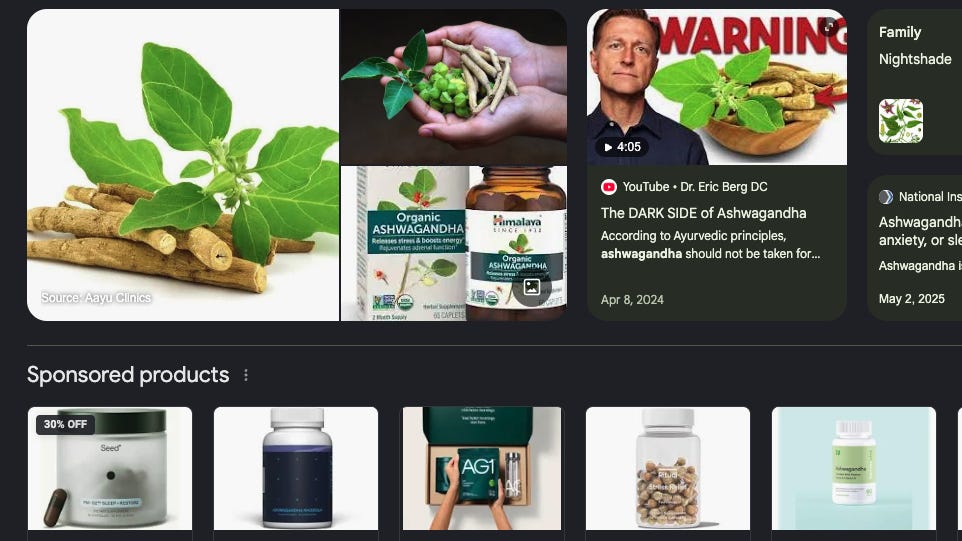
The current wellness epidemic ropes in millions of what doctors sometimes describe as the “worried well,” people who aren’t really sick but think they could be better. More well, in other words.
An endless array of supplements are targeted to these tortured souls and no one really knows if they work, if they’re safe or if, to cut to the quick, there’s any reason for a consumer to invest time and money in them.
The answer is almost always no but the parade of heavily hyped patent medicine, as it used to be called, continues. One of the latest entrants is ashwagandha, used in folk medicines. Like so many other moneymakers, it’s basically an herb that, so far as anyone knows, doesn’t cause any dramatic improvement in health. Or wellness, for that matter.
The sales pitches call it an “adaptogen,” a substance that helps the body adapt to stress. People take it for stress and anxiety relief, sleep support, improved energy, mood enhancement, exercise performance and — not to leave out the gentlemen — gobbs of testosterone.
Users, of course, swear by it. “I Got 99 Problems, But Stress Ain’t One — Ashwagandha to the Rescue” is a popular social media saying reflecting its use for stress relief. The National Institutes of Health (NIH) says a bit more cautiously that, “Research suggests that ashwagandha extracts may lower stress, anxiety, and cortisol levels.” It also warns that the safety of long-term use is not known.
Like supplements in general, ashwagandha isn’t legally a drug. It isn’t tested or approved by the FDA and it doesn’t have to demonstrate the two major goals of approved medications — efficacy and safety. In layman’s terms, that means there’s no evidence that unapproved supplements work or that they’re safe.
Known health risks
So, while there are no proven benefits to swallowing the stuff, there are some risks associated with it, including:
liver injury;
thyroid effects;
sedation; and
GI effects (diarrhea and/or nausea).
With all supplements, there is always the little matter of quality control. Since they’re not tightly regulated, potency may vary widely, contaminants may be present and many brands don’t use third-party testing to ensure purity.
Third-party tests
ConsumerLab’s third-party tests found that, in fact, many of the products it tested recently had much lower amounts of active ingredients known as withanolides than expected and only 5 out of 13 products selected for testing were approved.
Withanolides are the primary active chemical compounds found in ashwagandha. They are a group of naturally occurring steroidal lactones that researchers believe account for many of the herb’s physiological effects — both beneficial and potentially harmful.
The amount of withanolides in a suggested daily serving of the products tested ranged from only 1.3 mg to 72 mg. The cost to obtain 6 mg of withanolides ranged from just 6 cents to $1.77. Price was not an indicator of quality. (See What CL Found and How Products Were Evaluated).
What to do
There’s no peer-reviewed research we could find that demonstrates any real reason to take ashwagandha, no real evidence it works and not much information about its safety.
The only real evidence in its favor is scattered endorsements from consumers who think they’re more well than they used to be and, of course, what its salespeople and influencers say.
But before running to your laptop to order a batch, keep in mind that while it may be generally safe, it may not be safe for people with certain conditions. So, you guessed it, the best advice is to talk to your doctor before swallowing handsful of the stuff.