


A tabloid spotlight hits Washington
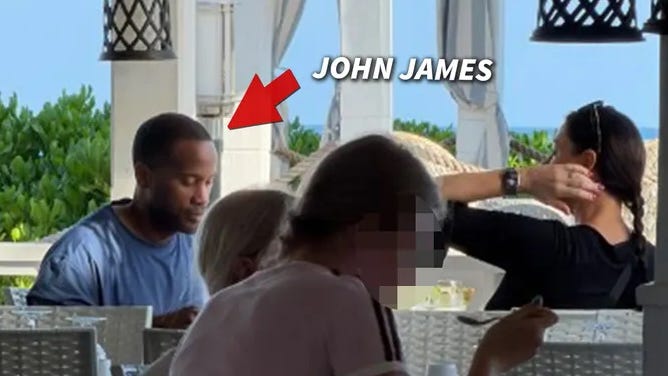
Rep. John James (D-Michigan) in Turks & Caicos (TMZ photo)
The celebrity news outlet TMZ is stepping deeper into political coverage, launching a campaign to spotlight members of Congress who are away from Washington as a funding standoff over the Department of Homeland Security stretches toward the 50-day mark.
The effort blends TMZ’s signature paparazzi-style reporting with a sharper political edge — juxtaposing images of lawmakers on recess with stories of federal workers missing paychecks.
Founder Harvey Levin said the outlet was motivated by frustration over the impasse.
“We wanted to use our platforms to show how Congress — Dems AND Republicans — have betrayed us,” Levin said, pointing to coverage of TSA workers struggling financially during the standoff.
Lawmakers caught on camera
TMZ has actively solicited tips and photos of lawmakers outside Washington, producing a steady stream of sightings:
Lindsey Graham reportedly spotted at Disney World
Robert Garcia photographed at a Las Vegas casino
Ted Cruz seen at a Florida airport
Jared Moskowitz attending his son’s basketball game
Several House Republicans, including Derrick Van Orden, John McGuire, and David Rouzer, photographed traveling in Scotland
Some lawmakers have pushed back on the portrayal. Garcia said his trip was to visit family, while Graham posted photos from his home state after the report. Van Orden defended his travel as official business, citing meetings abroad.
A new kind of political accountability — or spectacle?
TMZ’s expansion into political coverage underscores a broader shift in media dynamics, where entertainment outlets increasingly blur into hard news — especially during moments of public frustration.
Levin said the outlet’s Washington presence will mix humor with serious reporting, depending on the story.
But the approach raises questions:
Does tabloid-style exposure increase accountability — or oversimplify complex policy disputes?
Will viral imagery influence public opinion more than legislative details?
And how will lawmakers adapt to scrutiny that extends far beyond traditional political media?
What this means
The DHS funding standoff has already created real-world consequences for federal workers. Now, it’s also reshaping how political behavior is covered — and judged.
TMZ’s approach may amplify public anger by putting faces and vacation backdrops next to stories of financial hardship. At the same time, it signals a media environment where no setting — airport, theme park, or family event — is off-limits for political optics.
For Congress, the message is clear: the cameras are everywhere, and the audience is no longer limited to C-SPAN.