

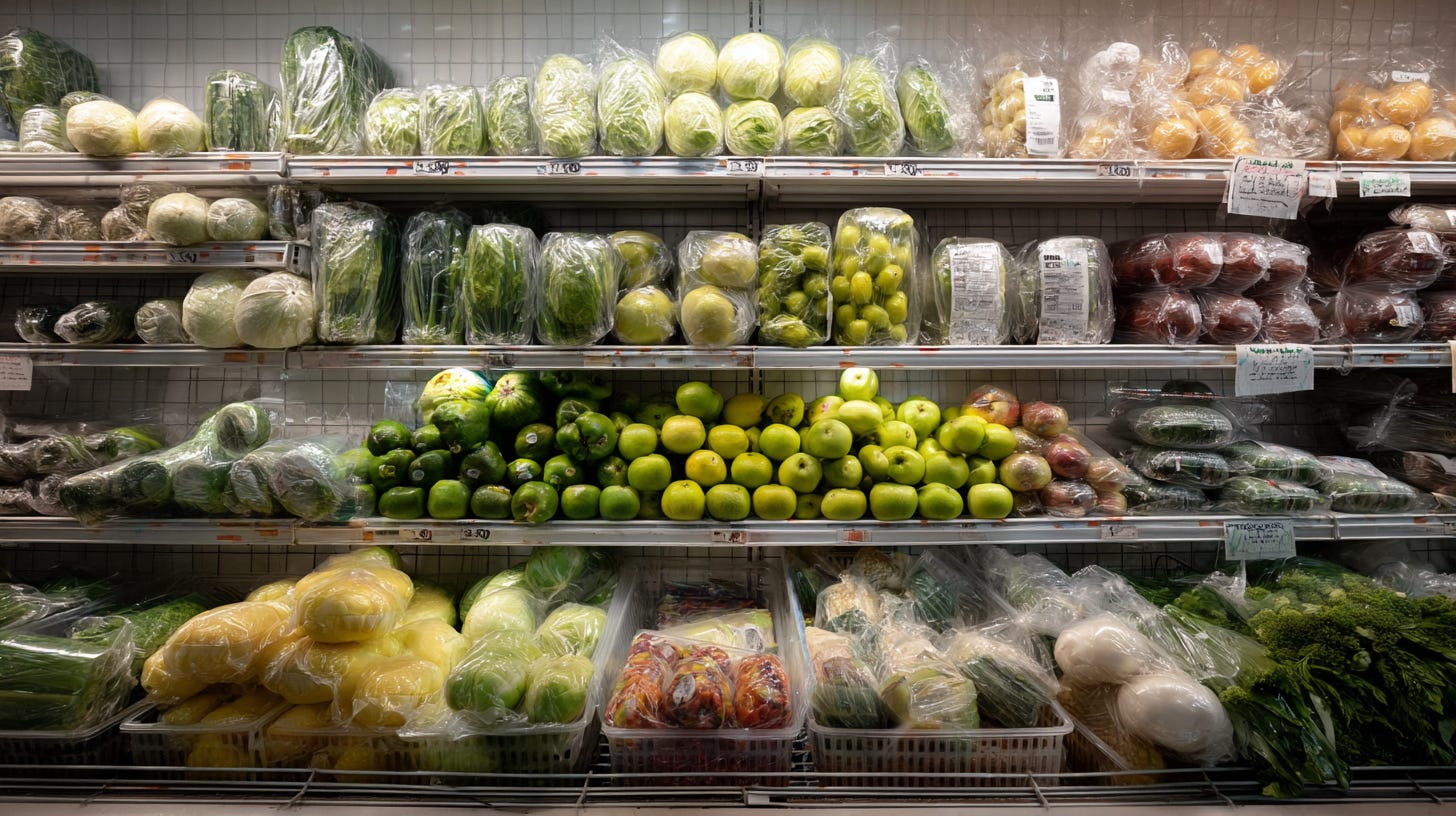
Walk the produce aisle of almost any American grocery store and you’ll find that the humble carrot — which comes equipped with its own skin — is typically bundled in a plastic bag. The strawberry, already sealed by nature, arrives in a plastic clamshell. The broccoli is shrink-wrapped.
Fresh produce, foods that need no container to protect them, has become one of the most reliably plastic-packaged items in the supermarket.
A report released Tuesday by U.S. PIRG Education Fund and Environment America Research & Policy Center puts hard numbers on that paradox. The study surveyed packaging for ten types of herbs, fruits and vegetables at 40 grocery stores across five U.S. cities and found that 81% of the produce examined was sold with plastic packaging — including clamshell containers, mesh bags, plastic film, trays and twist-ties.
Of more than 1,000 product lines surveyed, only 12% were fully plastic-free, while an additional 6% were sold loose but still carried a plastic sticker. Some 88% of stores provided plastic film produce bags in the produce section.
“Plastic waste is spreading throughout our environment at alarming rates,” said Jonathan Kaplan, policy analyst with U.S. PIRG Education Fund and co-author of the report. “The produce aisle turns out to be a great place to take action on plastic pollution.”
The survey, conducted in fall and winter 2025–2026, covered ten common items: basil, broccoli, carrots, cherry tomatoes, lemons, portobello mushrooms, romaine lettuce, spinach, strawberries and sweet potatoes. Researchers assigned each product a “plastic intensity” score based on how much plastic was used per unit of food volume, allowing for comparisons across retailers.
Big stores, big plastic
The findings on the nation’s largest grocers were damning: four of the top five chains by market share — Walmart, Kroger, Costco and Amazon — ranked among the five most plastic-intensive retailers in the survey.
“No one is top banana when it comes to providing produce without plastic packaging,” said Celeste Meiffren-Swango, Beyond Plastic campaign director with Environment America Research & Policy Center. “The grocery industry is ripe for improvement in reducing unnecessary plastic packaging, especially for fresh fruits and vegetables. There’s no reason for grocers to use so much plastic.”
The report lands amid a growing body of research tying plastic packaging to human health risks. Scientists have now detected microplastics and nanoplastics in human brain tissue, blood, lung and liver tissues, urine, breast milk and the placenta.
A 2024 study found that people with microplastics in their carotid artery tissue were twice as likely to suffer a heart attack, stroke or premature death over the following three years compared to those without. Research has also linked microplastic exposure to a range of diseases, including inflammatory bowel disease, diabetes, obesity and certain cancers.
The FDA, while acknowledging the growing research, has said that current evidence does not yet demonstrate that levels of microplastics in food pose a confirmed risk to human health — though the agency says it continues to monitor the science.
Beyond individual health, researchers have found that microplastics in soil may reduce water and nutrient intake in plants and impair photosynthesis, with projections suggesting that U.S. farmers could see annual yield losses of between four and 13.5% in staple crops like corn and wheat over the next 25 years.
Trump policies protecting plastic
The broader regulatory landscape offers little relief. A Trump administration executive order in January 2025 halted or reversed portions of the EPA’s national strategy to prevent plastic pollution, and an attempt to forge a globally binding plastics treaty at UN negotiations in Geneva in August 2025 adjourned without consensus. Congressional legislation that would create a tax on virgin plastic production and fund reduction efforts has not passed.
Against that backdrop, advocates say the produce aisle represents one of the most achievable near-term targets for change. The new report notes that plastic-free packaging options were already available for nine of the ten produce types surveyed — meaning the industry has demonstrated that alternatives exist; it simply hasn’t deployed them at scale.
“Getting rid of unnecessary plastic in the produce aisle really is low-hanging fruit,” said Lisa Frank, executive director of Environment America Research & Policy Center. “Many grocery chains already have plastic-free options available, so we know it’s possible. We’re asking stores to take the next step by eliminating all unnecessary plastic packaging for fresh produce.”
The report calls on grocery retailers to rapidly expand plastic-free options already in use, and urges policymakers to extend existing plastic bag bans to cover produce bags. It also asks consumers to choose unpackaged produce when possible, bring reusable bags and skip the thin plastic bags typically provided in the produce section.
For shoppers, the ask is relatively simple. For the industry, it may require more persuasion — but the report suggests the tools to make the change are already sitting on the shelf.