


Administration also plans new rancher loans, fewer livestock regulations, and reduced wolf protections
The Trump administration is preparing a broad package of measures aimed at lowering soaring beef prices, including temporarily easing tariffs on imported beef and cutting regulations for U.S. cattle producers, the Wall Street Journal reports.
According to reports, the administration plans to suspend the annual tariff-rate quota system on beef imports, allowing more foreign beef to enter the U.S. market at lower tariff rates. The change could take effect as soon as Monday and would apply to beef-exporting nations worldwide.
The move comes as consumers continue to face historically high meat prices at grocery stores and restaurants. Beef has remained one of the most persistent inflation problem areas even as prices for eggs, milk and some other staples have stabilized in recent months.
Ground beef prices are now about 40% higher than they were five years ago, according to government inflation data frequently cited by economists and food industry analysts.
The administration says the import changes are intended to address immediate supply shortages while longer-term efforts focus on helping domestic ranchers expand production.
A White House official reportedly said the administration views the tariff reduction as a short-term inflation relief measure while pursuing policies designed to lower costs for cattle producers over time.
Consumers squeezed at the meat counter
The rising cost of beef has become increasingly visible for shoppers.
Families are paying more for hamburgers, steaks, tacos and other everyday meals, while restaurants have continued raising menu prices or shrinking portion sizes to cope with higher wholesale meat costs.
Industry analysts say several factors have contributed to the price surge, including:
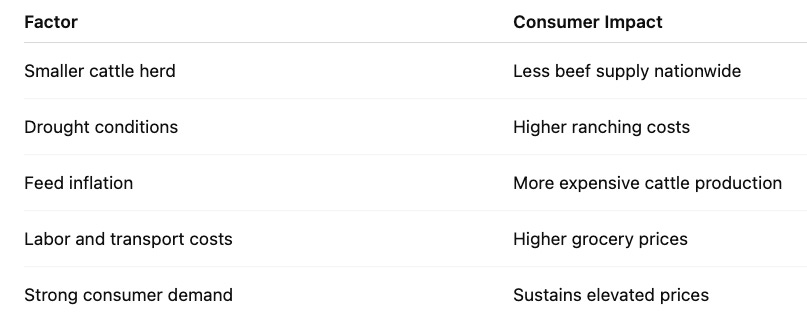
A historically small U.S. cattle herd
Drought conditions in major ranching states
High feed and transportation costs
Strong consumer demand for beef despite inflation
Supply-chain disruptions that lingered after the pandemic
The U.S. cattle inventory has fallen to some of its lowest levels in decades after years of drought and financial pressure pushed many ranchers to reduce herd sizes.
That has created tight supplies just as demand for beef has remained relatively resilient.
More imports could lower prices — eventually
Economists say increasing imports could help stabilize prices by boosting available supply, though the effect may not be immediate.
Countries including Australia, Brazil, Canada, Mexico and Argentina are among major beef exporters that could benefit from the tariff changes.
The administration already moved earlier this year to allow additional beef imports from Argentina as part of its inflation response strategy.
Consumer advocates generally support measures that increase competition and supply in food markets, though some domestic ranchers and cattle industry groups have historically opposed expanded imports, arguing they can depress U.S. cattle prices and create food-safety concerns.
The National Cattlemen’s Beef Association and other industry groups have frequently argued that foreign beef should face strict inspection standards and labeling requirements.
Ranchers also getting regulatory relief
Alongside the import changes, the administration plans several measures aimed at reducing costs and regulatory burdens for domestic cattle producers.
Those steps reportedly include:
Expanded Small Business Administration loan access for ranchers
Reduced Endangered Species Act protections for gray wolves and Mexican wolves
Rollbacks of certain livestock-tracking requirements
Less enforcement of electronic ear-tag mandates for cattle
Electronic ear-tag rules have been controversial among some ranchers, who argue the requirements are costly, burdensome and raise privacy concerns about livestock tracking.
Wildlife protections have also long been a flashpoint in western ranching states, where cattle producers say wolves threaten livestock and increase financial losses.
Environmental groups, however, are expected to strongly oppose efforts to weaken wolf protections, arguing they are essential for species recovery and ecosystem balance.
Affordability Watch
Why beef prices remain so high
Several economic forces continue driving meat costs upward:
Food inflation has cooled overall compared with the peak pandemic years, but beef remains one of the most expensive categories in the grocery store.
Analysts say meaningful price relief may depend on rebuilding the U.S. cattle herd — a process that could take years even under favorable weather and economic conditions.
For now, consumers may continue seeing elevated prices for steaks, burgers and other beef products throughout much of 2026.