


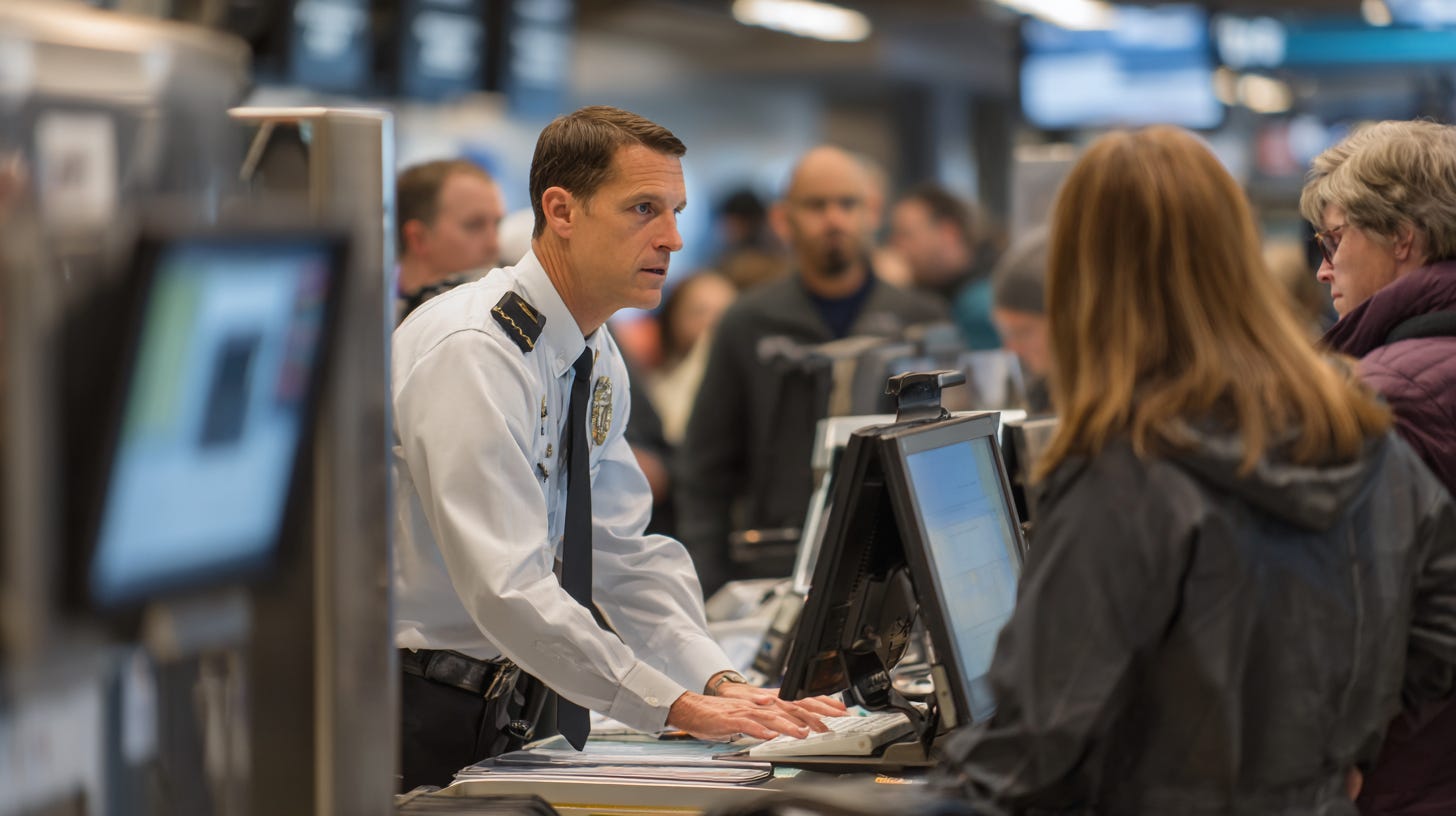
A little-known pipeline
A new investigation reported by The Guardian, drawing on internal data reviewed by Reuters, finds the Transportation Security Administration has played a significantly larger role in immigration enforcement than previously disclosed.
Since the start of the current administration, US Immigration and Customs Enforcement has arrested more than 800 people using leads derived from TSA data — a figure that far exceeds prior public estimates.
How it works
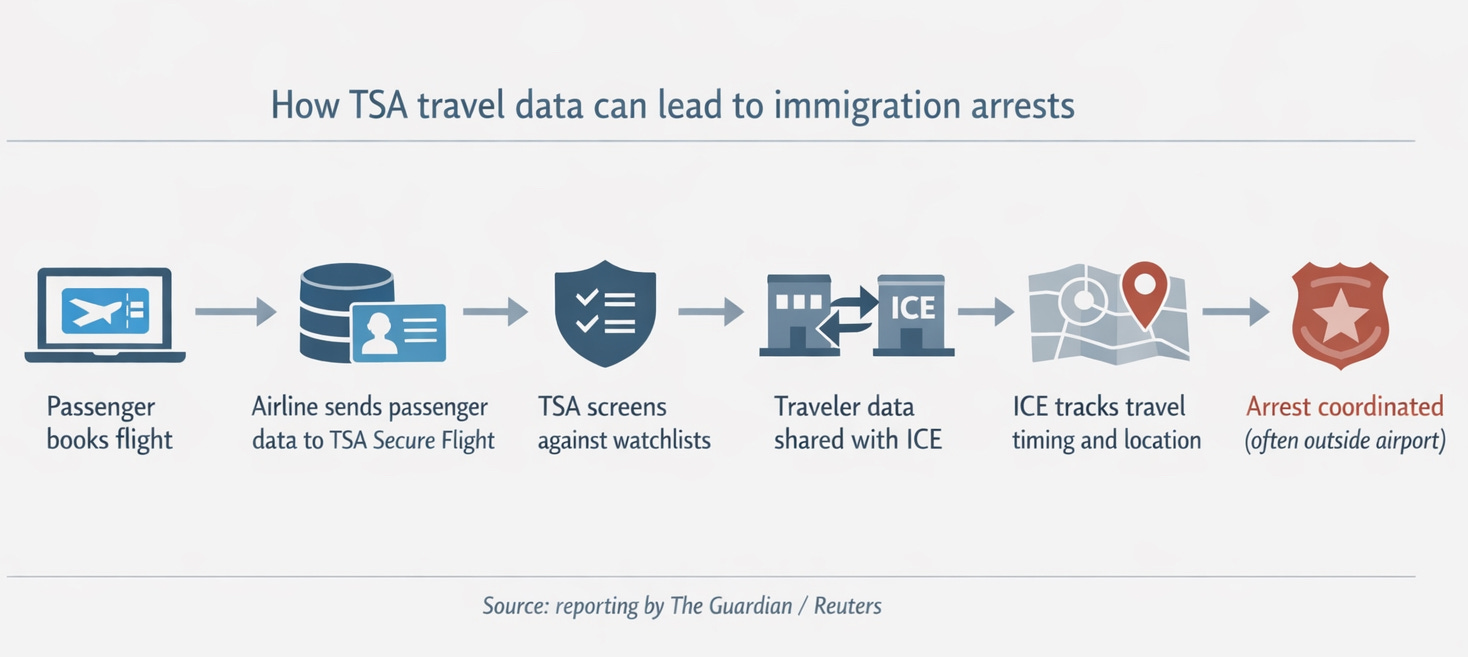
The arrests stem from TSA’s Secure Flight program, which collects passenger information to screen against terrorism watchlists.
According to the report:
TSA shared more than 31,000 traveler records with ICE
Data included flight details that could reveal when and where individuals would be traveling
Arrests were often carried out outside airports, timed around travel plans
What began as a counterterrorism tool has increasingly been used for domestic immigration enforcement.
Expansion under enforcement push
The data-sharing appears to have grown alongside broader deportation efforts.
Reporting indicates:
ICE has leveraged TSA data to track movement patterns, not just identities
Coordination within the Department of Homeland Security has intensified
Airport-related intelligence has become a regular investigative tool, not a rare exception
The result is a deeper integration of immigration enforcement into the air travel system.
Voices: Civil liberties advocates warn of “mission creep”
“This is a classic example of mission creep — a system built for aviation security now being used for routine immigration enforcement,” said one immigration policy analyst cited in coverage of the findings.
Advocates argue the practice risks turning airport screening into a de facto surveillance dragnet for non-citizens.
Concerns about chilling travel
Immigrant rights groups say the disclosures could deter lawful travel:
“People who have every right to be here may now think twice before boarding a domestic flight,” one advocate warned, pointing to fears of unexpected detention tied to travel data.
Government framing: lawful data use
Officials have generally maintained that information sharing within the Department of Homeland Security is legal and appropriate, particularly when it supports enforcement priorities.
Data box
TSA–ICE data sharing, by the numbers
31,000+ traveler records shared by TSA
800+ arrests tied to TSA-derived leads
Program involved: Secure Flight passenger screening system
Agencies: TSA → ICE (both under Department of Homeland Security)
What this means
For consumers and travelers, the findings suggest that routine airline travel may expose personal data to broader law enforcement uses than expected.
Key implications:
Hidden risk layer: Travel data may be used beyond security screening
Behavioral impact: Some immigrants may avoid flying altogether
Transparency gap: The scale of the practice only became public through reporting
For policymakers, the report raises a central question: Where should the line be drawn between security screening and civil enforcement?