

If Robert F. Kennedy Jr. gets his way, Americans will soon have easier access to a class of injectable drugs that have never been proven safe or effective—and that have already landed people in the hospital.
The Health and Human Services secretary is preparing to let compounding pharmacies produce peptides that the FDA currently restricts, according to people familiar with the plans. Kennedy has framed the move as consumer empowerment, a blow against bureaucratic overreach. What it actually represents is something far more reckless: the federal government actively lowering the bar for drugs entering the American marketplace.
What’s a peptide?
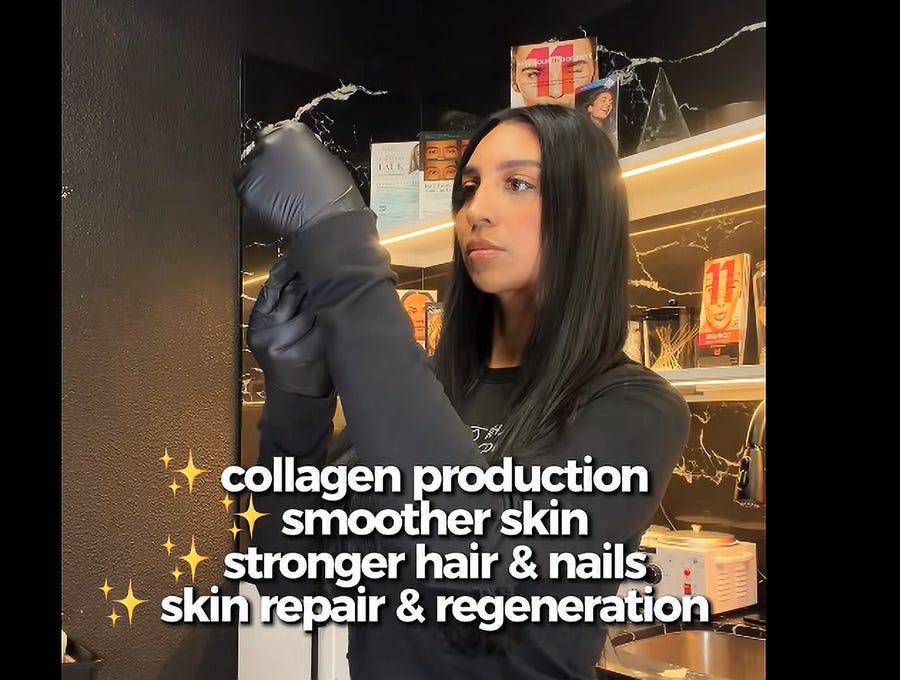
Let’s be clear about what peptides are in this context. They are not vitamins. They are not supplements you can pick up at a health-food store. They are injectable substances—many manufactured in China with minimal oversight—that have not gone through the clinical trials required of every other drug Americans put into their bodies. They come in tiny glass vials with marketing names designed to appeal to vanity and fear of aging: “Glow Stack,” “Wolverine Stack.” They cost anywhere from tens to hundreds of dollars each, and their primary salesforce is a network of social-media influencers with no medical credentials.
On TikTok, young creators post glowing before-and-after photos, attributing clear skin or rapid recovery to specific peptides. What they don’t mention—because they don’t know—is whether these substances cause long-term harm. Nobody does. That is precisely the kind of question the FDA approval process is designed to answer, and it is precisely the process being bypassed here.
Kennedy announced his intentions not in a policy briefing or a public hearing, but on Joe Rogan’s podcast. He claimed more than a dozen peptides had been improperly restricted under the Biden administration and said he had used them himself. Career FDA scientists whose jobs involve overseeing compounding drugs learned about their boss’s plans the same way the rest of America did: from a podcast.
A gray market
The administration’s argument is that current restrictions have created a dangerous gray market, and that letting licensed pharmacies compound peptides would be safer. This is a convenient half-truth. The gray market is real—unregulated sellers do hawk peptides online with a fig-leaf “for research use only” label. But the solution to an unregulated market is not to create a barely-regulated one. It is to enforce existing laws and require that drugs meet basic standards of safety before they reach consumers.
As Shabbir Imber Safdar of the Partnership for Safe Medicines put it, the logic amounts to arguing that we should let people raid bank vaults so they’ll stop robbing banks. The regulatory framework for medicine is not an inconvenience. It is the mechanism that ensures Americans aren’t injecting themselves with substances that could harm them.
The evidence of that harm already exists. Last year, two women were hospitalized in critical condition after receiving peptide injections at an anti-aging conference in Las Vegas. The injections were administered by a California doctor who was not licensed in Nevada and who promoted alternative therapies. Investigators were unable to determine what exactly caused the women’s illness—which is itself a damning indictment of a product category where basic questions about safety remain unanswered.
The financial dimension deserves scrutiny as well. The peptide industry is built on a familiar wellness-economy playbook: manufacture anxiety about aging, package unproven treatments in aspirational branding, and charge premium prices for substances that may do nothing at all.
Consumers spending hundreds of dollars on vials of GHK-Cu or BPC-157 are not making informed medical choices. They are participating in a marketing experiment, one where the only guaranteed outcome is a lighter wallet.
Compounding support
The compounding pharmacy lobby supports Kennedy’s move, naturally—it would expand their business. Gray-market sellers are thrilled too, viewing the policy shift as free publicity that will bring peptides into the mainstream. The only constituency not celebrating is the one that should matter most: public-health experts who have spent decades building a regulatory system designed to protect Americans from exactly this kind of unvetted product.
One proposed mechanism is enforcement discretion, meaning the FDA would simply choose not to penalize pharmacies that compound restricted peptides. Even the industry acknowledges this is a temporary fix. The compounding trade group’s own chief executive called it exactly that, noting that a future administration could reverse the policy.
So what Americans are being offered is this: wider access to unproven drugs, administered based on social-media hype rather than clinical evidence, enabled by a health secretary who learned about medicine from podcasts and personal experimentation.
The peptide craze is not a story about freedom or choice. It is a story about what happens when the guardrails come off, and the people in charge of public health decide that the free market knows best.