


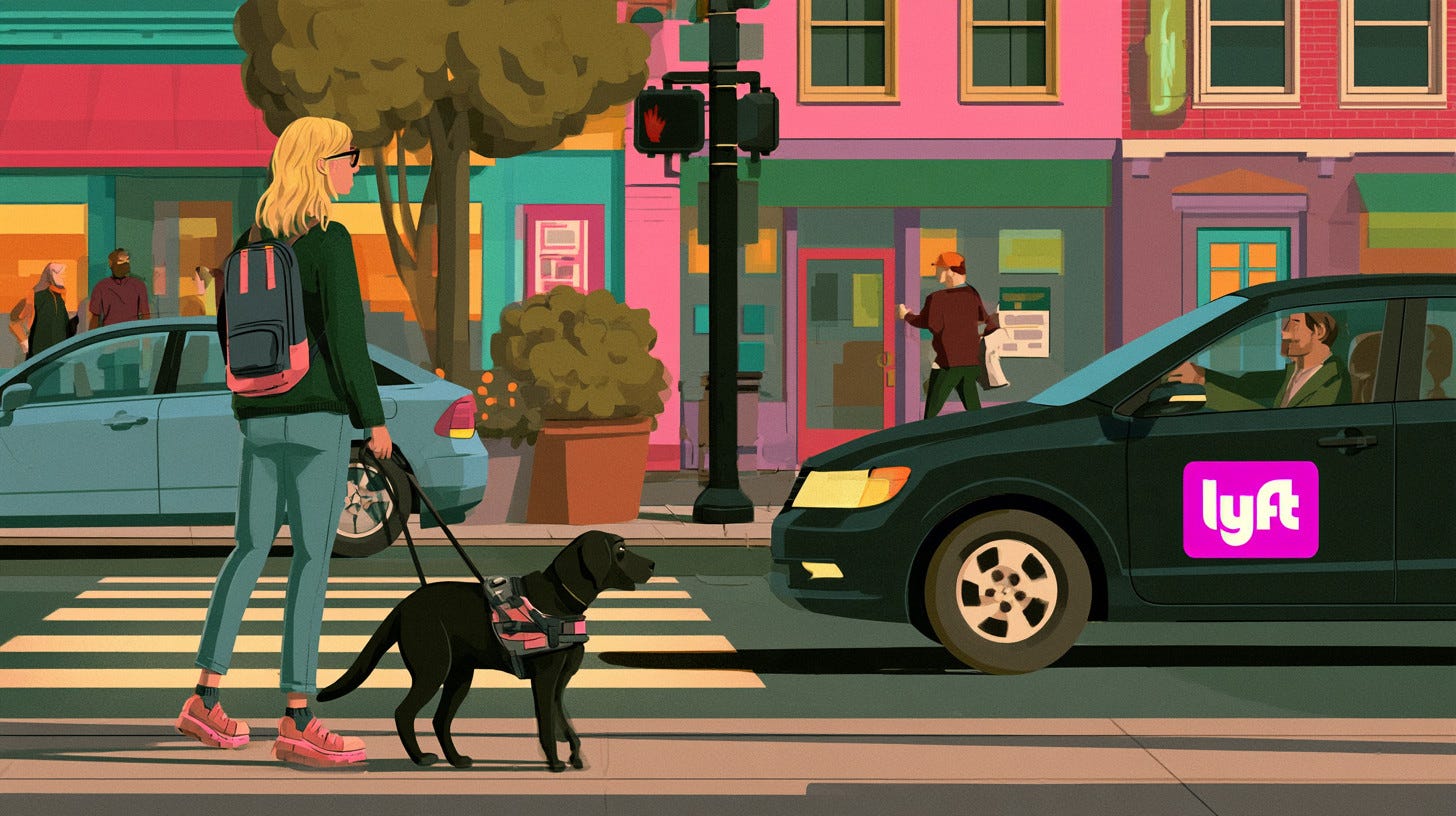
The U.S. Justice Department is suing Lyft, saying it routinely discriminates against passengers with disabilities. It’s similar to a suit filed last year against Lyft’s ride-share rival Uber. The Uber case is still pending.
Both cases are similar to ones that were brought earlier against the companies and against other transportation carriers.
The latest lawsuit charges that Lyft violated the Americans with Disabilities Act by failing to provide service to passengers who use mobility devices like wheelchairs as well as service animals. It said that in some instances, drivers not only fail to pick up such passengers but also bill them a cancellation fee.
It seeks a court order to force Lyft to modify its policies and to train its staff and drivers on the requirements of the law, which prohibits private transportation companies from discriminating against people with disabilities.
"Individuals with disabilities should be able to rely on rideshare services free of discrimination," Acting Assistant Attorney General Jesus A. Osete of the Justice Department's Civil Rights Division said in a statement. "We intend to uphold the ADA's promise that people with disabilities are entitled to equal access in every part of public life, including essential transportation services."
Both companies have denied the allegations. "We have long-standing policies requiring drivers to accommodate riders who travel with service animals or use foldable mobility devices, and drivers who violate these policies face serious consequences, including permanent deactivation," Lyft said in a statement quoted by Reuters.
Not the first ride to court
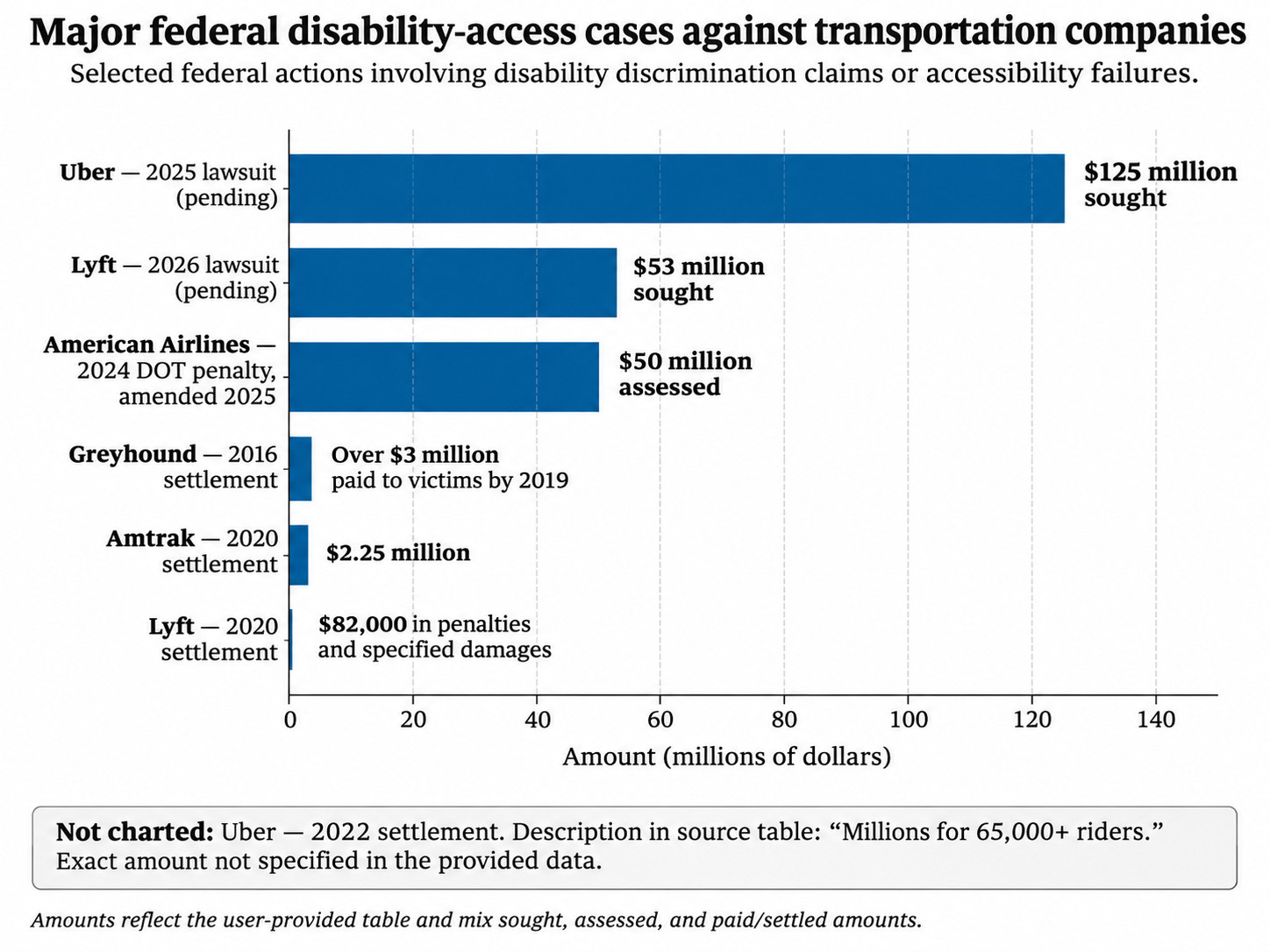
Both car service companies have seen the inside of the courtroom before. Uber was ordered to compensate 65,000 passengers in 2022 and was instructed to create a process for waiving wait-time fees for disabled passengers.
In 2020, Lyft settled federal charges that drivers refused to pick up passengers using wheelchairs and walkers. Lyft was fined $40,000 and ordered to strengthen its training and complaint process.
One of the complainants in that case was a military veteran who had lost both legs in combat. Another had failed at least 12 complaints about his treatment.
Uber and Lyft are not alone
It’s not only ride-sharing companies that are a problem for disabled passengers. Other notable cases include:
Greyhound - The bus company was sued in 2016 for discriminating against disabled passengers nationwide by failing to make its train stations accessible. Greyhound agreed to pay $2.25 million and to make improvements.
Megabus - As part of a larger investigation of intercity bus service, the company ws ordered to improve its compliance with ADA requirements.
New York City taxis - A class action case in 2011 said that only 231 of the city’s 13,437 yellow cabs could accommodate wheelchairs. A settlement require making half the fleet accessible but there has been continuii\ng litigation challenging the progress made so far.
American Airlines - In 2024, the airline was fined $50 million after investigators found failures involving wheelchair assistance and the airline’s handling of mobility devices.