

A system under strain
The United States Postal Service is taking emergency steps to conserve cash as its financial position deteriorates, including suspending contributions to a major employee pension program and raising postage rates.
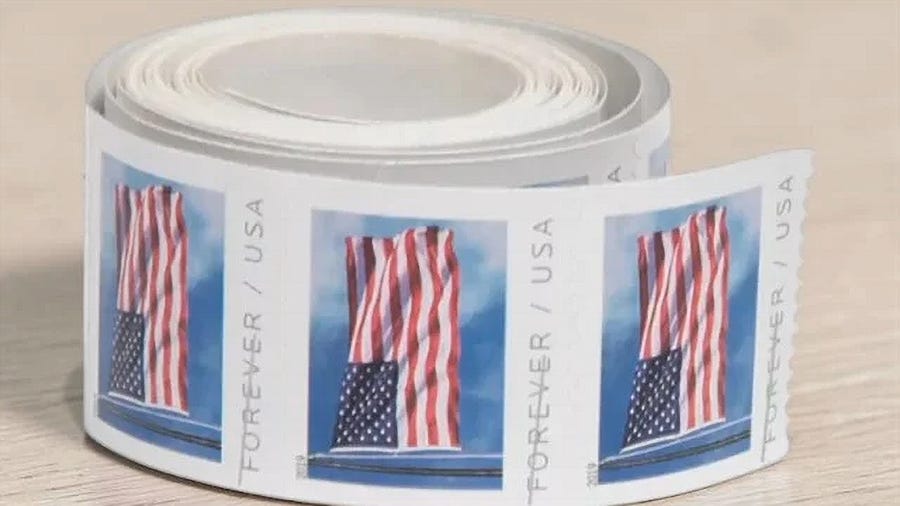
The agency said Thursday it will temporarily halt payments into the Federal Employees Retirement System (FERS), a move expected to free up about $2.5 billion in the current fiscal year. At the same time, it announced a price hike for first-class “forever” stamps—from 78 cents to 82 cents—effective July 12.
The actions underscore the severity of the Postal Service’s financial challenges, which have persisted for years despite repeated reform efforts.
Liquidity fears drive pension freeze
Postal officials said the suspension of pension contributions is aimed squarely at avoiding a near-term cash crunch.
The agency pays roughly $200 million every two weeks into FERS. By pausing those payments, it hopes to preserve liquidity needed to maintain daily operations, including its legally mandated six-day delivery schedule.
The Office of Personnel Management, which oversees federal retirement systems, was notified of the decision. The Postal Regulatory Commission approved a waiver allowing the temporary suspension.
Postal Service Chief Financial Officer Luke Grossmann said the risks of continuing payments outweigh the potential long-term impact on retirement funds.
“The risk to the Postal Service and the American public from insufficient liquidity for postal operations dramatically outweighs any longer-term risk to the pension funds,” Grossmann said.
Officials emphasized that employee contributions and payments to the Thrift Savings Plan will continue uninterrupted, and said current retirees would not see immediate effects.
Billions in losses, limited options
The pension move comes as USPS continues to post steep annual losses. The agency reported a $9 billion deficit in fiscal year 2025, only slightly improved from $9.5 billion the year before.
Declining mail volumes, high labor and retirement costs, and structural constraints have all contributed to the shortfall.
David Steiner warned lawmakers in March that, without changes, the agency could run out of cash within a year—jeopardizing its ability to deliver mail nationwide.
“If you want the same level of services… someone has to pay for it,” Steiner told a House Oversight hearing. “The only options are postal ratepayers or taxpayers.”
USPS operates under a $15 billion borrowing cap and faces legal requirements to maintain universal service, including delivery to rural and unprofitable areas.
Price hikes accelerate
The stamp increase announced Thursday is part of a broader push to raise revenue.
Steiner has floated raising stamp prices as high as 90 to 95 cents in the future. Meanwhile, USPS is implementing a temporary 8% surcharge on some package shipments starting April 26 and lasting through early 2027, citing higher transportation costs.
Together, the measures signal a shift toward relying more heavily on consumers to stabilize the agency’s finances.
Temporary fix—or long-term strategy?
If the pension suspension continues through fiscal year 2030, USPS estimates it could free up as much as $15 billion.
Regulators said the move should help avert an immediate liquidity crisis but warned it is not a permanent solution.
The Postal Regulatory Commission urged both USPS and Congress to use the reprieve to pursue “meaningful and lasting change.”
The agency has taken similar steps before, including deferring pension payments during a financial crunch in 2011.
Congress steps back
Despite the mounting crisis, political support for another federal rescue appears limited.
Lawmakers previously provided relief through a 2022 reform law that eliminated a requirement for USPS to pre-fund retiree health benefits—an obligation that had weighed heavily on its balance sheet and was projected to save about $107 billion over time.
But more assistance may not be forthcoming.
James Comer, chair of the House Oversight and Government Reform Committee, delivered a blunt message when asked about the Postal Service’s situation.
“No more bailouts,” Comer said. “You’re going to have to figure it out.”
What this means
For consumers, the immediate impact will be higher postage prices, with the likelihood of further increases ahead.
For postal workers and retirees, the pension suspension introduces longer-term uncertainty, even as officials insist benefits remain secure for now.
And for policymakers, the Postal Service’s worsening finances are reviving a familiar debate: whether to preserve universal mail service as a public good—or force the system to operate more like a self-sustaining business.
With cash reserves dwindling and political patience wearing thin, that debate may soon become unavoidable.