


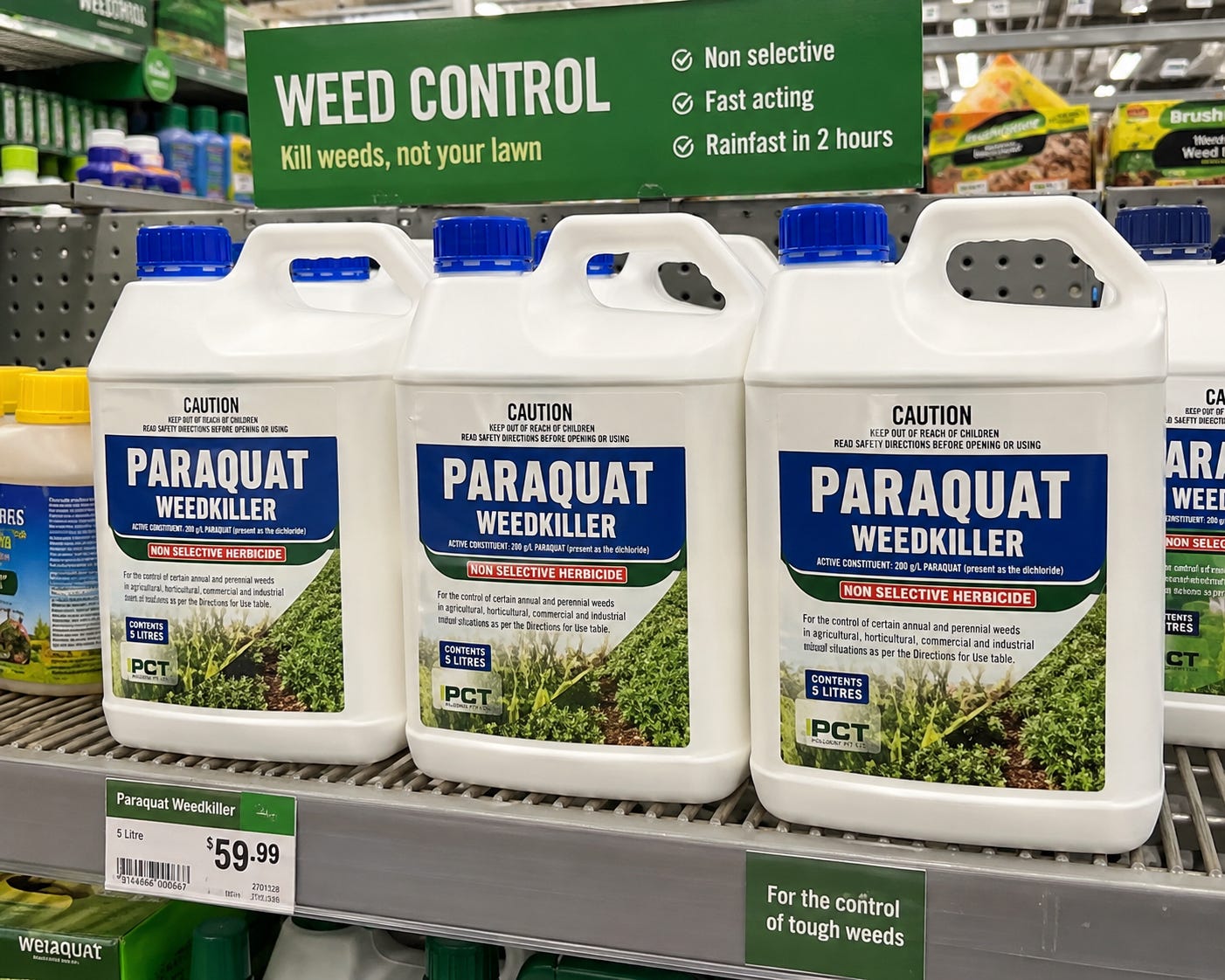
Vermont has become the first state in the nation to ban paraquat, a widely used but highly controversial herbicide that researchers, advocacy groups and thousands of lawsuits have linked to Parkinson’s disease.
Gov. Phil Scott signed the measure Tuesday after bipartisan support emerged in the Vermont legislature, making the state the first in the U.S. to prohibit the sale and use of the chemical. The law takes effect Nov. 1, 2026, though certain exemptions for small fruit crops may continue through 2030 under limited permits, The Guardian reported.
The decision marks a significant escalation in the long-running battle over paraquat, one of the most toxic herbicides still legal in the United States. The chemical has been used for decades to control weeds in crops including soybeans, cotton and orchards.
Supporters of the Vermont law say the state acted because federal regulators have moved too slowly despite mounting evidence of health risks.
“Instead of waiting for EPA action,” Vermont lawmakers wrote in the legislation, “the State of Vermont should ban the use of paraquat in order to protect Vermonters from the known, significant health effects of exposure.”
Growing Parkinson’s concerns
Paraquat has long been controversial because of research suggesting that exposure can substantially increase the risk of Parkinson’s disease, a progressive neurological disorder that affects movement and cognition.
The Vermont legislation cites multiple National Institutes of Health studies linking paraquat exposure to Parkinson’s disease, non-Hodgkin lymphoma and childhood leukemia (see below).
The American Parkinson Disease Association says studies show people exposed to paraquat may be more than twice as likely to develop Parkinson’s compared with people not exposed to the chemical.
The Michael J. Fox Foundation, which has pushed for tighter restrictions on the pesticide, praised Vermont’s action and urged other states to follow.
“Vermont’s leadership sends a clear message,” the organization said after the bill passed. “We do not have to wait to act.”
Paraquat manufacturer Syngenta has repeatedly denied that the product causes Parkinson’s disease. The company maintains that regulators worldwide have reviewed the herbicide and concluded it can be used safely when label directions are followed.
Banned overseas, still used in the U.S.
Paraquat has already been banned in more than 70 countries, including members of the European Union, China and several developing nations, the American Parkinson Disease Association said.
Yet the herbicide remains legal in the United States, where it is classified by the EPA as a “restricted use” pesticide available only to licensed applicators because of its extreme toxicity.
The EPA approved continued registration of paraquat in 2021, but later reopened portions of its review after legal challenges and concerns that the agency had underestimated risks from airborne exposure and drift.
Advocacy groups say Vermont’s action reflects growing frustration with federal regulators.
“This EPA action is a starting point, not a finish line,” the American Parkinson Disease Association said earlier this year while calling for a nationwide ban.
Litigation and financial exposure mounting
The Vermont ban also lands amid intensifying litigation against Syngenta and other companies connected to paraquat.
Thousands of plaintiffs nationwide have alleged the chemical contributed to Parkinson’s disease diagnoses among farmers, landscapers and agricultural workers. Several bellwether lawsuits have already been settled, including a high-profile Philadelphia case earlier this year.
Consumer attorneys continue advertising heavily for potential plaintiffs, highlighting the growing financial risks facing manufacturers and insurers tied to pesticide liability claims.
At the same time, lawmakers in states including Pennsylvania, Illinois, New York and Virginia have introduced legislation to restrict or ban paraquat use.
What it could mean for consumers
For consumers, the Vermont decision highlights a broader shift in how states are approaching chemical safety as trust in federal oversight weakens.
Health advocates argue the issue extends beyond farmworkers because paraquat can drift into nearby communities or contaminate the environment. Recent reporting has also raised concerns about industrial emissions tied to paraquat processing facilities in parts of the South.
Farm groups and some agricultural interests, however, warn that eliminating paraquat could raise production costs and complicate weed control for growers already dealing with inflation and supply pressures.
That tension — between public health concerns and agricultural economics — is likely to shape the next phase of the national debate.
For now, Vermont has become the first testing ground for what advocates hope becomes a nationwide movement against one of agriculture’s most controversial chemicals.
Studies find an association between paraquat and Parkinson’s
Several NIH-linked and NIH-funded studies have found an association between exposure to paraquat and an increased risk of Parkinson’s disease, though federal regulators have not formally concluded that paraquat definitively causes the disease.
Among the most cited NIH-backed research:
A 2011 study led by researchers at the National Institute of Environmental Health Sciences (part of NIH) found that people who used paraquat were about 2.5 times more likely to develop Parkinson’s disease than non-users. The study examined pesticide exposure in the Agricultural Health Study cohort. (PMC)
NIH’s National Toxicology Program later conducted a major scoping review and concluded there is “a considerable body of evidence” linking paraquat exposure with Parkinson’s disease. (National Toxicology Program)
A 2024 epidemiological study using California pesticide application data found that higher long-term paraquat exposure near homes or workplaces was associated with increased Parkinson’s risk. (PubMed)
Earlier NIH-archived research also found that combined exposure to paraquat and another pesticide, maneb, substantially increased Parkinson’s risk, especially among younger people exposed earlier in life. (PMC)
The NIH/NTP review summarized dozens of epidemiological studies — including cohort, case-control and environmental exposure analyses — and said the literature collectively describes a “potential association” between paraquat exposure and Parkinson’s disease. (NCBI)
At the same time:
The U.S. Environmental Protection Agency has said evidence remains insufficient to establish a definitive causal relationship, though it continues reviewing newer data, accordint to The Guardian.
Paraquat manufacturer Syngenta has repeatedly denied that paraquat causes Parkinson’s disease, despite thousands of lawsuits alleging otherwise.
Several states, including Vermont, have moved toward restrictions or bans citing the growing scientific evidence.