


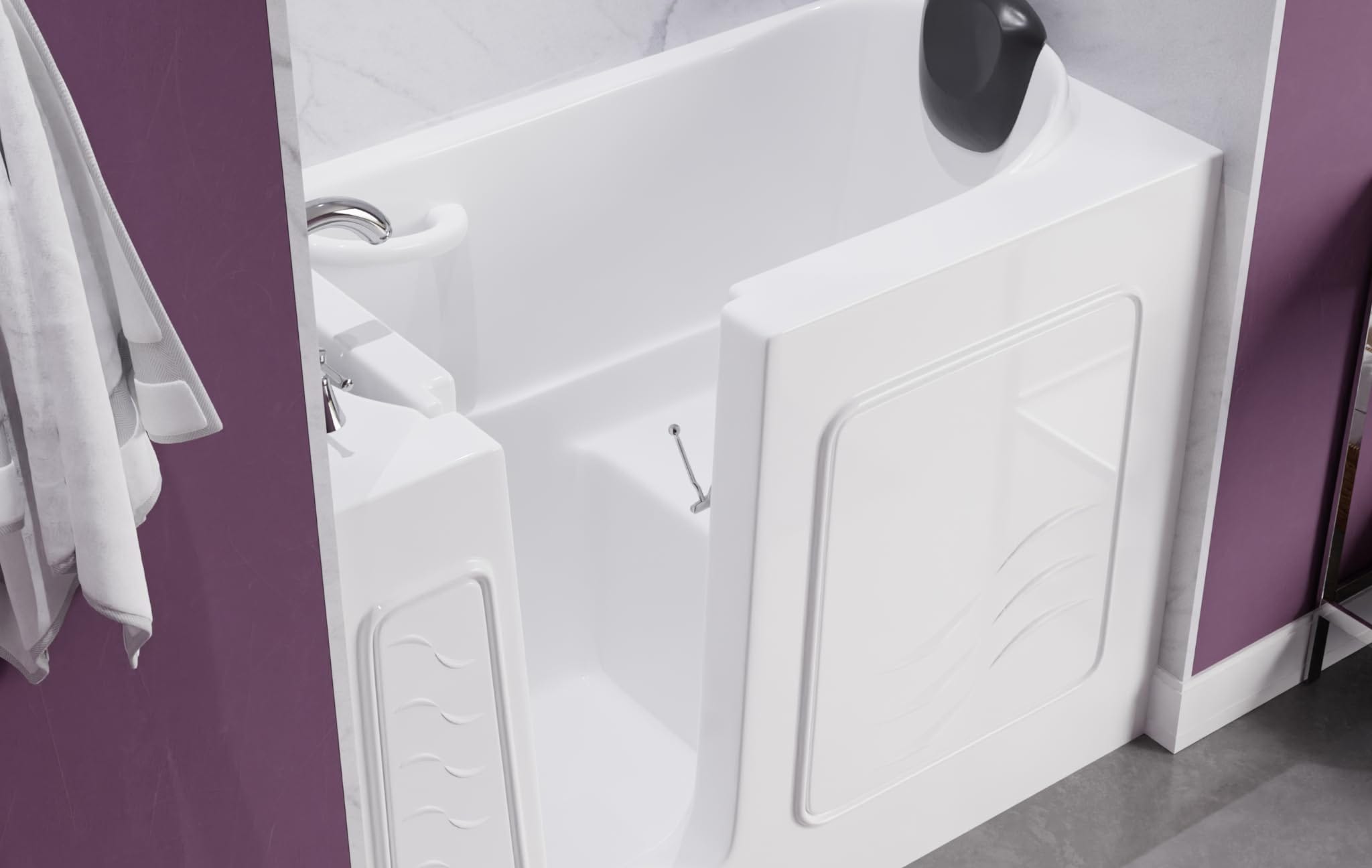
A high-risk room — and a growing market
For older Americans trying to “age in place,” the bathroom is one of the most dangerous rooms in the house.
Each year, roughly 235,000 people are injured in bathroom-related falls, with older adults disproportionately affected. The most dangerous moment isn’t standing in the shower — it’s getting in or out of the tub.
That risk has fueled a booming market for walk-in bathtubs, which promise safer bathing with low-entry doors, built-in seating, and grab bars. Prices can run well into five figures, and advertisements often frame them as essential safety upgrades.
But a closer look shows the picture is far more complicated.
What walk-in tubs are designed to fix
Traditional bathtubs require users to step over a high ledge — a maneuver that combines balance, strength, and coordination on a slippery surface. Walk-in tubs eliminate that step. Users enter through a door, sit down, and bathe in a seated position.
For people with moderate mobility issues, that can reduce one of the most common fall triggers. But in solving one problem, walk-in tubs can introduce others.
New risks: “trapped in the tub”
One of the most serious complaints involves users becoming trapped inside the tub.
Because most models use inward-opening doors, a person who falls or shifts position inside may block the door from opening. In addition, water pressure can make it difficult or impossible to open the door until the tub is fully drained.
Unlike a shower, a walk-in tub may require users to remain seated for several minutes before they can exit — even in an emergency.
Lawsuits and local news reports have documented extreme cases in which users were unable to exit after a fall or mechanical failure.
Falls don’t disappear — they change
Walk-in tubs are often marketed as “fall prevention” devices. But experts say they don’t eliminate fall risk — they shift it.
Lowering onto the seat
Shifting position inside the tub
Standing up after bathing
For people with advanced mobility limitations, even seated bathing can present challenges.
Mechanical failures and real-world complaints
Consumers have reported a range of problems:
Drains that fail or clog
Door seals that leak
Slow fill and drain times
Malfunctioning controls
While severe incidents are rare, the combination of water, confinement, and limited mobility can turn small failures into serious safety risks.
Affordability Watch: Bathroom safety upgrades meet a high-cost reality
Walk-in tubs can cost $10,000–$20,000 or more — and are rarely covered by insurance
Many older Americans are already carrying rising debt, including credit card balances
Lower-cost safety fixes can deliver meaningful protection at a fraction of the price
For older Americans trying to make their homes safer, the biggest obstacle may not be design — it’s cost.
Walk-in bathtubs often come with price tags well into five figures, and Medicare typically does not cover them.
Basic upgrades such as grab bars, non-slip flooring, and shower seating can often be installed for a few hundred dollars, dramatically lowering fall risk without taking on new debt.
Consumer advocates say the key question isn’t just “What is safest?” but also “What is sustainable?”
The cost question: what are you really buying?
Walk-in tub: $5,000–$20,000+
Walk-in shower: $5,000–$15,000
Basic upgrades: $50–$2,000
For many households, the safety benefits are not always proportional to the price.
Fraud Watch: High-pressure sales tactics target older homeowners
Consumers report aggressive in-home sales pitches for walk-in tubs
Some claims emphasize safety or medical benefits that may be overstated
Financing offers can turn a bathroom upgrade into long-term debt
Beyond safety concerns, consumer complaints often center on how walk-in tubs are sold.
Advocacy groups and legal filings describe a pattern of high-pressure, in-home sales tactics targeting older homeowners. Sales representatives may emphasize fear — particularly the risk of falls — while presenting the tub as a near-essential solution.
In some cases, consumers say they were encouraged to make same-day decisions, with discounts framed as “limited-time” offers.
Equally concerning are claims about benefits. Some marketing materials suggest walk-in tubs can prevent injuries or provide therapeutic outcomes, even though the evidence supporting such claims is limited or indirect.
Price is another flashpoint. Total costs can exceed $15,000, and financing options are frequently part of the pitch. These may include installment loans or other arrangements that significantly increase the total amount paid over time.
Consumer advocates warn that buyers should approach these offers with caution:
Get multiple quotes
Avoid same-day purchase decisions
Ask for written details on warranties and installation
Consult a medical or mobility professional before committing
The broader concern is that products marketed as safety solutions can become financial risks if consumers are pressured into decisions they don’t fully understand.
As with many home improvement markets, the line between helpful innovation and aggressive sales tactics can be thin — and it often falls on consumers to tell the difference.
Why many experts favor walk-in showers
Occupational therapists and aging-in-place specialists often recommend walk-in (curbless) showers over walk-in tubs.
They eliminate barriers without adding new risks, allow immediate exit, and are easier for caregivers to assist.
The overlooked solution: simple fixes
Basic safety upgrades — grab bars, non-slip mats, shower chairs, and handheld showerheads — can significantly reduce fall risk at a fraction of the cost.
Yet many households skip these steps and move directly to major renovations.
What you can do right now
Install grab bars near the tub and toilet
Add non-slip mats or strips
Use a shower chair or bench
Improve lighting, especially at night
If remodeling, consider a walk-in shower.
Consider a walk-in tub only if you strongly prefer bathing and understand the tradeoffs.
The bottom line
Walk-in tubs can improve safety for some users — particularly those who want to continue bathing and have moderate mobility limitations.
But they are not a universal solution, and in some cases may introduce new risks that consumers don’t fully understand.
For many households, the safest and most cost-effective approach is far simpler: reduce hazards, improve access, and avoid unnecessary complexity.
In bathroom safety, as in much of consumer protection, the most expensive option is not always the best one.