


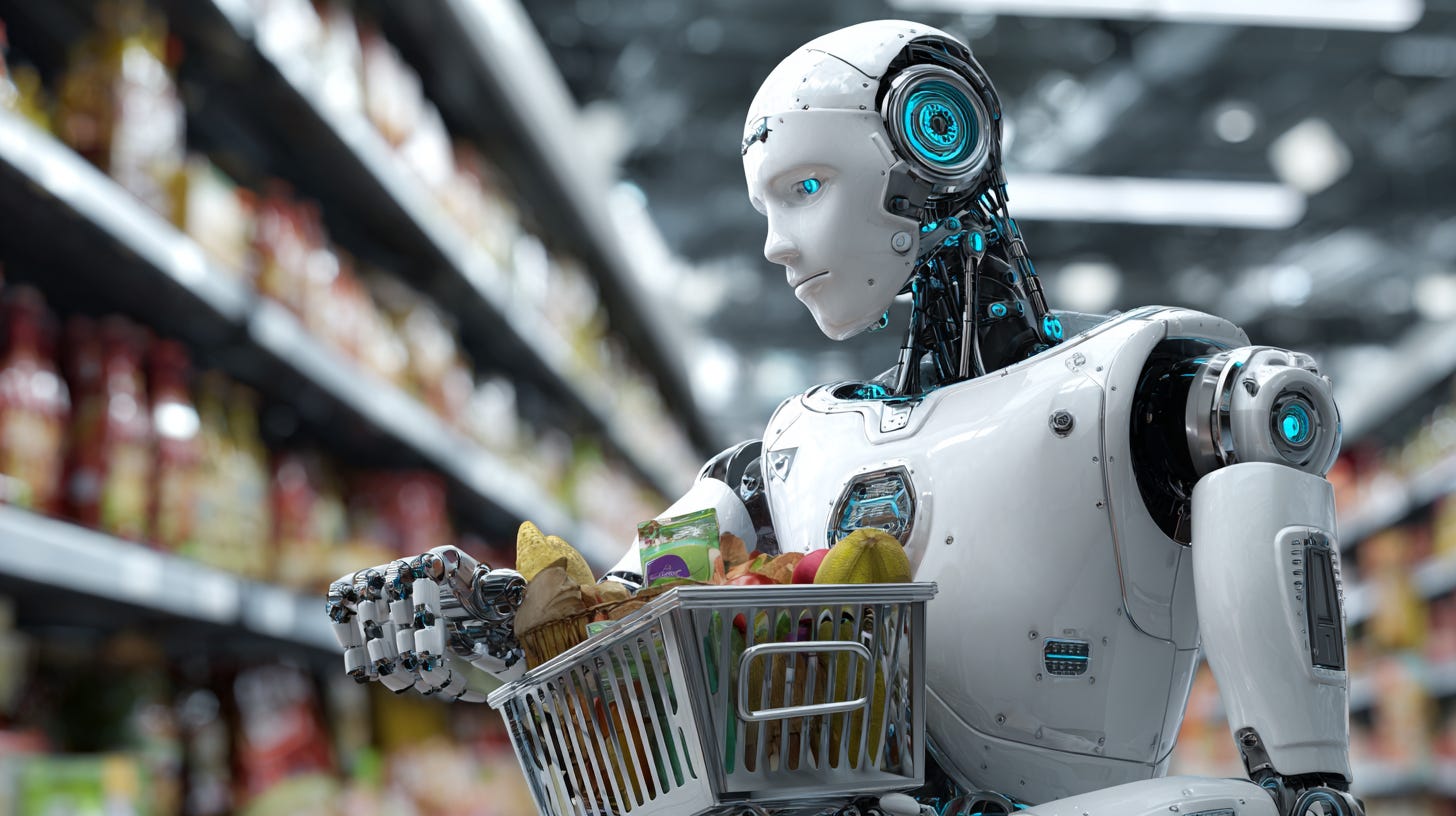
So what is AI good for anyway? Many consumers have been asking that and not getting much of an answer. Come to think of it, some AI investors and developers have been asking that too, wondering if they put their money in the right place.
Well, the answer is that AI will most likely be doing your shopping for you in the not-so-distant future. That’s thanks to what everyone is calling “agentic AI” and it simply means that AI is getting itself organized to be your personal shopping representative.
There was once a meme going around that said Amazon was developing the capability to know what you wanted before you realized your wanted it. That didn’t quite happen but agentic AI is likely to come close to doing just that.
There are several early examples out there at the moment. ChatGPT recently unveiled its Instant Checkout tool with Instacart, Walmart, Etsy and Shopify on board initially. Google is already letting users of its Gemini chatbot place orders without leaving the chat and Microsoft is doing the same with its Copilot.
"With the Instacart app directly in ChatGPT, users can go from meal planning to checkout in a single, seamless conversation," OpenAI's head of ChatGPT, Nick Turley, said in a statement. "It's another step toward bringing our vision to life — where AI delivers helpful suggestions and connects directly to real-world services, saving people time and effort in their everyday lives."
The goal is for AI to know your shoe size, dietary habits, credit card number and calendar so that it can order shoes, groceries and airline tickets, all without you doing anything. Maybe it will also review the review sites to see which brands get the highest consumer satisfaction scores.
It’s not as scary as it sounds. You will have the option of having a set daily or weekly routine — ordering groceries, let’s say — and giving instructions for occasional purchases, such as travel reservations or theater tickets.
We’ve all gotten used to it but online shopping is not exactly the most user-friendly experience in its current form. The abandoned shopping carts that litter the landscape testify to that.
Simple but complicated
It sounds pretty simple but it’s going to require a lot of backend engineering by both the AI engines and the retailers who now rely on sales clerks and websites to handle most of their sales. Initially, it will be an added cost for retailers and brands but could be a money-saver in the future. It may cause some angst for website developers.
A major difference for retailers is that they will be writing their product descriptions for machines rather than, or perhaps in addition to, humans. Today, if you’re selling women’s shoes, you need a steady supply of flowery language, attractive photos, size charts and so forth. Selling to an AI agent is a little different; it will rely more on having exact product specifications arranged in a standardized format and providing flowery dialogue on-demand for consumers who want to browse a little before going ahead with the sale.
Current jargon describes this process by saying it “collapses the buying funnel” by using fewer steps to get to completing and fulfilling a purchase.
Old model:
Search → click → browse → compare → checkout
Agentic model:
Ask → decide → buy (in chat)
Retailers believe AI will replace search and browsing as the default entry point for shopping.
What will do to the search engines, you ask? Well, Google has turned itself into the storehouse of the world’s advertising slop, as compared to its original goal of organizing the world’s knowledge, so what it loses on search engine advertising it should make up on its Gemini AI.
Besides, Sergey Brin is so worried about California’s proposed billionaires tax that he’s thinking of moving to Texas. Maybe spending a few hundred billion in Gemini development will even things out for him.
Humans vs. machines
Humans and machines, as we all know, are different. Some humans just love to shop while others hate it. The latter will be most likely to be enthused about agentic AI.
Machines? They don’t care but they’re expected to be very good at shopping. If you want to find the peanut butter that has the lowest price per pound, an AI agent is your man, so to speak. Likewise for lowest sugar content and so forth.
Your AI agent will happily slice and dice your specs for every product on your list and will do so a lot faster and more objectively than any old obsolete human could ever dream of.
It’s the latest brave new world and it will be here before you know it. Will we regret it? Hard to say. Stay tuned.