

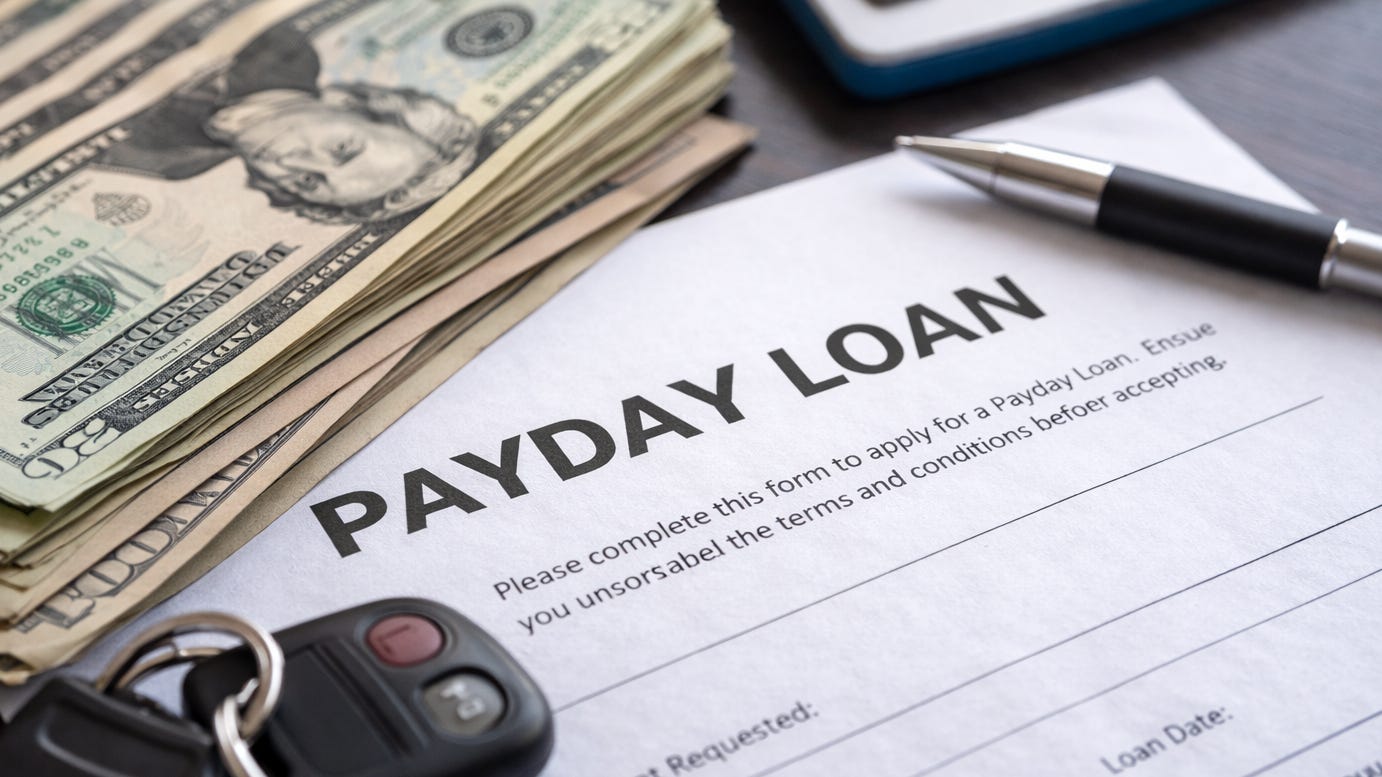
Consumer advocates consider payday loans to be predatory and cruel. They offer hope to consumers desperate for cash but, in reality, lock them into a debt spiral from which few escape unharmed.
Recently, the Consumer Financial Protection Bureau has been flip-flopping on the issue, as the Trump administration proceeds to de-fang the agency. The most recent back-pedaling involves the earned wage advance, a variation on the payday loan scheme but one that retains the likelihood of falling into triple-digit interest loans that carry a stunning collection of fees.
The CFPB has been claiming that the earned wage advances are not loans and that the costs surrounding them are not finance charges. That, says Lauren Saunders, associate director of the National Consumer Law Center, is flatly wrong.
Every court that has ruled on these questions has rejected similar claims by earned wage payday lenders, according to Saunders.
“Earned wage payday loans are loans, and just like traditional payday loans they trap consumers in a cycle of debt with exploding fees that force workers to pay to be paid. Courts have seen through payday loan apps’ deceptive claims. Declaring that loans are not loans doesn’t make them safe for people living paycheck to paycheck,” she said.
The meaning of “is”
The CFPB recently issued an advisory opinion declaring that certain “covered EWA” (earned wage access) do not offer “credit” within the meaning of the Truth in Lending Act (TILA) and that expedite fees and tips are not normally finance charges. However, Saunders notes that this year, at least six federal decisions in different states have rejected similar claims. Courts have the final say as to the meaning of federal statutes. As the CFPB said, the advisory opinion “does not have the force or effect of law.”
Under Acting Director Russell Vought, the CFPB is making the unjustifiable claim that loans with steep costs, including many direct-to-consumer payday loan apps with no connection to the employer, are not credit.
The advisory opinion is limited to “covered EWA” – advances that, whether offered through employers or directly to consumers (DTC), access payroll data, are repaid using a payroll process deduction, and have certain other limits. In other words, the loan payment is taken directly out of the borrower’s paycheck rather than being repaid by the borrower.
As the CFPB notes, technology now allows many DTC providers to tap into employees’ private wage and hour information. Lenders can also be repaid by payroll deduction without any agreement with the employer. The CFPB’s claim that tips and expedite fees are generally not finance charges does not appear to be limited to “covered EWA.”
“Payday loan apps like DailyPay that offer loans through employers extract over $300 a year in fees from employees and as much as $1,400 over two years,” said Saunders.
“Payday loan app lobbyists will undoubtedly try to use this faulty CFPB opinion to promote loopholes in state interest rate laws. But this action under Acting Director Vought is part of his effort to eliminate the CFPB and abandon its statutory consumer protection mission,” said Saunders. ”States should defend their laws against predatory lending and throw this opinion in the trash.”
Flips and flops
This latest interpretation is the third in a series of flip-flopping CFPB opinions on the TILA coverage of earned wage payday loans, Saunders said. In 2020, under CFPB Director Kathy Kraninger, the CFPB issued an advisory opinion finding that certain free, employer-based programs did not offer credit under TILA, and the CFPB gave a temporary “sandbox” approval to one employer-based provider that charged fees.
In 2024, under CFPB Director Rohit Chopra, the CFPB rescinded the 2020 advisory opinion and sandbox approval, and also proposed a new interpretive rule with a thorough analysis finding that these loans are credit under TILA.
In its latest action, the CFPB rescinded the 2024 proposal and also invited earned wage payday lenders to apply for approvals under a renewed “compliance assistance sandbox” program