


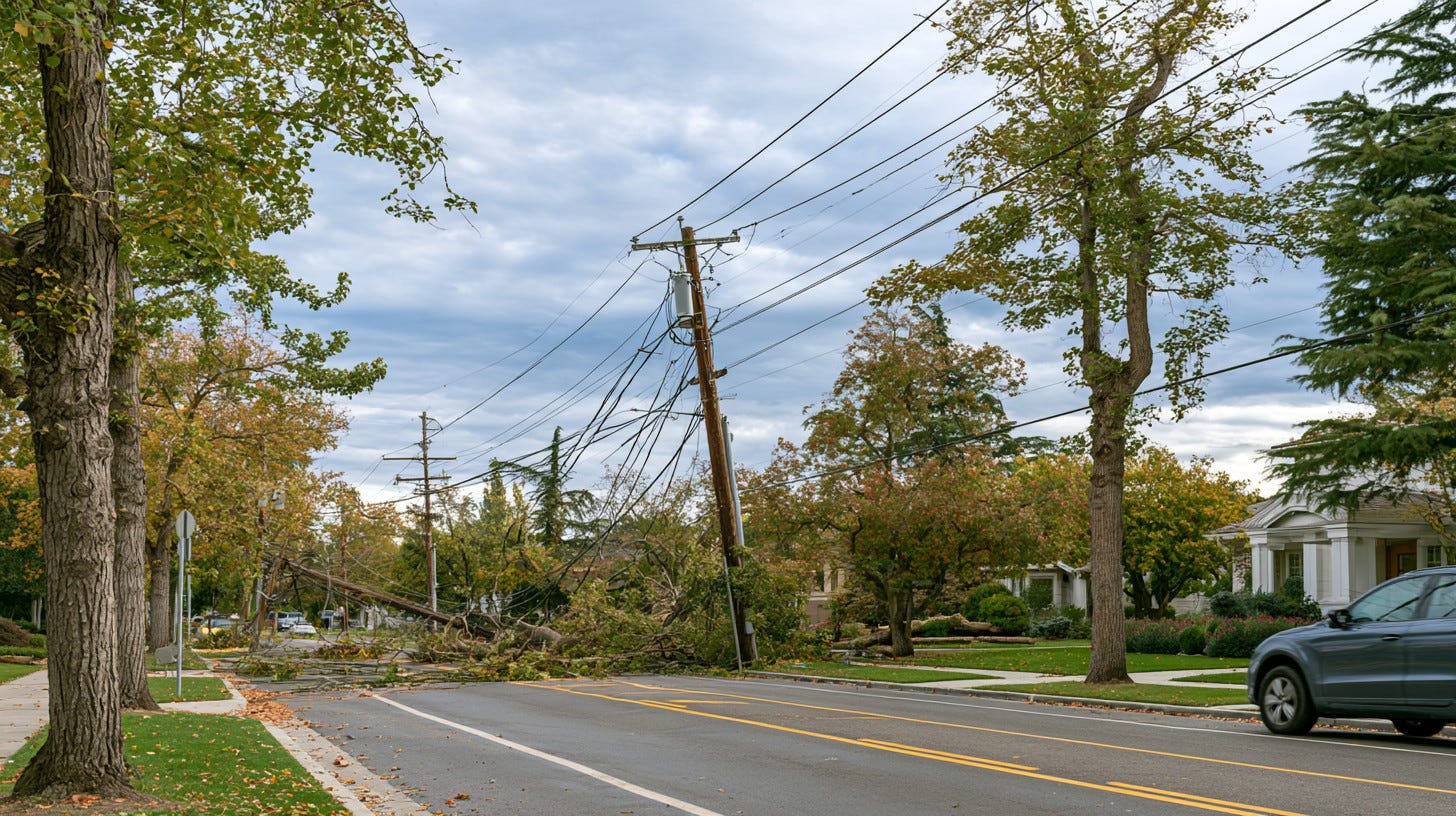
When the June 2012 derecho ripped across Northern Virginia, it left some Fairfax County homes without power for 10 days in 100-degree heat. Then-Governor Bob McDonnell called it the largest non-hurricane outage in state history.
Fourteen years later, the storm still defines how the region thinks about backup power — and it explains why every severe-weather forecast now sends a fresh wave of homeowners searching for whole-home generators and, increasingly, battery storage systems.
We’re using Fairfax County as an example because, like much of the country, it’s not ideal for solar-battery combinations — heavy tree cover, often cloudy, touchy HOAs, etc.
Like many things, the idea of a battery-powered backup system sounds pretty simple. Hook it up, get it charged and you’re good to go, right? Wrong. Like many things that sound simple, home batteries are complicated and may not be the best choice for many homeowners. If you have an electric vehicle, that presents another set of options that will be covered in a future story.
Choosing the best power backup has gotten more complicated in the last few years. Home batteries from Tesla, FranklinWH, and Enphase have matured into credible whole-home backup solutions. But the federal 30% residential clean-energy tax credit expired December 31, 2025, stripping roughly $8,000 to $10,000 from typical battery projects and reshaping the math.
So for the Fairfax County homeowner who watched the lights flicker again on June 11 — when a wind event knocked out 25,000 local customers — the question is straightforward: Does a battery system actually justify its price premium over a traditional standby generator?
What it costs to install
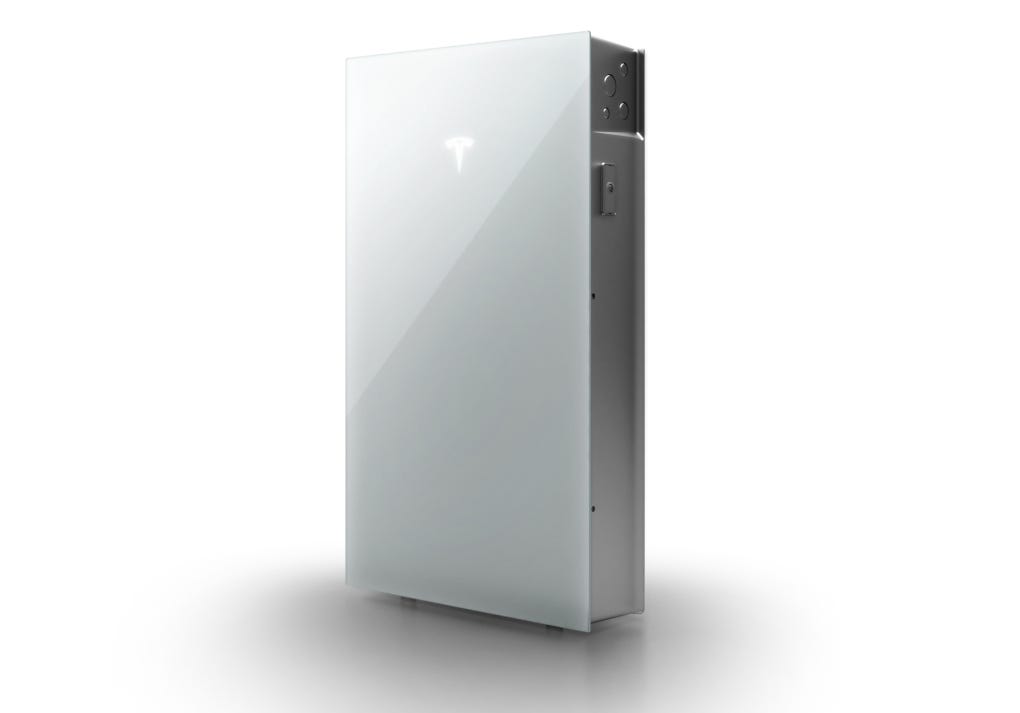
A two-unit Tesla Powerwall 3 system providing 27 kilowatt-hours of storage runs $26,000 to $35,000 installed in Fairfax County, according to pricing from SolarReviews and Northern Virginia installers. FranklinWH’s aPower 2 system lands in a similar range.
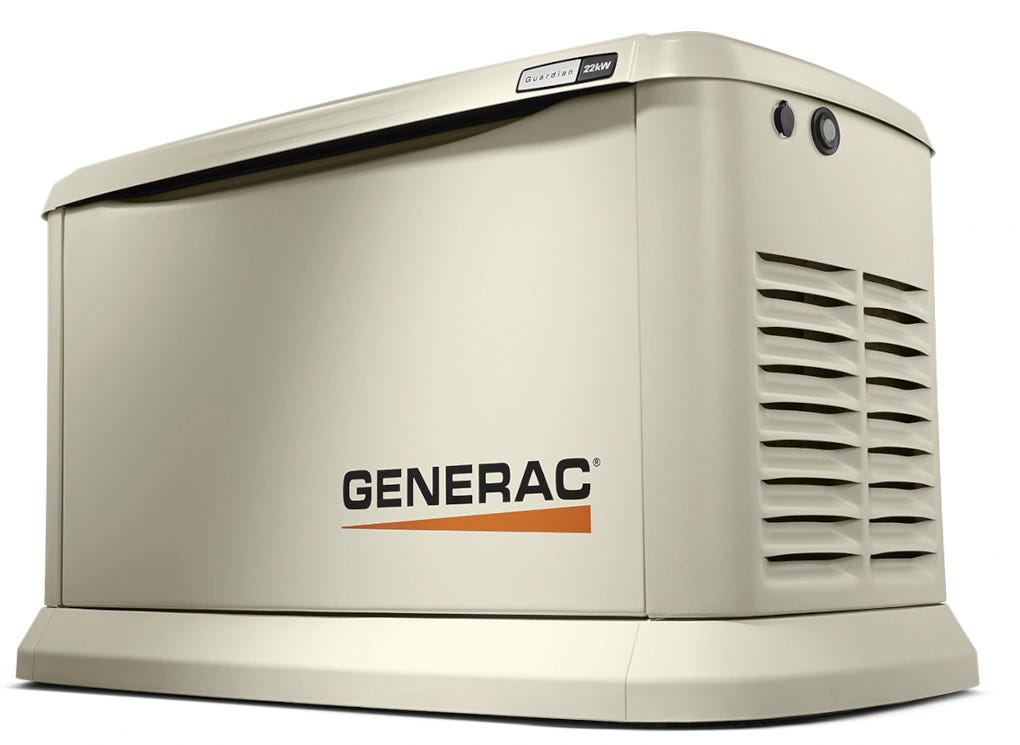
A Generac Guardian 22-kilowatt natural-gas generator — the closest equivalent in whole-home capability — installs for $11,600 to $17,800, including the automatic transfer switch, gas plumbing, concrete pad, and permits. A propane version of the same generator, paired with a 500-gallon tank, runs $13,100 to $21,000.
The installed-cost gap is roughly $11,000 to $15,000 in favor of the generator. Without the federal tax credit, none of that gap is recoverable through incentives. Virginia has no statewide residential battery rebate, and Dominion Energy’s customer programs are limited.
The 10-year picture
Operating costs partially offset the upfront difference. Using current Washington Gas rates of about $1.20 per therm, a Generac 22-kilowatt consumes roughly $26.50 per month in fuel for weekly “exercise” cycles plus typical outages.
Add an annual service contract — $220 to $535 in the Northern Virginia market, based on quotes from Kennedy Electric, NNG Generator, and Unity Services — and the total monthly cost of generator ownership runs $50 to $75.
Propane is dramatically more expensive to run. Virginia retail prices held around $3.50 per gallon in early 2026, per Energy Information Administration data, putting standby costs near $113 to $135 per month including service.
Batteries, on the other hand, are nearly free to operate. Standby parasitic draw and occasional grid top-offs add $5 to $20 per month to a Dominion bill that’s already climbing — the utility added about $11.24 per month for typical customers in January 2026 after a State Corporation Commission rate decision.
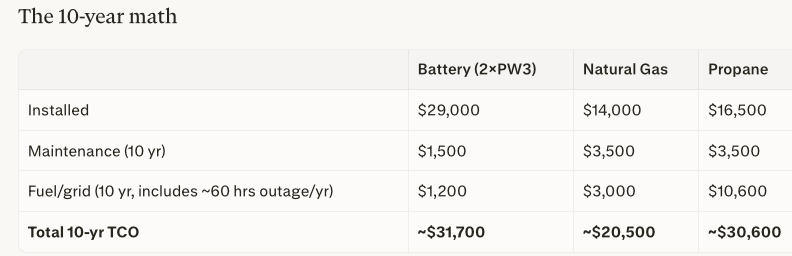
Over a 10-year horizon, including roughly 60 hours of outage runtime per year, the total cost of ownership shakes out like this:
Natural gas generator: about $20,500
Battery system: about $31,700
Propane generator: about $30,600
Natural gas wins on dollars by roughly $11,000. The battery and propane setups land essentially tied.
The silence question — and a Fairfax loophole
A Generac 22-kilowatt produces 67 decibels at 23 feet under load. Fairfax County’s noise ordinance, Chapter 108.1, caps continuous residential noise at 60 decibels during the day and 55 at night. On a typical Northern Virginia lot where the property line might sit 15 to 25 feet from the generator pad, that math doesn’t work.
But it doesn’t have to. Section 108.1-5-1 of the county code fully exempts backup generators from noise limits during power outages. Weekly exercise cycles get a separate carve-out: permitted between 7 a.m. and 9 p.m. for up to two hours per day. Generac’s Quiet-Test™ mode runs the engine at low speed at about 55 decibels — comfortably within daytime limits.
A battery system, by contrast, produces 40 to 50 decibels from inverter cooling fans. It is effectively silent. No code exemption needed, no neighbor friction, no exhaust. For homeowners on tight lots, in noise-sensitive HOAs, or simply with light-sleeping neighbors, that distinction matters more than the spec sheet suggests.
Your local government quite likely has similar rules. It’s worth checking before making a major investment.
How long the power lasts
This is where the resilience tradeoffs sharpen.
A two-Powerwall system runs a typical Fairfax home for 12 to 24 hours on a single charge. Trim to essentials — refrigerator, lights, internet, a few outlets, no air conditioning — and that stretches to four or five days. But without solar, there is no autonomous recharge. Once depleted, the home goes dark until Dominion restores service.
A natural-gas generator runs indefinitely, provided the Washington Gas pipeline stays pressurized. Through the 2012 derecho, the utility’s underground infrastructure held for the vast majority of affected customers. Pipeline failure during a regional emergency is rare but not impossible: a February 2026 main rupture in Centreville cut service to 46 homes.
A propane generator with a 500-gallon tank delivers about 5.5 to 6.5 days of runtime at typical loads — enough for nearly every Fairfax outage in recorded history, but tight for the longest events. Pre-storm refills are essential; delivery trucks face the same downed-tree obstacles as everyone else.
The verdict
For most homes, a natural-gas standby generator remains the lowest-cost path to whole-home backup. It runs as long as the pipeline does, it costs $11,000 less over a decade than the alternatives, and, at least in the Fairfax area used in our example, Washington Gas’s infrastructure has proven storm-resilient.
Batteries justify the premium in three specific situations: when solar panels are part of the project (unlocking Tesla’s unlimited-cycle warranty and autonomous recharge), when neighborhood noise or HOA restrictions make a generator impractical, and when typical outages are short enough — under 18 hours — that 27 kilowatt-hours of storage is sufficient.
Propane fills a niche: homes without a natural-gas connection that want multi-day backup without dependence on the utility gas grid.
A growing hybrid option pairs a single Powerwall with a smaller propane or natural-gas generator — silent operation for short outages, indefinite duration for the next derecho. It is not the cheapest answer. But for homeowners who want both quiet and resilience, it may be the most honest one.
Sources: Washington Gas current rate filings; Dominion Energy residential tariff schedules; EIA Virginia propane retail prices; Generac and Kohler manufacturer specifications; Tesla Powerwall Limited Warranty (May 2026); Fairfax County Code Chapter 108.1; Virginia State Corporation Commission 2025 Grid Modernization Report; June 2012 derecho documentation; FFXnow and AlexandriaBrief storm reporting.
Perplexity.ai provided research assistance for this story.