

Don't buy a new car today
Chinese cars are coming to the US and will save consumers millions. Be patient.

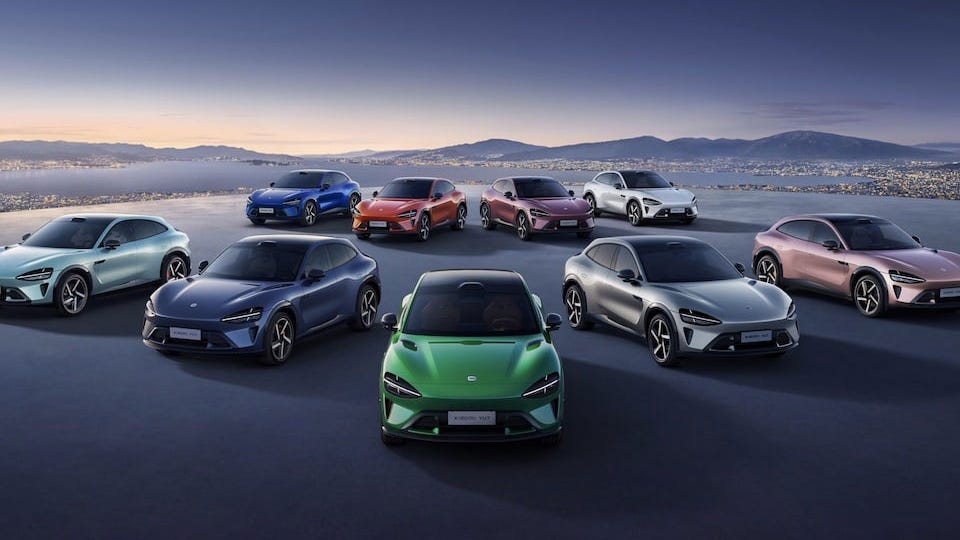
When’s the last time someone told you not to buy a new car? Most consumer sites discuss buying decisions by comparing one brand against another but few bother to discuss whether you should even be buying an automatic ear-cleaner, walk-in bathtub or extended auto warranty.
We wouldn’t presume to tell you which car to buy but we have no problem saying that new cars are way too expensive right now, with an average price of around $50,000 and payment plans that would make a payday lender blush.
Our advice: baby your old car for another year or two because the Chinese are coming, one way or another. American automakers — including the Asian brands that have plants here — have managed to hold back the tide while the Trump Administration talks about affordability but imposes yet more tariffs that block products consumers can afford.
No less an authority than the Wall Street Journal’s longtime tech writer Joanna Stern recently got a two-week test drive of a Chinese sedan and didn’t want to give it back.
“I can’t stop thinking about you — your long range, your modular interior, your absurdly large infotainment screen,” Stern wrote in her review of a Xiaomi SU7 Max. “At night, I miss your adjustable color lighting. On weekends, the kids talk about your wireless karaoke mics, walkie-talkies and yes, that back-seat minifridge.”
Chinese cars have become big sellers just about everywhere except the U.S., the world’s largest auto market by volume. Buyers swoon at the low prices, the extended battery ranges and the software, which is an integral part of the car — not surprising, since Xiaomi is primarily a software company.
In the U.S. and much of Asia, it feels like automakers take a gas-powered car, slim it down a little and stuff some off-the-shelf software into it while jacking up the price. Not the Chinese. They design the software and build the car around it, their admirers say.
The result? In Stern’s words: “We’re talking software that feels smooth like a brand new smartphone, not a screen you have to jab five times to load a map.”
Better … and cheaper?
It may be hard for the more jingoistic among us to face but the Chinese are building better cars and selling them at lower prices. Just about everyone in the car business knows this already and discusses it openly, and somewhat fearfully, among themselves.
Even President Trump seems to sort of know it. While slapping tariffs onto imported cars, he waxed eloquently the other day about some tiny electric cars he had seen in Japan and thought they would do well in the U.S.
Trump said he would “love that” if Chinese carmakers set up plants in the U.S. “These cars of the very near future are inexpensive, safe, fuel efficient and, quite simply, AMAZING!!! START BUILDING THEM NOW!”
Face it. Protectionism never works forever in the U.S. Just as a melting glacier puts pressure on downstream dams, cheaper and better electric cars will flood into the U.S. The dam is already starting to leak. Mexico is now the top destination for Chinese cars and — thanks to the U.S. crudely rebuffing its northern friends — Canada has just agreed to a quota for Chinese imports.
When there are Chinese cars in Mexico and Canada, there will be enough Chinese cars slipping into the U.S. to generate consumer demand that will only be met by opening the floodgates.
Where the demand is
The lower-price section of the marketplace is currently most afflicted by the lack of affordable models. And while it’s not the most profitable sector on a per-car basis, it can be the passport to higher-end cars as well.
A few decades ago, the Japanese took over the franchise for small inexpensive cars, then it was the Koreans. Today, that market is being ignored in the U.S., which hurts consumers and also dealers. When dealers don’t have inexpensive cars to sell, their fingers start to itch.
At the recent National Automobile Dealers Association (NADA) convention in Las Vegas, dealers held hushed hallway conversations trying to decide which Chinese nameplate would be tomorrow’s Toyota or Hyundai, we’re told.
“We’re not telling dealers not to take Chinese franchises,” NADA president Mike Stanton told Bloomberg News, even though 95% of the group’s members say they oppose allowing Chinese entry.
Even Ford’s chief executive, Jim Farley, is on board with Joanna Stern’s adoration of Xiaomi’s sleek EVs. He has spoken warmly of the cars and is currently negotiating to share factory capacity in Europe with a Xiaomi rival, according to the Financial Times.
Change the oil, buy some tires …
All this adds up to a simple word to the wise: don’t do anything rash. That little $50,000 1.5-liter crossover will still be there in a year or two and may even cost a lot less.
Just tell the neighbors you left the Benz in Aspen for the season.
—
Photo © Xiaomi USA
Love reading your stuff. Easily as good as were some of your old memos. ET