



Critics say both moves could provide only limited short-term relief while creating new budget and market disruptions.
As Americans grapple with rising food and fuel costs, the Trump administration is backing a pair of high-profile inflation relief measures: suspending the federal gasoline tax and temporarily lowering barriers to imported beef.
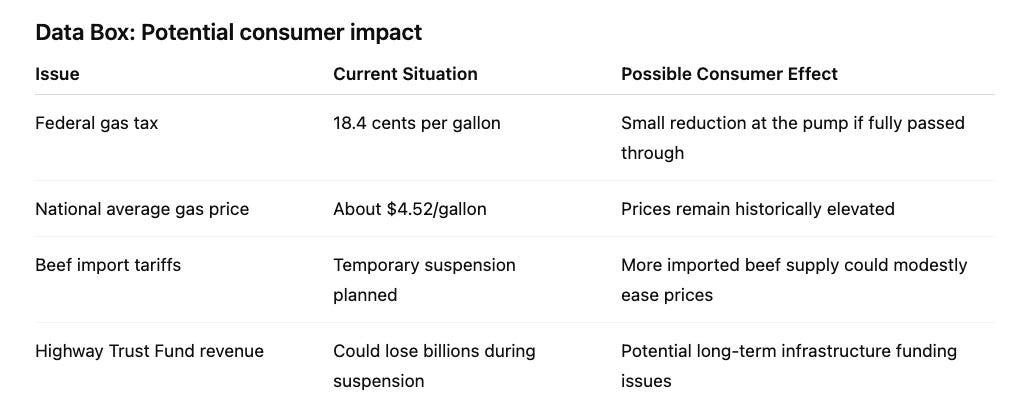
Trump said Monday he supports pausing the federal gas tax “for a period of time” as fuel prices spike following escalating tensions in the Middle East and disruptions tied to the Iran conflict. The federal gasoline tax currently adds 18.4 cents per gallon to the price drivers pay at the pump.
At the same time, the administration is preparing to temporarily suspend tariff-rate quotas on imported beef, allowing more foreign beef to enter the U.S. market at lower tariff rates. The move is aimed at cooling record-high beef prices that have become a growing source of frustration for consumers shopping for steaks, burgers and other staples.
The twin initiatives represent a notable shift for an administration that has broadly embraced tariffs and protectionist trade policies while also facing mounting political pressure over affordability concerns.
According to AAA data cited in multiple reports, average U.S. gasoline prices have climbed to roughly $4.52 per gallon, up sharply from earlier this year as geopolitical tensions rattled oil markets, according to The Guardian.
Trump told reporters the gas tax suspension would be temporary and could end once fuel prices stabilize. But Congress would have to approve any federal gas tax holiday before it could take effect. Republican lawmakers, including Sen. Josh Hawley and Rep. Anna Paulina Luna, are reportedly preparing legislation to support the move, Axios reported.
Beef prices become a political problem
The administration’s beef move highlights another major consumer pain point: grocery inflation.
Beef prices have remained stubbornly high amid reduced cattle inventories, drought pressures, higher feed costs and strong consumer demand. By temporarily relaxing import restrictions, the White House hopes to boost supply quickly and put downward pressure on supermarket prices.
The administration is also reportedly planning additional support for domestic ranchers, including expanded Small Business Administration lending access and the rollback of certain livestock regulations.
The beef decision is particularly notable because Trump has spent much of his second term expanding tariffs on imported goods. In recent months, the administration imposed or threatened a range of new import duties under various trade authorities while defending tariffs as a way to protect American industries.
Now, faced with mounting consumer complaints over grocery bills, the administration appears willing to carve out exceptions for products tied directly to household inflation.
How much relief would consumers actually see?
Economists have long debated whether gas tax holidays meaningfully lower prices for consumers.
While suspending the federal tax could shave roughly 18 cents off a gallon of gasoline, analysts note that recent fuel price increases tied to oil markets have been far larger. National average gas prices have risen by more than $1.50 per gallon since the Iran conflict escalated, according to reports citing AAA data.
Some economists also warn that retailers and refiners do not always pass the full tax savings directly to drivers.
Meanwhile, suspending the gas tax could reduce funding for the federal Highway Trust Fund, which finances road and bridge projects nationwide. Analysts cited by the Financial Times estimated that a three-month suspension could cost roughly $7 billion in transportation revenue.
The impact of lower beef tariffs is similarly uncertain.
Imported beef could help stabilize supply in the short term, particularly for ground beef and lower-cost cuts. But analysts say broader cattle shortages and global supply constraints may limit how much prices actually fall.
Affordability Watch
Consumers are increasingly facing a double squeeze from both food and transportation costs.
Gasoline prices are now at their highest levels in roughly four years, while beef prices have climbed steadily amid shrinking U.S. cattle herds and supply disruptions.
For many households, the combined effect is especially painful because fuel and food are among the most visible and unavoidable expenses in family budgets.
Data Box: Potential consumer impact
What consumers should watch
If Congress acts quickly, drivers could see lower gas prices within weeks. But any savings may vary by region and retailer.
At grocery stores, imported beef could begin appearing more widely later this year if the tariff suspension proceeds as expected. Consumers may see the biggest impact in ground beef prices rather than premium cuts.
For now, affordability remains a major political issue — and the White House is signaling that even some long-standing tariff policies may be negotiable when inflation hits consumers directly.